

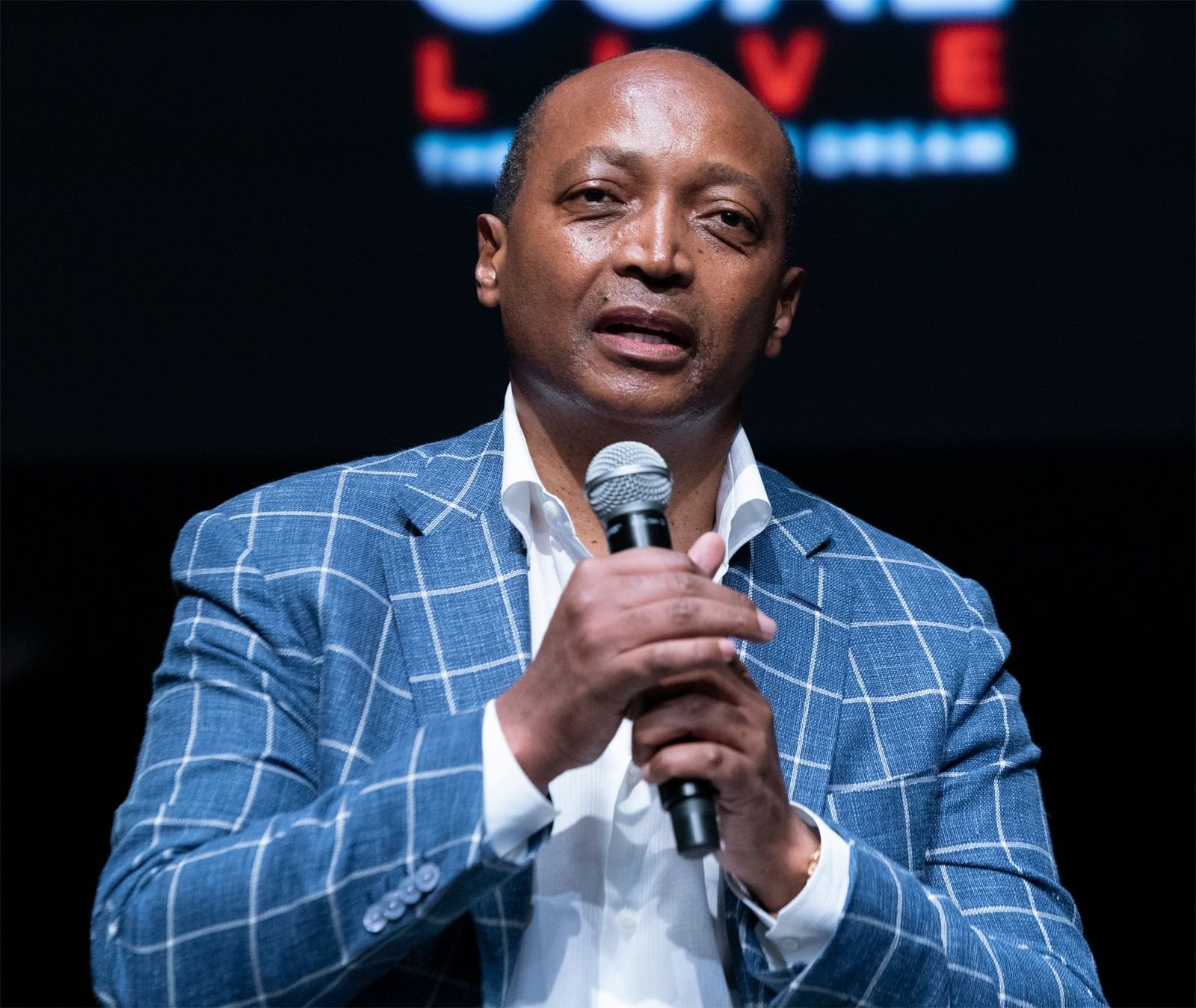
Patrice Tlhopane Motsepe, 2019.
© lev radin/Shutterstock.com
The Rise of Patrice Tlhopane Motsepe: South Africa’s First Black Billionaire
Early Life and Education
Patrice Tlhopane Motsepe was born on January 28, 1962, in Soweto, South Africa. Despite growing up during the apartheid era, he experienced relative privilege compared to many other members of the black community in South Africa. His father, who was exiled for opposing apartheid, became a successful liquor distributor with ties to South African Breweries.
Motsepe’s childhood was characterized by hard work in his father’s liquor store and beer hall, giving him early insights into business management and an understanding of the mine workers who patronized the shop. Due to his father’s resistance to the segregated education system, which provided minimal opportunities for black students, Motsepe and his siblings were enrolled in a Roman Catholic boarding school located in the Eastern Cape province. He later obtained a bachelor’s degree in law from the University of Swaziland, followed by a law degree from the University of the Witwatersrand in Johannesburg.
Early Career in Law
After joining the law firm of Bowman Gilfillan in 1988, Motsepe climbed the ranks to become a partner by 1993. He gained additional experience working as a visiting attorney for the American firm McGuire, Woods, Battle & Booth from 1991 to 1992. This period in law helped him develop valuable skills that would later prove instrumental in his business ventures.
Transition to Mining: The Formation of African Rainbow Minerals
Motsepe’s pivotal career shift came as he sought to leverage his legal experience in the mining sector. With the restructuring of Bowman Gilfillan in the new post-apartheid landscape, he decided to dive into mining, believing he could optimize production through effective management techniques. By implementing low base salaries alongside production incentives, he aimed to revitalize non-performing mines.
In 1994, he founded Future Mining, a mine services company, and utilized his extensive knowledge of the industry and community needs. By 1997, he established ARMgold, which embarked on a rapid expansion trajectory, merging with Harmony in 2003 and acquiring Anglovaal Mining (Avmin).
In 2004, after the reorganization of ARM, Motsepe was appointed as chairman. Under his leadership, the company diversified its operations and expanded from gold mining into coal mining.
Investments and Philanthropy
Motsepe’s financial success as a mining mogul allowed him to make significant investments in various sectors, including sports. In 2003, he purchased a 51% stake in the Mamelodi Sundowns football club, taking full control the following year. His influence in both business and sports has made him a prominent figure in South Africa.
Despite criticisms that the Black Economic Empowerment (BEE) laws primarily benefited already affluent and connected individuals like Motsepe, he is often seen as a role model. His contributions to initiatives such as the Nelson Mandela Foundation further solidify his reputation as a philanthropist, exemplified by his 3 million rand donation to the foundation in June 2008.
Legacy and Impact
Patrice Tlhopane Motsepe’s journey from the struggles of apartheid to becoming South Africa’s first black billionaire is a testament to resilience and entrepreneurship. His story, bolstered by strategic business decisions and a commitment to social responsibility, continues to inspire many across the globe. Through his work in mining and philanthropy, he embodies the potential for economic empowerment in post-apartheid South Africa.
