

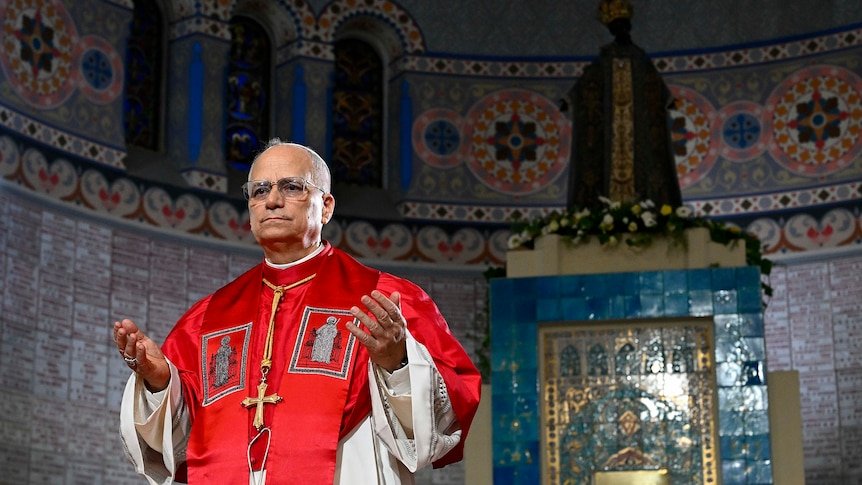
Pope Leo XIV Embarks on Historic Apostolic Journey to Africa
On April 13, 2026, Pope Leo XIV set out from Rome for his second apostolic journey since his election. This landmark trip will span ten days, covering over 18,000 kilometers as he visits four African nations. His itinerary includes twenty-five speeches and a variety of events ranging from private meetings in hospitals, orphanages, and prisons to grand religious services attended by hundreds of thousands of worshippers.
According to a senior Vatican official, this papal visit aims to “shine a spotlight on Africa.” Among the countries on Pope Leo’s itinerary, three boast significant Catholic populations:
- In Cameroon, there are approximately 4.4 million Catholics, making up 24.3% of the populace—the largest religious group in the nation.
- Angola is home to 8.8 million Catholics, representing a remarkable 55% of its population.
- Although Equatorial Guinea is smaller in size, a staggering 87% of its residents identify as Catholic.
Pope Leo’s journey reflects a continuing theme emphasized by his predecessors: the rapid expansion of the Catholic Church across Africa. In stark contrast, Algeria, where Pope Leo begins his trip, has only about 8,740 Catholics among a 45-million-strong, predominantly Sunni Muslim population.
The Significance of Algeria in Pope Leo’s Visit
Why has Pope Leo chosen to begin his journey in Algeria? While the stops in Cameroon, Angola, and Equatorial Guinea symbolize the future of Christianity on the continent, the pope’s visit to Algeria highlights the long-standing history of Christianity in Africa.
As a member of the Order of St. Augustine, Pope Leo’s religious path is deeply connected to Christianity’s legacy in Africa. His ties to the region are further augmented by his educational background at Villanova University, founded by the Augustinians. After joining the order in 1977 and serving as its global leader, he became the first Augustinian Pope in 2025.
A Brief History of Christianity in Africa
St. Augustine, born in the Roman city of Thagaste in modern-day Algeria, is emblematic of the country’s Christian past. After his return from studying in Carthage, he established a religious community in his hometown and later became the bishop of Hippo, where he served until his death in 430 CE.
Pope Leo will visit the archaeological site of Hippo and celebrate Mass at the modern Basilica of St. Augustine during his trip. Augustine’s influence on Western Christianity makes him a significant figure in the Church’s history, providing insights into the understanding of faith and unity across time and geography.
Christianity’s Expansion and the Shift in Dynamics
Historically, Christianity made significant strides in Africa, especially by the sixth century. However, the rise of Islam in the seventh century prompted a decline in Christian presence, particularly along the Mediterranean coast. Despite this setback, a vibrant Christian community endured in Ethiopia and Egypt, represented by the Coptic Church and the Ethiopian Orthodox Tewahedo Church.
A Resurgence of Catholicism
The Catholic Church is experiencing an astonishing resurgence in Africa. Although in 1900 the continent had merely one to two million Catholics, this number skyrocketed to 140 million by 2000 and has since doubled to an estimated 288 million—accounting for one-fifth of the global Church. This growth shows no signs of slowing, as evidenced by an increase of 8.3 million members in just the year 2025.

Pope Leo XIV visits the archaeological site of Hippo on 14 April 2026 in Annaba, Algeria. (Photo by Matteo Pernaselci – Vatican Media via Vatican Pool / Getty Images)
Fostering Unity in a Diverse Context
Pope Leo’s visit underscores the significant role African Catholics will play in shaping the global Church’s future. His choice of destinations speaks volumes, as Vatican Secretary of State Cardinal Pietro Parolin noted that Leo’s trip to Hippo is “not merely a commemorative act” but a profound statement of identity and spiritual coherence. Thus, as African Catholicism flourishes, Leo aims to emphasize the importance of community, enriched by wisdom passed down from notable figures like Augustine.
This sentiment is encapsulated in Pope Leo’s chosen motto for his papacy, In illo uno unum, translating to “In the One, we are one.” Reflecting Augustine’s view on unity across time and geography, Pope Leo’s journey aims to inspire a collective Christian identity, enriched by both the histories and the futures of communities across Africa.

Pope Leo XIV celebrates Mass at the Basilica of St. Augustine on 14 April 2026 in Annaba, Algeria. (Photo by Matteo Pernaselci – Vatican Media via Vatican Pool / Getty Images)
