

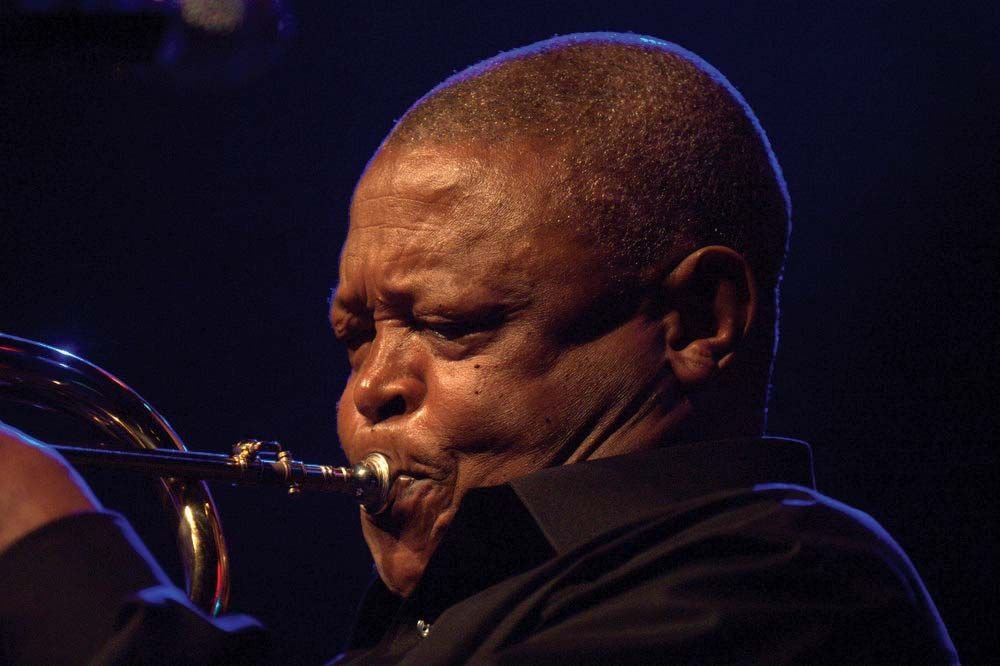
Hugh Masekela: A Trailblazing South African Trumpeter
Introduction to Hugh Masekela
Hugh Masekela, born on April 4, 1939, in Witbank, South Africa, stands as one of the nation’s most celebrated trumpeters. Renowned not just for his musical talent but also for his outspoken opposition to apartheid, Masekela’s musical journey took him across the United States, Europe, and Africa, where he introduced the world to South Africa’s vibrant rhythms.
Early Life and Musical Roots
Growing up in Sharpeville, Masekela was deeply influenced by his father, a chief health inspector and a sculptor, whose extensive collection of jazz records laid the foundation for his love of music. Influenced by legendary trumpeters like Dizzy Gillespie and Clifford Brown, Masekela embraced the genre of bebop. In 1959, he joined the Jazz Epistles, the first Black band in South Africa to record an album, featuring noted pianist Abdullah Ibrahim.
Migration and Rise to Fame
With the rise of apartheid in the early 1960s, Masekela moved to the United States to pursue his musical education at the Manhattan School of Music in New York City. Throughout the 1960s, he made a name for himself as an arranger and performer, notably assisting his then-wife, singer Miriam Makeba, and composing engaging tunes in the kwela style—an upbeat folk music genre from South African townships.
Musical Exploration Across Africa
The 1970s were a transformative period for Masekela, marked by extensive travels across Africa. He immersed himself in diverse musical styles, teaching in Guinea, collaborating with the iconic Nigerian artist Fela Kuti, and recording multiple albums. During this time, his involvement with the highlife band Hedzoleh Soundz further showcased his versatility and commitment to African music.
The 1980s and Advocacy
In the 1980s, Masekela emerged as a unifying force in concerts in Lesotho and Botswana, attracting diverse audiences during a tumultuous era in South Africa. He established a mobile recording studio in Botswana to amplify local musicians’ voices and was also featured in Paul Simon’s groundbreaking “Graceland” world tour.
Return to South Africa and New Ventures
As change loomed in the 1990s, Masekela returned to a transitioning South Africa after receiving news from his sister about amnesty for political exiles. He released Hope (1994), a compilation of his biggest hits, followed by Johannesburg (1995), which incorporated elements of rap and hip-hop, signaling a shift in his musical direction. This period also birthed additional albums like The Lasting Impressions of Ooga Booga (1996), Revival (2005), and Phola (2009), demonstrating his ongoing evolution as an artist.
Legacy and Autobiography
In 2004, Masekela shared his life story through his autobiography Still Grazing: The Musical Journey of Hugh Masekela, co-written with D. Michael Cheers. His words reflect on not only his musical journey but also on his activism and the socio-political landscapes of South Africa.
Conclusion: Remembering Hugh Masekela
Hugh Masekela left an indelible mark on the global music scene, blending his South African roots with international sounds while standing tall against injustice. His legacy continues to inspire musicians and activists worldwide, ensuring that his melodies resonate for generations to come.
For more insights and details about Hugh Masekela’s contributions to music and society, visit his profile on Britannica.
