

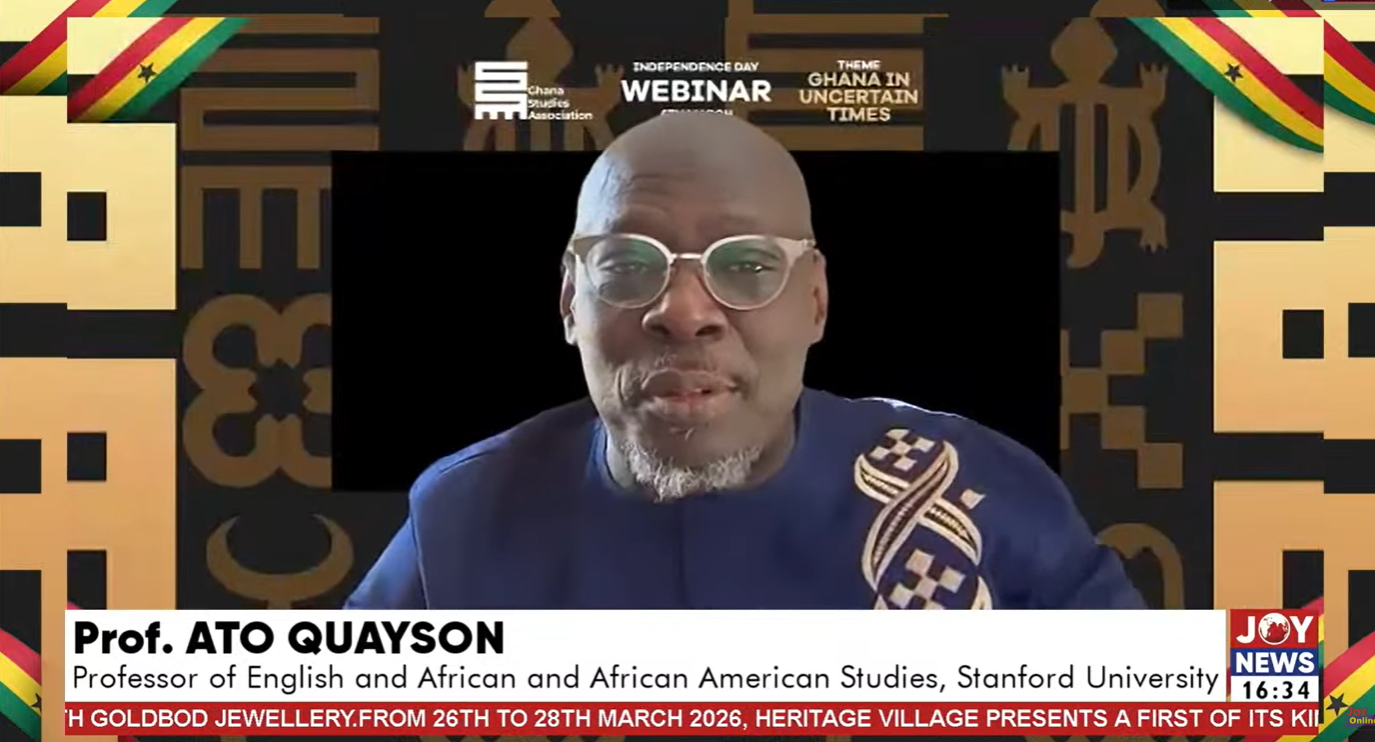
In a recent discussion titled “Ghana in Uncertain Times,” Professor Ato Quayson, a distinguished faculty member at Stanford University specializing in English and African Studies, emphasized that the essence of Ghanaian identity transcends mere citizenship or nationality. According to him, the shared cultural experiences that bind Ghanaians from various walks of life play a pivotal role in defining what it means to be Ghanaian.
“Being Ghanaian is not confined to holding a passport or having Ghanaian lineage,” Prof. Quayson remarked. “It encompasses feelings of attachment and pride, whether you reside in Ghana or are part of the vibrant Ghanaian diaspora.”
Everyday cultural practices, particularly in areas such as cuisine, music, and communal interactions, are pivotal in cultivating this deep sense of belonging among Ghanaians.
Ghanaian Cuisine: A Pillar of Identity
Professor Quayson underscored Ghanaian cuisine as a powerful emblem of national identity, noting that traditional dishes encapsulate collective memories and cultural significance. He pointed out that the unique preparation of dishes, such as fufu, highlights deep-rooted cultural practices.
“While there may not be a logical reason for pounding cassava and plantain to create fufu, it remains a cherished tradition,” he stated. “The entire experience—from the pounding to the delightful aromas—creates a profound sense of nostalgia and belonging.”
The Power of Music in Fostering Unity
Music, according to Prof. Quayson, is another critical contributor to the Ghanaian identity. He highlighted contemporary songs, such as Sarkodie and Castro’s hit “Adonai,” which resonate with tales of resilience and triumph.
Moreover, he celebrated the influence of music icons like Daddy Lumba, whose songs have the power to unite Ghanaians, even in the diaspora.
“Whenever Daddy Lumba’s music plays at gatherings abroad, people instinctively flock to the dance floor, singing along joyfully,” he noted.
The Significance of Laughter in Ghanaian Culture
Professor Quayson also addressed the unique aspect of Ghanaian social interactions characterized by humor. This culture of laughter, he explained, embodies a sense of safety and warmth.
“Laughter among individuals signals a friendly and welcoming social environment, creating bonds that strengthen our communities,” he clarified.
Embracing Everyday Culture for Identity
As a concluding remark, Prof. Quayson encouraged Ghanaians to be more mindful of the everyday cultural practices that shape the national identity.
“What we may often overlook in our daily experiences forms the very foundation of our identity as Ghanaians,” he urged, advocating for a deeper appreciation of these cultural building blocks.
DISCLAIMER: The views, comments, opinions, contributions, and statements made by readers and contributors on this platform do not necessarily represent the views or policy of Multimedia Group Limited.
