

Nature-Based Solutions: Reviving Ecosystems and Economies in Africa
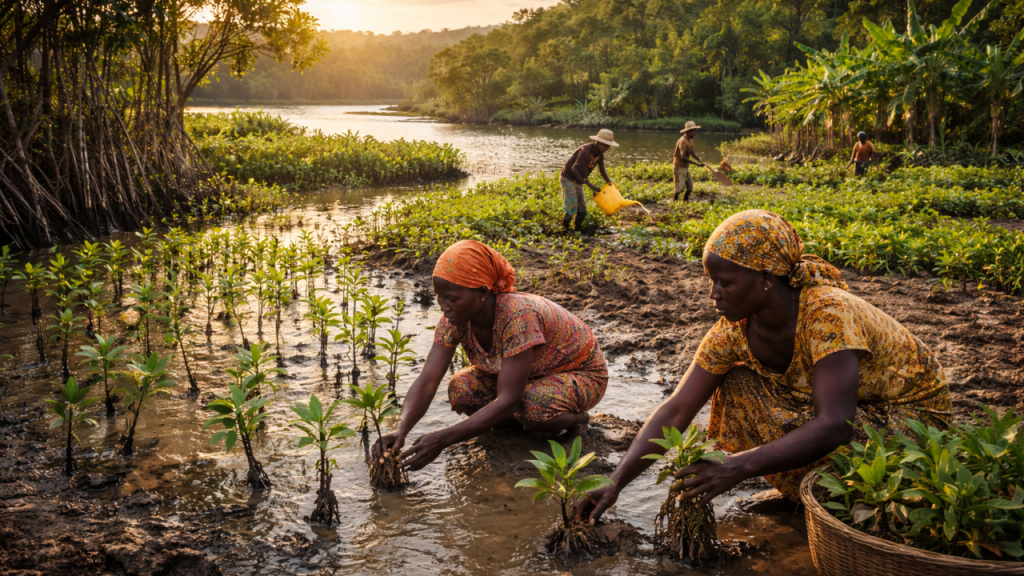
At dawn on the shores of southern Benin, a fisherman recounts the profound transformation of his environment. The coastal mangroves that once thrived have been decimated for fuelwood, leading to a dramatic decline in fish populations. However, he points towards a newly restored section of mangroves, a fragile but vital sign of recovery. “They are coming back,” he says. This narrative of regeneration symbolizes the potential of Nature-Based Solutions (NbS) throughout Africa, highlighting that nature itself can be a powerful ally in the fight against climate change.
The Essence of Nature-Based Solutions
Nature-Based Solutions are, at their core, about harnessing the power of nature to tackle environmental challenges. They focus on:
- Restoration: Reviving degraded ecosystems.
- Protection: Safeguarding existing natural areas.
- Sustainable Management: Balancing human needs with ecological health.
The United Nations Environment Programme emphasizes that restoring ecosystems like forests and wetlands can simultaneously sequester carbon, enhance biodiversity, and improve community resilience. Coastal and marine ecosystems alone could contribute up to 35% of the emissions reductions required to meet global climate targets by 2050, underscoring their critical role in climate strategy.
Case Study: Benin and Mangrove Restoration
In Benin, mangrove restoration has revitalized both the ecosystem and local livelihoods. Traditionally dependent on cutting mangroves, communities are now leading restoration initiatives. Mangroves are not only significant carbon sinks—having the capacity to store four times more carbon per hectare than terrestrial forests—but they also provide essential services such as:
- Nurseries for marine life
- Coastal erosion buffers
- Natural storm defenses
As mangroves return, fish populations are rebounding, and women, who previously trekked far for firewood, are learning sustainable harvest techniques. Youth groups are being trained as stewards of restoration, exemplifying a shift in local economies back towards nature.
Cameroon: Forests as Climate Infrastructure
Moving to Cameroon, the narrative transitions to the dense tropical forests of the Congo Basin, the second-largest rainforest globally. Regarded as the “lungs of Africa,” these forests face threats from logging and agriculture. However, communities are increasingly adopting landscape restoration strategies that integrate conservation and economic activity.
Agroforestry practices—cultivating crops alongside trees—are thriving, with farmers blending cocoa production with indigenous tree species. Research indicates that such integrated systems not only bolster biodiversity but also stabilize income and food security. In this context, forests are viewed as essential climate infrastructure, fostering a symbiotic relationship between nature and development.
Gabon: A Model of Conservation-Driven Development
Gabon exemplifies how conservation can fuel economic growth. With over 80% of its land area forested, Gabon is a leader in ecosystem-driven development. The nation has achieved a net carbon sink economy, showcasing that economic advancement need not come at the expense of nature. By implementing innovative policies, including results-based payments for forest conservation, Gabon provides a compelling model that reconciles the economy with ecological preservation.
Egypt: Reviving Arid Landscapes
At first glance, Egypt’s arid terrain may not seem conducive to Nature-Based Solutions. Yet, in these challenging environments, the potential for transformation through sustainable practices is evident. Restoration efforts include:
- Sustainable land and water management
- Soil health improvement
- Optimizing irrigation systems
Coastal ecosystems, such as wetlands, are also being recognized for their role in combating sea-level rise while supporting fisheries. Localized regenerative agriculture strategies enhance soil quality and conserve water, demonstrating that in regions grappling with climate change, NbS can facilitate adaptation rooted in ecological understanding.
Embracing a New Mindset
The collective experiences from Benin, Cameroon, Gabon, and Egypt illustrate a paradigm shift in how we perceive nature. Nature-Based Solutions are not merely technical fixes; they necessitate a rethinking of our relationship with the environment. Historically, development has leaned towards extraction, yet NbS advocates for investment in ecosystems for sustainable value generation.
The Need for Caution in Implementation
While the momentum for NbS is growing, it is essential to approach these solutions with care. Misapplication of NbS can result in ineffective policies or marginalized communities. Therefore, the principles guiding successful NbS must include:
- Local leadership
- Scientific grounding
- Social inclusivity
Listening to indigenous knowledge is vital for ensuring that restoration efforts are beneficial and equitable.
Unlocking Africa’s Potential
Africa stands on the brink of significant opportunity. With its diverse landscapes—forests, wetlands, and coastlines—the continent is poised to lead in implementing Nature-Based Solutions. Achieving this potential requires integration with broader development strategies, aligning policies across sectors such as:
- Agriculture
- Environment
- Finance
- Infrastructure
This approach emphasizes community-led initiatives, redefining success to encompass not only economic growth but also ecosystem health and human well-being.
A Journey of Regeneration
Reflecting on the fisherman’s experience in Benin, the tale of regeneration underscores the importance of patience and faith in nature’s recovery processes. Nature operates on its own timeline; granting it the space to heal yields extraordinary results. Investing sincerely in Nature-Based Solutions is not merely an option—it is a necessity for a sustainable and just future.
For more insights on ecological initiatives and restoration strategies, visit the African Biodiversity Alliance.
