



The Significance of the Apidima Cave Findings in Understanding Human Evolution
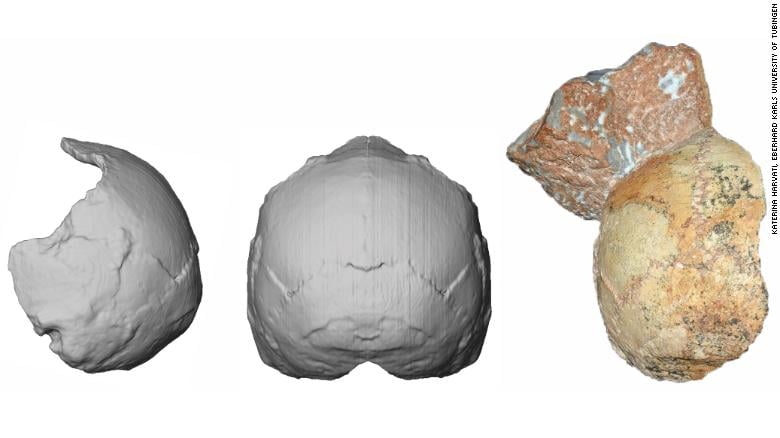
A groundbreaking discovery in Southern Greece has provided impressive insight into early human migration patterns. A partial skull unearthed from the depths of Apidima Cave is now identified as the earliest known evidence of Homo sapiens existing outside Africa, shifting our comprehension of human history dramatically.
Unearthing Ancient Fossils: A Journey Back in Time
The Apidima Cave, located on the Mani Peninsula, became a site of interest in 1978 when archaeologists discovered two notable fossils: a partial skull and a jawbone. Initially categorized as Neanderthals, the archaic humans prevalent in Europe during the Middle Paleolithic era, a detailed reexamination in 2019 revealed that one of these fossils actually belonged to a modern human.
Age Assessment: A Shift in Understanding
Researchers dating the skull determined it to be around 210,000 years old, approximately 150,000 years older than the previously oldest-known fossil of Homo sapiens found in Europe. This finding positions it as the third-oldest instance of modern humans discovered to date.
Another skull from the same site has been attributed to Neanderthals and dates back at least 170,000 years. This corroborates the idea of significant Neanderthal populations existing across Europe until around 40,000 years ago, when Homo sapiens began to dominate.

Research and Technological Advancements
Initial age assessments faced challenges due to the complex positioning of the skulls within the cave walls, further complicated by soil movement. Katerina Harvati, a Greek researcher and director of Paleoanthropology at the Eberhard Karls University of Tübingen, spearheaded a team that meticulously examined the fossils stored in the Museum of Anthropology in Athens.
Utilizing advanced techniques, including computer reconstructions and a radiometric dating method that analyzes uranium decay, the researchers successfully dated these invaluable finds, enabling a clearer context for Homo sapiens in relation to other human species.
The Implications for Human Migration
The analysis of the Apidima fossils has profound implications for our understanding of how Homo sapiens dispersed from Africa into Europe. This finding supports the theory that early human populations migrated earlier and more extensively than previously documented. The introduction of advanced tools likely facilitated this migration, with the hypothesis suggesting a significant cultural evolution.
According to Dr. Harvati, the Apidima findings imply that Southeast Europe may have acted as a corridor for various human groups during migration across the continent. It provides a riveting avenue for further research aimed at uncovering the complexities surrounding human evolution.
To validate these theories, a comprehensive five-year program is underway led by the Norwegian Institute in Athens—aiming to delve deeper into the chronology and history of the Apidima complex.
The prospect of future explorations promises to shed more light on humanity’s journey from Africa and how Homo sapiens interacted with their contemporaries, including Neanderthals, enriching our understanding of human evolution.
Related: 153,000-year-old Homo Sapiens Footprints Identified
