

Eskom’s Winter Preparedness Strategy: Insights into South Africa’s Energy Transition
Understanding the Challenges in South Africa’s Energy Sector
As global energy systems encounter pressures from climate change, economic instability, and technological advancements, South Africa’s electricity sector provides a compelling case for transformation under stress. Eskom’s ability to meet winter electricity demand highlights the hurdles traditional utilities face—declining demand coupled with the necessity for system reliability.
Eskom’s initiatives in addressing winter energy needs also reveal the significant influence of mining decarbonization and renewable energy solutions in reshaping the energy landscape across the continent.
Key Metrics: Assessing Eskom’s Grid Stability
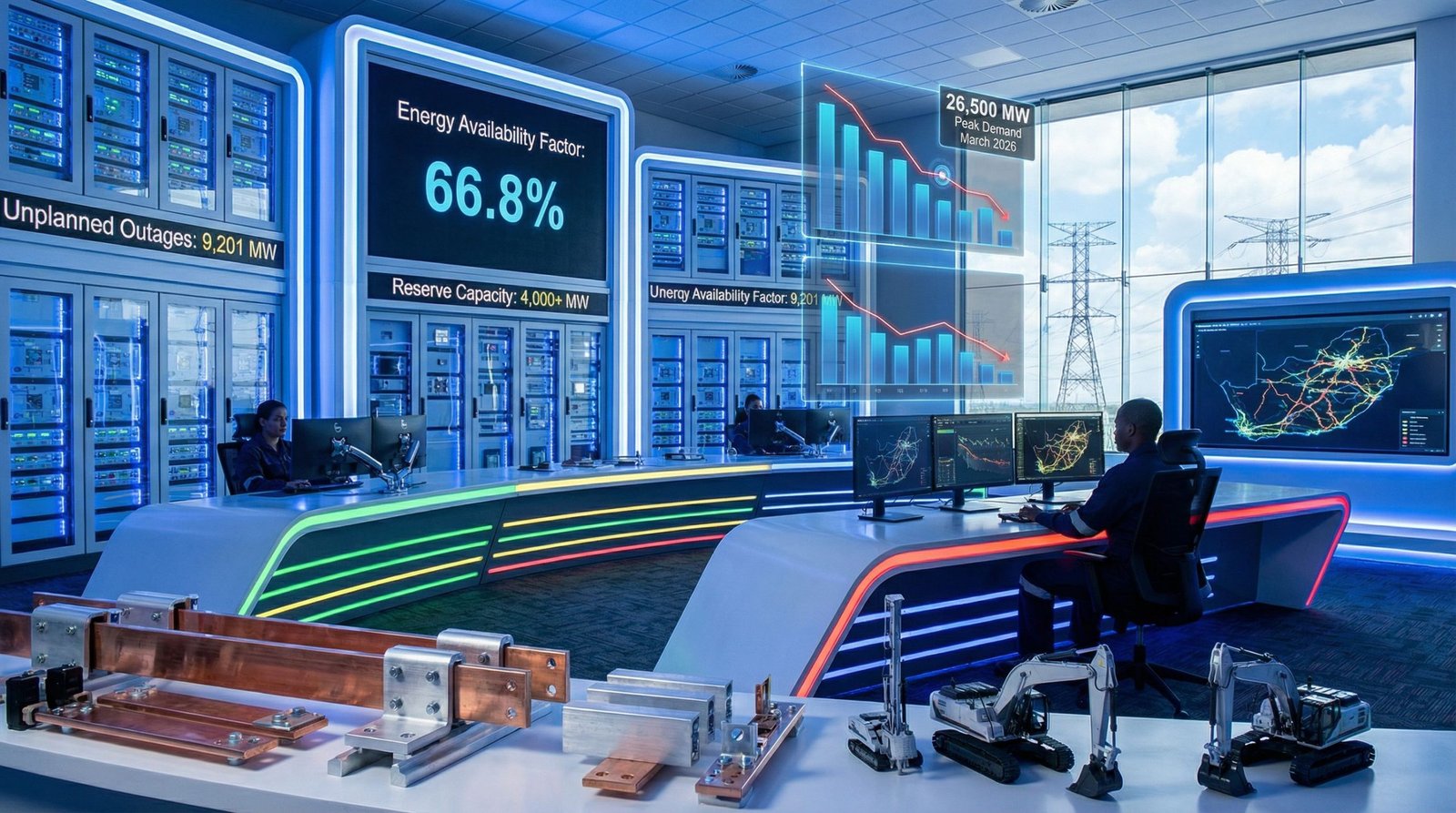
Eskom’s Energy Availability Factor (EAF) serves as a vital indicator of its readiness to handle electricity demand. The latest data for March 2026 shows an EAF of 66.8%, down from 68.3% in February. This decline raises concerns about the reliability of Eskom’s generation fleet during peak demand.
| Performance Indicators (March 2026) |
|---|
| Energy Availability Factor: 66.8% |
| Immediately Dispatchable Reserve: 4,000 MW |
| Unplanned Outages: 9,201 MW |
| Planned Maintenance: Increased by 1,300 MW |
Despite the decrease in EAF, the available dispatchable reserve offers a buffer for rapid deployment during high demand periods, suggesting a proactive stance toward electricity management.
Reserve Capacity: Shifting Demand Patterns
The trends in open cycle gas turbine (OCGT) utilization indicate a strategic approach rather than a purely demand-driven response. In March 2026, the OCGT usage rose slightly; however, this was linked to optimization tests rather than urgent demand needs. Such patterns facilitate effective winter planning, hinting at sufficient generation capacity to meet current demands.
Importantly, peak demand declined by 8.3% year-over-year, dropping from 28,905 MW in March 2025 to 26,500 MW in 2026. Reduced demand complements operational strategies that enhance system resilience.
Evolving Electricity Consumption Trends
The demand landscape for electricity in South Africa signals profound structural changes, with reported power generation declining 3.8% year-on-year in February 2026. This consistent downward trend suggests durable shifts in economic dynamics rather than temporary cyclical fluctuations.
| Production Metrics | Performance | Comparison Period |
|---|---|---|
| February 2026 YoY Decline | 3.8% | vs February 2025 |
| Month-on-Month Decline | 0.2% | February vs January 2026 |
| Pre-COVID Baseline Gap | 8.7% Below | January 2026 vs Pre-pandemic |
| Long-term Historical Decline | 12.4% Lower | January 2026 vs January 2019 |
Decoupling Mining from National Dependency
Historically, South Africa’s mining sector has correlated closely with electricity consumption—a relationship which reversed in April 2025. Increased mining production now coincides with decreased Eskom electricity utilization due to the rise of self-generation within the industry.
Key Motivators for Mining Independence:
- Cost advantages of self-generated electricity
- Increased reliability from decentralized energy sources
- Strategic security needs within mining operations
- Regulatory changes promoting independent power production
This evolving dynamic prompts utilities to reevaluate traditional revenue sources and grid infrastructure priorities.
Economic Forces Reshaping Power Market Dynamics
Electricity tariffs that are uncompetitive compared to global benchmarks are prompting significant restructuring in South Africa’s industrial sectors. Closures of major industrial operations, including those reliant on electricity-intensive processes, deepen the challenges faced by Eskom.
For example, the shutdown of South32’s Mozal aluminium smelter underscores the broader trend of industries relocating to regions with more favorable electricity pricing.
Export Markets: Prospects and Challenges
While South Africa has maintained a net exporter status since May 2024, challenges lurk on the horizon. Trade limitations arise from subdued economic activity in neighboring countries, further compounded by global geopolitical tensions that curtail energy trading. The essential relationship between domestic industry health and export market strategies necessitates a careful approach to regional energy cooperation.
Maintenance Strategies and Grid Resilience
Eskom’s maintenance approaches have evolved dramatically, with a significant rise in planned maintenance aimed at ensuring reliability during the winter months. This proactive strategy has reduced total outages compared to previous years, creating additional capacity margins for peak demand management.
| Maintenance Metrics | March 2025 | March 2026 | Change |
|---|---|---|---|
| Total Maintenance & Outages | 13,601 MW | 9,201 MW | -4,400 MW |
| Unplanned Outages | 11,200 MW | 9,201 MW | -1,999 MW |
| Planned Maintenance | 2,401 MW | 3,701 MW | +1,300 MW |
Risk Mitigation and Seasonal Preparedness
Winter readiness extends beyond mere maintenance, incorporating comprehensive risk management strategies. Enhancements in cold storage capacity and planned operational procedures create layers of resilience advantageous during peak demand periods.
Critical Risk Mitigation Elements:
- Prioritized maintenance ahead of the winter season
- Cold storage capacity for rapid generation activation
- Reserve margin management exceeding 4,000 MW
The Mining-Energy Nexus and Industrial Independence
The mining sector’s shift toward self-generation is redefining operational strategies and economic models. Companies are increasingly investing in solar photovoltaic systems and energy storage solutions, underscoring the transition from reliant utility structures to autonomous energy frameworks.
Future Demand Patterns and Energy Policy
Looking ahead, South Africa’s energy future hinges upon the relationship between economic growth and electricity consumption. Traditional dependencies are dissolving, suggesting recovery timelines that exceed standard economic cycles. This evolution will necessitate policy adaptations, focusing on both grid modernization and distributed energy systems.
Key Considerations for Energy Policy Adaptation:
- Rethinking tariff designs to accommodate shifting consumption patterns
- Prioritizing grid flexibility alongside generation expansion
- Developing proactive regional energy cooperation
Regional Energy Security Challenges
South Africa’s winter outlook is heavily influenced by regional market dynamics. The constraints of cross-border energy trade and inadequate infrastructure can limit the ability to capitalize on surplus electricity generation. The overarching economic conditions across Southern Africa necessitate strategic long-term planning focused on enhanced energy security.
Strategic Outlook: Sustainable Growth for South Africa’s Energy Sector
As Eskom faces the winter demand challenges of 2026, its operational improvements and the broader strategic framework highlight the need for substantial investment in infrastructure, smart grid technologies, and policy evolvements. The transition should focus on promoting distributed generation capacity, thus ensuring resilient energy systems capable of navigating the emerging energy landscape.
Exploring better frameworks for energy production and consumption will prepare South Africa’s energy sector to meet evolving demand patterns while fostering economic resilience amid a global shift toward sustainable energy practices.
