

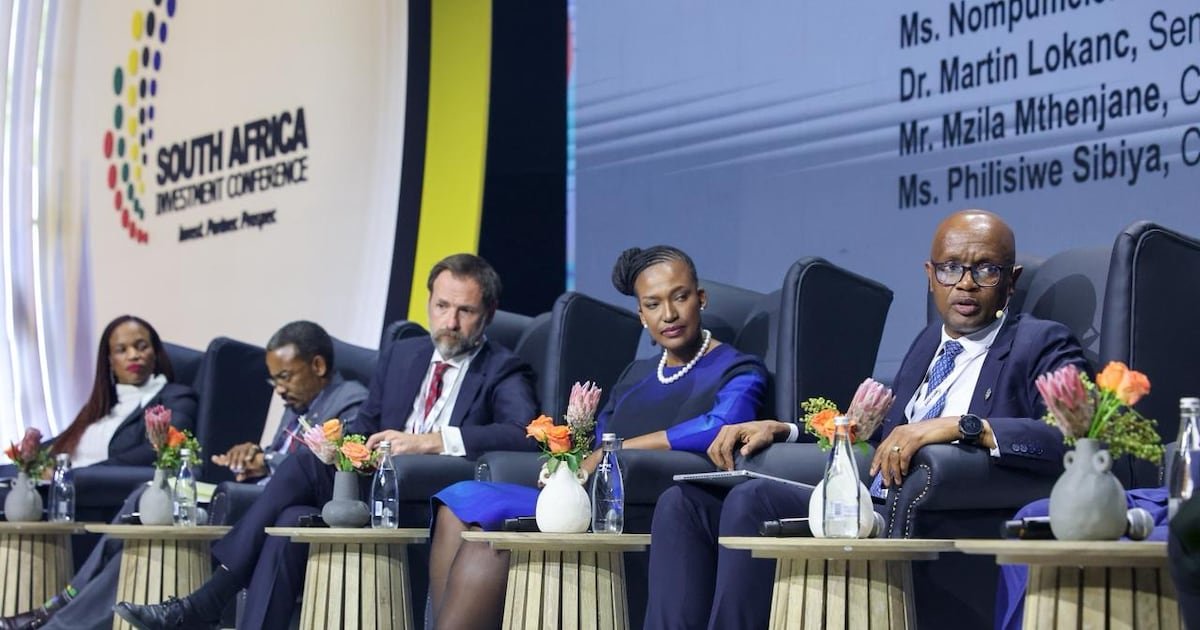
South Africa’s Role in Global Clean Energy: Harnessing Mineral Resources for Industrial Growth
Introduction
South Africa is strategically positioned at the heart of the global shift towards clean energy, advanced manufacturing, and digitalisation, thanks to its rich mineral resources. As the competition for clean technology supply chains sharpens, South Africa faces both an opportunity to establish new industrial value chains and an obligation to ensure stable policies, robust infrastructure, and investment-ready projects that convert geological potential into job creation.
Beneficiation: A Pathway to Economic Growth
Recently, the US ambassador to South Africa, L. Brent Bozell III, suggested that American companies might explore local beneficiation initiatives in the region. This strategy could bolster domestic industrial capacity and employment opportunities, transforming minerals into crucial industrial materials such as concentrates, alloys, and battery precursors. Upgrading raw minerals can significantly enhance revenue by moving towards higher-margin, processed products, aligning well with South Africa’s Critical Minerals & Metals Strategy (2025).
The Importance of Local Beneficiation
Under this strategy, prioritising local beneficiation and downstream industrialisation is vital. Countries that maintain control over their mineral resources during midstream processing gain significant geopolitical leverage, establishing themselves as key players in global value chains.
South Africa’s Critical Mineral Resources
Few nations are as crucial as South Africa for specific mineral inputs. The Bushveld Complex, for example, harbors approximately 63 million kilograms of platinum group metals (PGMs), accounting for the majority of the world’s total supply. This makes South Africa essential for catalytic converters, hydrogen technology, and specialized industrial applications.
Key Minerals Supporting the Energy Transition
The Critical Minerals & Metals Strategy identifies PGMs, manganese, vanadium, and rare earth elements as cornerstones of a robust energy transition industrial framework. The goals include enhancing geoscience mapping, advancing beneficiation, fostering research and development, and ensuring stable infrastructure and energy security.
Manganese: A Critical Player in Metal Production
Manganese is crucial in steel production and emerging battery technologies. South Africa is the largest global producer with reserves estimated at 560 million tonnes, mainly from the Kalahari Manganese Field. Despite accounting for a third of global output, domestic beneficiation remains minimal, a gap the strategy aims to bridge.
Vanadium and Chrome: Challenges and Opportunities
Similarly, South Africa stands out as a primary producer of vanadium, with integrated capabilities ideal for the growing vanadium redox flow battery market. The nation is also a top exporter of chrome ore, vital for stainless steel manufacturing. However, challenges such as power instability and rising costs have led producers to prefer raw ore exports rather than higher-value alloys, demonstrating the need for a reliable energy grid to enhance local beneficiation.
Titanium Mineral Sands: A Valuable Resource
Beyond traditional minerals, titanium mineral sands play a crucial role. Richards Bay Minerals is a leading producer of ilmenite, rutile, and zircon. Initiatives like the Nyanza Light Metals project aim to upgrade ilmenite to titanium dioxide pigment, significantly increasing its market value. A sustainable approach aligning power, logistics, and capital can elevate South Africa’s position in advanced material production.
Rare Earth Elements: Emerging Potential
Rare earth elements (REEs) present significant growth opportunities, with South Africa’s Steenkampskraal deposit among the highest-grade resources worldwide. Funding for concentrator capacity indicates intent to support local value chain development amid increasing global demand. Geopolitical dynamics are also shifting, with US defence procurement rules anticipated to curtail reliance on Chinese REEs, highlighting the need for alternative supply chains.
Investment and Infrastructure Development
The approval of the Critical Minerals & Metals Strategy marks a pivotal step towards a balanced approach in scaling exploration, enhancing local beneficiation, and fostering regulatory harmonisation. Collaborative efforts among the Department of Mineral & Petroleum Resources, Mintek, and the Council for Geoscience aim to increase exploration shares and develop processing hubs.
Challenges Ahead: Infrastructure and Policy
Yet, critics point to “fragile foundations” like power shortages, logistical constraints, and inconsistent policies, which could hinder progress. To avoid a pattern of exporting raw materials while missing out on value creation, significant reforms in energy markets, transportation infrastructure, and regulatory processes are essential.
Regional Integration and Global Positioning
As global supply chains undergo transformation, South Africa must adopt an outward-looking strategy to encircle regional integration, securing its place in electric vehicle and grid storage sectors while guarding against becoming just a transit point for other nations’ supply strategies.
Conclusion: A Future of Opportunity
With a proactive Critical Minerals & Metals Strategy, flagship projects underway, and a robust hydrogen roadmap, South Africa is poised to transition from merely exporting minerals to actively manufacturing the innovative technologies of the future. By establishing a cohesive, bankable pipeline supported by reliable infrastructure and efficient regulations, South Africa can transform into a key player in the global industrial landscape.
