

Kenya’s Economic Dynamics: New Trade Agreements with China and the U.S.
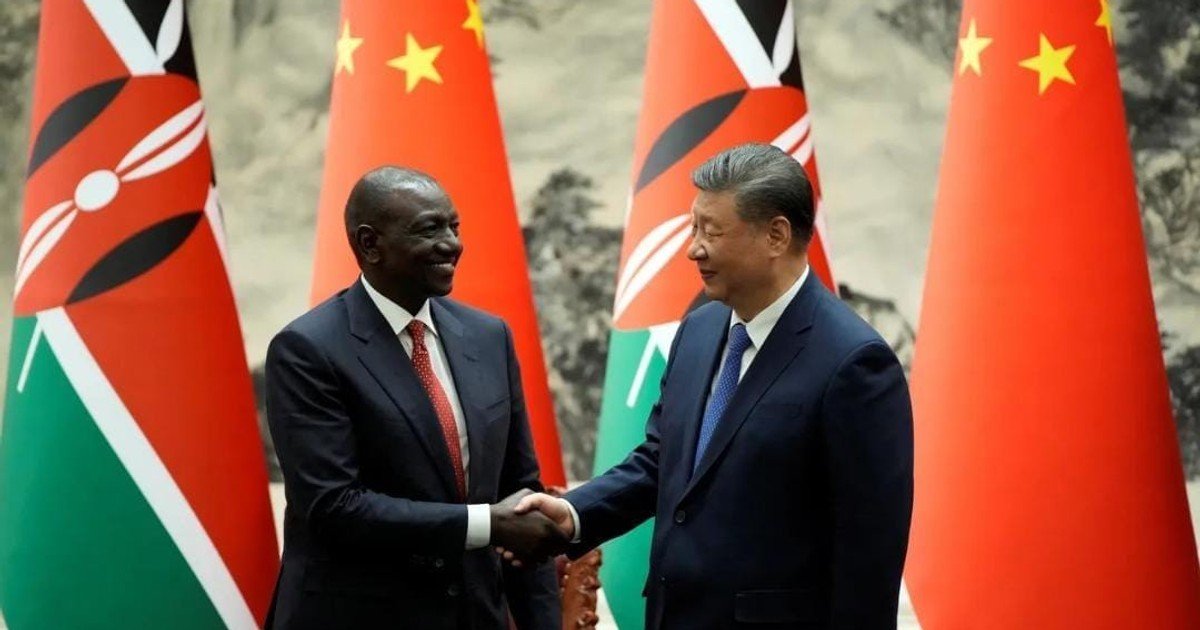
Kenya is embracing promising new trade agreements that significantly elevate its economic landscape. Recent agreements with China, highlighted in the South China Morning Post, facilitate an "early harvest" Economic Partnership Agreement. This agreement grants Kenyan exports, including tea, coffee, and avocados, duty-free and quota-free access to the lucrative Chinese market starting in May. This strategic development is set to enhance Kenya’s export earnings and reduce the substantial trade imbalance it faces with China, where imports far exceed exports.
Strengthening Economic Ties with China
During recent discussions in Nairobi, President William Ruto emphasized the importance of these agreements, alongside newly established memorandums regarding agriculture and infrastructure. He characterized them as a vital boon for the national economy. A notable milestone was achieved as Han, a high-ranking official, oversaw the first shipment of Kenyan agricultural products under this zero-tariff framework, a significant achievement that broadens Kenya’s export horizons. This initiative aligns with Beijing’s commitment to a zero-tariff policy for 53 African nations, commencing May 1.
Expanding Collaborations with the United States
While deepening ties with China, Kenya is also strengthening its relationship with the United States through a series of agreements across various sectors, including healthcare, minerals, and trade. In December 2025, Kenya signed a landmark five-year health partnership with the U.S., valued at over $1.6 billion, aimed at fortifying the country’s healthcare infrastructure. Additionally, Kenya is exploring partnerships in mineral exploration and processing to bolster local value chains and secure essential supply lines.
In parallel, negotiations for a broader trade and investment agreement with the U.S. are resuming, aiming to enhance market accessibility and diminish trade barriers.
Infrastructure Development and Regional Connectivity
Beyond trade agreements, China’s investments are pivotal in propelling Kenya’s infrastructure growth. Significant projects include the extension of the Standard Gauge Railway (SGR) from Naivasha to Malaba and the construction of the Rironi-Mau Summit Highway, both integral to improving regional connectivity. The $5.4 billion SGR extension is projected to link the Port of Mombasa to landlocked countries such as Uganda, Rwanda, South Sudan, and the Democratic Republic of Congo, greatly enhancing East Africa’s trade corridors.
Navigating Economic Opportunities Amid Debt Challenges
Despite these advancements, analysts highlight a delicate balancing act. Kenya currently spends approximately $1 billion annually to service Chinese debt, raising concerns about long-term sustainability even amid ongoing investments. David Shinn, a former U.S. ambassador to Kenya, stated, "Kenya considers the completion of the railway to Kampala, Uganda, critical to its financial success."
Leveraging Global Rivalries for National Benefit
China views Kenya as a strategically significant ally and is motivated to foster a strong partnership as it competes with the U.S. for influence across Africa. This dynamic rivalry is increasingly beneficial for African nations, as governments leverage this competition to secure favorable trade agreements, attract infrastructure investments, and diversify their partnerships. Tim Zajontz, an interim professor at the University of Freiburg, noted, “Kenya is punching above its weight because the great powers are competing for exclusive partnerships with Nairobi.”
In conclusion, Kenya’s proactive approach in expanding trade agreements with both China and the United States is shaping its economic future, while also navigating challenges such as debt management. As the nation capitalizes on its strategic importance, it is poised to emerge as a key player in the global economy.
