

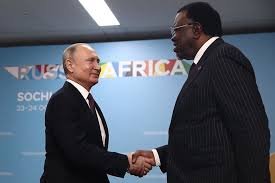
Russia’s Strategic Engagement in Namibia: Expanding Influence in Southern Africa
Russia is intensifying its efforts in Namibia, aiming to establish a robust foothold in Southern Africa. This strategic engagement marks a shift from mere economic ties to a comprehensive presence across various critical sectors.
Broadening Economic Ties
Moscow is targeting key industries such as energy, mining, logistics, agriculture, education, healthcare, and defense. This broad approach enables Russia to influence not only contracts but also infrastructure, workforce training, and state decision-making processes over time.
The Importance of Uranium
One of the most significant factors driving Russia’s interest in Namibia is uranium. As one of Africa’s leading producers with over 400,000 tons in reserves, Namibia holds roughly 7% of the world’s known uranium resources. Russia’s engagement transcends mere resource extraction; it aims to build a dependency through nuclear technologies, regulatory support, and training, embedding itself within Namibia’s energy sector.
This dependency presents a challenge for the United States, as it wrestles with the implications of Russia gaining access to essential resources critical for the global nuclear fuel cycle and enhancing its influence in a region vital for international supply chains.
From Economic Engagement to Political Leverage
Russia’s ambitions in Namibia are not merely about short-term gains but encompass long-term goals, including:
- Political Leverage
- Presence in Sensitive Sectors
- Displacing U.S. Influence
Unlike typical diplomatic engagements, Russia is investing in long-term partnerships that allow for:
- Technology transfers
- Specialist training
- Technical support
- Institutional engagement
This holistic approach solidifies Russia’s image as a reliable partner, potentially reducing resistance often seen with overt military or political interventions.
Why Namibia Matters to Russia
Namibia is an ideal candidate for Russia’s expansion strategy, offering:
- Rich Natural Resources
- Access to Atlantic Coast
- Stability in Governance
- Desire for Diverse External Partnerships
Thus, Russia can not only sustain its presence in Africa but also create lasting ties through economic, technological, and institutional integration, far surpassing surface-level diplomatic engagements.
Strategic Depth: Logistics and Resource Access
Russia’s collaboration with Namibia provides access to the Atlantic coast, enhancing its regional logistics capabilities. Control over maritime routes and port access bolsters Moscow’s influence further while giving it strategic leverage over critical resources like uranium. This positioning enhances Russia’s role in global energy dynamics, presenting a sensitive scenario for U.S. interests.
Institutional Entrenchment
Russia’s strategy involves more than just contracts. It includes:
- Training local specialists
- Offering technical assistance
- Participating in regulatory frameworks
Such tactics embed Russia into Namibia’s governance structures, significantly complicating any potential shift to another partner in the future.
Strategic Implications for the U.S.
Russia’s activities in Namibia signal a growing challenge for U.S. influences in Southern Africa.
- U.S. Influence Restrictions: As Russia’s presence becomes more robust and structurally resilient, the balance of power is at risk.
- Long-Term Systemic Influence: Competition shifts from short-term transactions to sustaining long-term influence that can effectively reshape regional dynamics.
The Russia vs. China Dynamic in Namibia
Both Russia and China are expanding their influence in Namibia but through different methods. China’s approach is broad and economically driven, focusing primarily on trade and infrastructure, while Russia’s model focuses on developing strategic ties and gaining leverage in sectors that could translate into political influence.
This different emphasis means that while China is often the visible commercial powerhouse, Russia’s strength lies in technical areas where deeper dependency can be fostered, such as uranium and nuclear cooperation.
Who is Lobbying for Russian Influence in Namibia?
There isn’t a singular pro-Russian lobby in Namibia; rather, several political elites and influential governmental bodies support enhanced cooperation:
Key Political Figures
- Netumbo Nandi-Ndaitwah: Advocates for cooperation across multiple sectors including energy and defense.
- Selma Ashipala-Musavyi: Co-chairs the Russia–Namibia Intergovernmental Commission, focusing on crucial discussions regarding trade and nuclear cooperation.
The Role of Supporting Networks
- SWAPO Elite: With historical ties to the Soviet Union, members within this party continue to advocate for close relations with Russia.
- Government Structures: Institutions such as the Russia–Namibia Intergovernmental Commission drive investment agreements and sector cooperation.
Opposition to Russian Presence
Opposition to Russia’s influence in Namibia is fragmented and not uniformly organized. Various sectors express concerns over issues like:
- Sovereignty and Resource Control: Fears of dependency on foreign entities, particularly regarding uranium.
- Lack of Transparency: Calls for clear governance in foreign agreements and transparency in partnerships.
Political Opposition
- Popular Democratic Movement (PDM): This political party pushes for greater transparency in foreign deals aimed at minimizing the risks of opaque agreements.
Civil Society Critique
- NGOs and Media: Advocate for resource sovereignty and governance standards, focusing on issues surrounding foreign control.
Strategic Conclusion
Russia’s engagement in Namibia illustrates a calculated approach to expand its influence without overt confrontation. By embedding itself within critical sectors like uranium and logistics, Russia not only secures access to resources but also establishes mechanisms of dependency that might endure even under challenging geopolitical scenarios.
For the United States and its partners, facing the dual influences of Russia and China in Namibia requires an adaptive strategy, acknowledging that these nations deploy distinctly different, yet equally effective, tactics to secure their interests in Africa.
To learn more about Russia’s strategic pursuit in Africa, explore resources on geopolitical analysis and international relations here.
This article synthesizes comprehensive insights into Russia’s deepening relationship with Namibia while addressing relevant geopolitical tensions, aimed at enhancing digital engagement through SEO-optimized narratives.
