

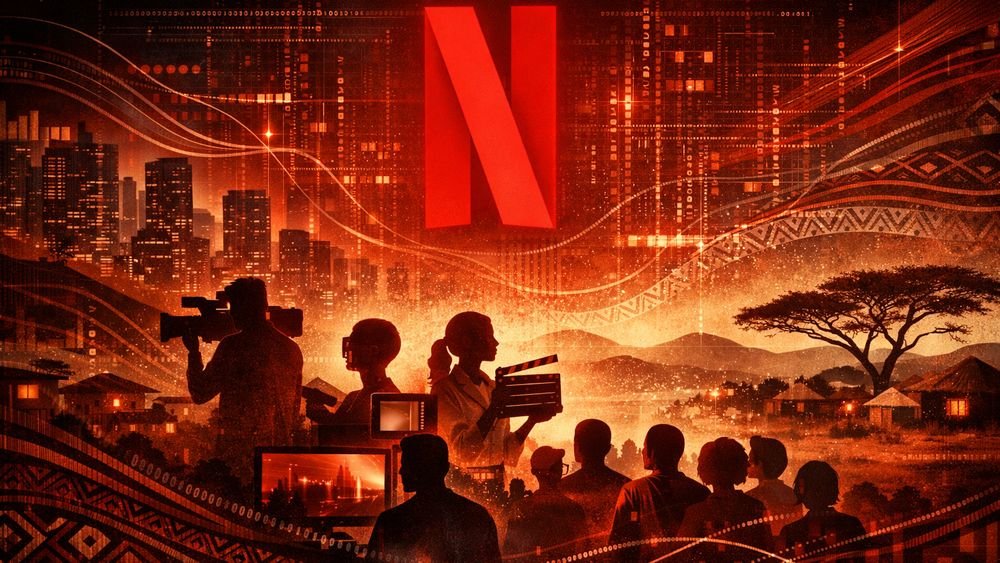
Netflix and the Evolution of Local Storytelling in South Africa
As South Africa commemorates the 10th anniversary of Netflix’s entry into its market, the conversation around the impact of streaming services on local narratives gains momentum. Students from the University of the Western Cape (UWC) are posing critical questions: Has Netflix bolstered local storytelling, or has it fostered a new wave of digital neo-colonialism? This inquiry served as the foundation for an academic symposium that took place from January 27 to January 28, 2026, focusing on how global streaming platforms are transforming culture, identity, and media power dynamics in South Africa.
The Current Landscape of Media in South Africa
The symposium, organized by the UWC Chair in Media Inclusion and Diversity, attracted both South African and international scholars keen to dissect the volatility of the media landscape. This discussion comes on the heels of Canal+’s recent $3.2 billion acquisition of MultiChoice, the owner of DStv and Showmax. The implications of this deal extend beyond the influence of a single platform, hinting at the establishment of a potential transnational media monopoly.
Understanding Media Inclusion and Diversity
Orchestrated by Associate Professor Sisanda Nkoala from UWC’s Linguistics Department and Professor Leo van Audenhove of Vrije Universiteit Brussels (VUB), the initiative seeks to tighten the research bond between South Africa and Belgium while tackling issues of media inclusion in the Global South. In her opening address, Prof. Nkoala encapsulated the symposium’s essence: “We are asking the tough questions: Who is seen, who is heard, and who is being ‘coded out’ of our contemporary cultural archive?”
The Impact of Netflix on South African Content Production
Before Netflix’s introduction, South African audiences mainly relied on traditional broadcasters and limited video-on-demand services like Showmax, which launched in 2015. Netflix’s subscription-based model and extensive library of original programming established a new paradigm for content consumption and production.
In the last decade, Netflix has transitioned from a platform dominated by international titles to one that actively commissions local productions such as Queen Sono, Blood & Water, and How to Ruin Christmas. While this has broadened the global reach of South African stories, it has also sparked critical discussions surrounding representation, cultural authenticity, and the control over narratives.
Addressing Concerns of Centralization in Media Power
The conversation at the symposium highlighted the ongoing transformations within the streaming sector. Prof. van Audenhove underscored the necessity of understanding how global streaming trends manifest in South Africa, particularly in light of Canal+ entering the market. This acquisition brings forth new inquiries about production, representation, and cultural sovereignty, especially given Canal+’s dominance in Francophone Africa, which could lead to a pan-African media powerhouse.
Challenges of Accessibility in the Digital Era
Despite the increase in content availability and platforms, the symposium also focused on the "hard" infrastructure barriers that impede media access. Keynote speaker Axelle Asmar from VUB emphasized the issues of high data costs and uneven broadband access, which make the streaming landscape inaccessible for many South Africans, especially those in rural communities. “We are not just looking at content; we are looking at the ‘hard’ infrastructure of access,” remarked Prof. Nkoala, reiterating the urgency of addressing who can participate in this digital era.
The Future of South African Media Research
The symposium signals the beginning of a sustained research initiative aimed at elevating South African perspectives in international media conversations. A dedicated panel has already been accepted for the International Communication Association (ICA) conference scheduled in Cape Town this June.
Moreover, the UWC Chair in Media Inclusion and Diversity is working on cultivating emerging scholars, including Carin Hector, a second-year master’s student, who presented her research titled The South African algorithm: Race and gender. Her work epitomizes the Chair’s broader objective of empowering young researchers to analyze the intersections of language, identity, and algorithms in South Africa’s rapidly evolving digital media landscape.
As South Africa navigates this complex terrain, ongoing discussions about the role of streaming platforms like Netflix will undoubtedly shape the future of local storytelling and cultural representation.
For more insights into media diversity and inclusion, consider visiting Media Inclusion and Cultural Representation.
