

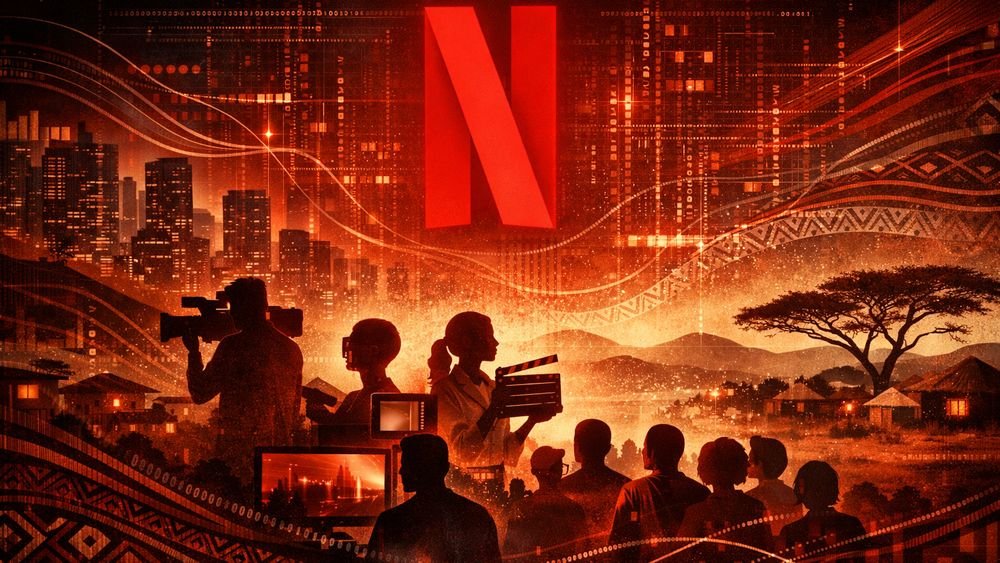
Netflix in South Africa: A Decade of Change and Cultural Debate
As South Africa approaches the tenth anniversary of Netflix’s launch in the country, the impact of the global streaming giant on local storytelling comes into sharp focus. Students at the University of the Western Cape (UWC) recently explored whether Netflix has bolstered South African narratives or rather entrenched a form of digital neo-colonialism.
The Symposium: A Platform for Dialogue
Hosted from January 27 to 28, 2026, the symposium at UWC brought together researchers from South Africa and beyond to analyze how international streaming platforms are altering culture, identity, and power dynamics within the South African media landscape. This timely discussion occurs amid significant industry shifts, particularly following the acquisition of MultiChoice—owner of DStv and Showmax—by the French media group Canal+ for $3.2 billion.
A New Transnational Media Landscape
The acquisition raises critical questions regarding the influence of global media providers. Researchers indicate that this shift might give rise to a transnational media monopoly, transforming conversations around local content production and distribution.
Academic Collaboration for Cultural Inclusion
The symposium was organized by the UWC Chair in Media Inclusion and Diversity, part of a collaborative research project spearheaded by Associate Professor Sisanda Nkoala from UWC’s Linguistics Department and Professor Leo van Audenhove from Vrije Universiteit Brussels (VUB). The project aims to strengthen research collaborations between South Africa and Belgium while addressing critical issues of media inclusion within the Global South.
A Shift in Content Consumption
Before Netflix’s arrival, South African audiences primarily relied on traditional broadcasters and a few limited video-on-demand options, such as Showmax, which was launched in 2015. Netflix introduced an innovative subscription-based model that reshaped content consumption and production.
Over the past decade, Netflix’s South African presence has evolved from a catalog filled predominantly with international titles to a balanced approach that actively commissions local productions. Shows like Queen Sono, Blood & Water, and How to Ruin Christmas have gained not only national but also international attention. This has sparked debates about representation, cultural authenticity, and narrative control.
The Transformation of Streaming in South Africa
As Netflix has driven the pace of the streaming revolution, the sector is now undergoing profound transformations. Professor van Audenhove emphasizes the need to better understand how global streaming trends play out in South Africa compared to Europe.
The Impact of Canal+ Acquisition
The acquisition of MultiChoice raises new concerns regarding production, representation, and cultural sovereignty. Researchers worry that Canal+’s dominance in Francophone Africa may lead to the creation of a pan-African media empire that could either enhance or diminish the diversity of voices onscreen. Smaller independent producers, crucial to South Africa’s media ecosystem, may find themselves marginalized in this consolidated landscape.
Access and Infrastructure Challenges
Despite the emphasis on content, the symposium underscored the importance of the "hard" infrastructure of media access. Keynote speaker Axelle Asmar from VUB highlighted that high data costs and inconsistent broadband availability limit the streaming boom’s reach, especially in rural areas.
"Beyond content, we must examine the ‘hard’ infrastructure of access," Prof. Nkoala noted. "Limited broadband penetration and high data costs persist as barriers. Our role is to inquire who is being seen, who is heard, and who is being ‘coded out’ by algorithms."
Future Research Initiatives
The symposium marks the beginning of a long-term research effort aimed at amplifying South African voices in global media discussions. A dedicated panel from UWC has already secured a slot for the International Communication Association (ICA) conference scheduled in Cape Town this June.
Additionally, the UWC Chair in Media Inclusion and Diversity is focused on nurturing emerging scholars. One of these is Carin Hector, a second-year master’s student whose research, titled The South African Algorithm: Race and Gender, reflects the Chair’s mission to empower young academics to explore the intersections of language, identity, and algorithms within South Africa’s dynamic digital media landscape.
Conclusion
As Netflix continues to impact the South African media landscape, the ongoing discussions around representation, access, and cultural sovereignty remain vital. The future of local storytelling hinges on how these global platforms choose to engage with the rich tapestry of South African narratives.
For more insights on media impact and streaming trends, visit Netflix Official Site and Canal+.
