

Addressing Land Expropriation in South Africa: Challenges and Opportunities for Black Farmers
By Ed Stoddard
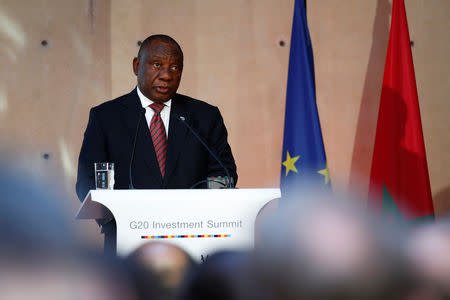
EDENVILLE, South Africa (Reuters) – The land reform debate in South Africa has gained renewed focus this year as Nick Serfontein, a farmer, engaged with President Cyril Ramaphosa regarding the government’s plans for land expropriation without compensation. This initiative aims to tackle rural poverty and the historical injustices faced by black farmers.
The Land Expropriation Context
Since the end of apartheid in 1994, attempts to redistribute land from white farmers to black South Africans have faced significant obstacles. The ruling African National Congress (ANC) is preparing for potential challenges in the next election from parties advocating for complete nationalization of land. In an effort to calm investor fears, President Ramaphosa has reassured that property rights will be safeguarded, and he has emphasized that South Africa does not intend to follow Zimbabwe’s troubling model of land seizures that led to economic turmoil.
The Role of Nick Serfontein and Sernick Group
Nick Serfontein, who leads the Sernick Group specializing in large-scale cattle production, is at the forefront of a model that seeks to empower black farmers. In 2016, he began acting as a financial intermediary for black farmers, enabling them to access loans even without land to use as collateral. His strategy involves collaborating with the Land Bank, a state institution designed to support agricultural initiatives.
A Unique Lending Approach
The Land Bank made significant loans through Serfontein, offering 25 million rand ($1.7 million) in 2016, 50 million rand in 2017, and estimates of 100 million rand this year. Total loans by the Land Bank currently exceed 40 billion rand, largely benefitting white farmers. According to TP Nchocho, CEO of the Land Bank, Serfontein’s approach represents an "anchor farm model" that leverages the resources of established farmers to give emerging farmers access to necessary financial support.
Realizing Limitations of Current Models
Despite its successes, Serfontein acknowledges that his financial model is not a comprehensive solution to the broader issues facing black farmers. Over 60 black farmers now borrow funds from Serfontein to raise cattle on his feedlots, but the lack of title deeds remains a significant barrier. Solomon Mosoeu, a 55-year-old farmer leasing 640 hectares from the government, shares his struggle for financial independence without ownership.
The Importance of Title Deeds
As farmers like Mosoeu call for more support and access to land ownership, the ANC is exploring various strategies, including unlocking value in communal and state-owned lands. Recent discussions in parliament have suggested the potential for constitutional amendments to facilitate land expropriation without compensation, though any definitive decisions will wait until post-election. The far-left Economic Freedom Fighters (EFF) continue to criticize ANC efforts as insufficient reforms that merely entrench "white monopoly capital."
Wandile Sihlobo, head of research at the Agricultural Business Chamber in South Africa and a member of the advisory panel to the president, emphasizes the necessity of title deeds. "Capital is the key to progress or increased production. Without capital, we will not be able to see notable success," he stated.
Conclusion
The challenge of land ownership and access to finance for black farmers in South Africa underscores the complex legacy of apartheid. Collaborative strategies, such as those implemented by Serfontein, provide crucial stepping stones toward empowerment, yet the ultimate goal of equitable land distribution requires deep reflection and systemic change.
For further insights into agriculture and land reform in South Africa, you can explore resources from Reuters and Agricultural Business Chamber.
This article aims to provide a detailed overview of the land expropriation discussion in South Africa, focusing on the roles of prominent stakeholders and the obstacles faced by emerging farmers.
