

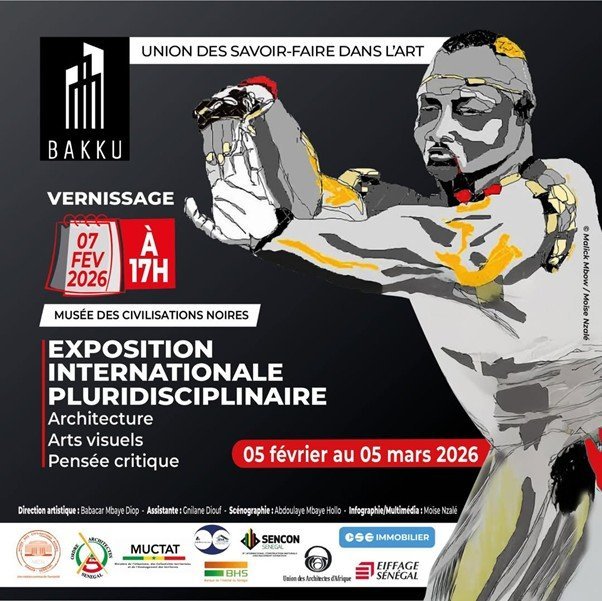
The Significance of the Bàkku Exhibition at the Museum of Black Civilizations
Since its inception, the Museum of Black Civilizations has positioned itself as a vital hub for cultural exploration and reflection on the African experience. Among its offerings, the Bàkku exhibition stands out by engaging audiences with African critical and aesthetic thoughts as applied to architecture and visual arts. This initiative transcends traditional disciplinary boundaries, offering fresh perspectives on urban and cultural forms across the continent.
An Intellectual and Aesthetic Movement
The term Bàkku, rooted in Senegalese culture, signifies more than just an exhibition; it embodies an intellectual and aesthetic movement aiming to reclaim African architectural identity and move away from the urban chaos influenced by external models. This movement emphasizes the creation of spaces that resonate with African cultural and social realities.
Bringing together insights from architects, artists, and thinkers across approximately twenty African nations, the Bàkku exhibition showcases the diverse cultural assets of the continent. The display features photographs, models, sculptures, and visual arts, spotlighting notable examples such as the historic mosque of Dioulassaba in Burkina Faso and alabaster sculptures that engage with form, material, and memory.
The Call for Authentic African Architecture
According to the curators, Bàkku transcends aesthetic appeal; it is a critical call to rethink African architecture. Artistic director Babacar Mbaye Diop highlighted that Bàkku “is a call to return to African architecture that reflects us,” stressing the need for built environments that consider the unique social, climatic, and cultural contexts of the continent.
This discourse gains momentum against the backdrop of rapid urbanization in Africa. Demographic trends indicate that by 2050, over one billion people will inhabit urban areas, presenting significant challenges in planning, infrastructure, and sustainability. The Bàkku exhibition explores not only how architecture can satisfy the material necessities of African city dwellers but also how it can embody their cultures, histories, and dreams.
Rethinking Paradigms of Creation and Urban Living
The exhibition is organized around several thematic axes, including memory, identity, architectural genesis, and the relationship between art and housing. These themes illustrate that architectural forms are laden with political, social, and symbolic meanings, reflecting both historical contexts and current challenges.
This dialogue is captured through diverse works and installations: some evoke traditional vernacular architecture, whereas others present innovative concepts that challenge the future trajectory of African cities. The aim is to stimulate collective reflection that transcends aesthetics, effectively reshaping paradigms of creation and urban existence. Furthermore, the Bàkku exhibition reinforces the museum’s commitment to serving as a venue for critical thought, aligning with its mission to democratize access to knowledge—a goal evidenced by increasing visitor attendance at the museum in recent years.
This article is structured for SEO optimization, utilizing headers for organization, keywords linked to relevant external resources, and a clear engaging narrative, ensuring it effectively communicates the importance of the Bàkku exhibition.
