

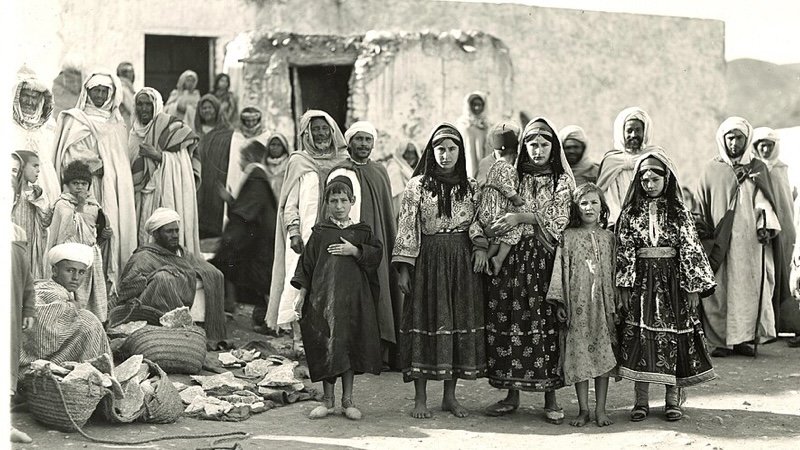
The Rich Heritage of Judeo-Amazigh Culture in North Africa
Introduction to Judeo-Amazigh Cultural Synthesis
The Jewish presence in North Africa represents one of the oldest and most enduring diasporas in Jewish history, with roots that potentially predate both Christianity and Islam in the region. While much scholarly attention has focused on urban Judeo-Arabic-speaking populations, there is a significant knowledge gap regarding the integration of Jewish communities with the Amazigh (Berber) populations, particularly in rural regions. These interactions have been crucial in shaping a unique cultural fabric, which deserves further exploration.
The mass emigration of North African Jewish communities between 1948 and 1967, coinciding with political instability, led to a significant cultural homogeneity loss. This demographic shift has made it increasingly important to document and preserve Judeo-Amazigh cultural elements, creating new contexts where these traditions can either thrive or fade away.
This article examines the cultural substratum of Judeo-Amazigh heritage through various analytical frameworks, including ethnomusicology, linguistics, regional case studies, and the evaluation of contemporary revival efforts. Such an analysis reveals distinctive cultural forms that reflect a fruitful interplay between these two communities, warranting recognition and celebration.
Ethnomusicological Perspectives on Judeo-Amazigh Traditions
Organological and Modal Systems
Shared musical traditions between Jewish and Amazigh communities in North Africa illustrate a striking convergence at multiple levels, including instrumental techniques and modal systems. Instruments such as the loutar (three-stringed lute), bendir (frame drum), and qaraqeb (metal castanets) demonstrate a rich collaborative spirit. The Andalusian nawba tradition was particularly influential, providing a common modal framework adapted by musicians from both communities.
Functional Parallelism and Social Context
Wedding music serves as a prime example of the structural parallelism in their respective musical traditions. Both communities organize elaborate wedding festivities, featuring unique elements like the henna night rituals that echo each other’s practices. Shared professional musicians and female singers crossing communal boundaries suggest a profound mutual understanding and cultural integration.
Work songs further illustrate shared musical practices, as both communities utilized similar melodies and rhythms in agricultural and labor contexts, demonstrating a collaboration across linguistic differences.
Contemporary Revival and Transformation
The mass migration of North African Jews resulted in the geographic dispersal of cultural practices. Early immigrants faced a cultural landscape dominated by Ashkenazi norms in Israel but, since the 1970s, have witnessed a revival of North African musical traditions emphasizing Amazigh influences. Contemporary artists are actively engaged in documenting and performing Judeo-Moroccan repertoire, ensuring that these rich traditions are not forgotten.
Judeo-Berber Languages: A Linguistic Investigation
Varieties and Geographic Distribution
Judeo-Berber languages are distinct variations of Berber dialects historically spoken by Jewish communities across North Africa. Different varieties, such as Judeo-Atlas and Judeo-Sous, exhibit unique phonological and lexical characteristics influenced by Hebrew and Aramaic due to religious differentiation.
Hebrew-Berber Linguistic Interaction
The interaction between Hebrew and Judeo-Berber languages is particularly notable in religious and social terminology. A significant portion of religious vocabulary derives from Hebrew while everyday speech remains predominantly Berber, showcasing a fascinating linguistic tapestry.
Regional Case Studies in Judeo-Amazigh Integration
High Atlas Mountain Communities
The High Atlas region represents a unique synthesis of Jewish and Amazigh communities. Economic interdependence characterized their relationship, with Jews specializing in crafts such as silver jewelry and trading, while Amazigh populations primarily engaged in agriculture and pastoralism.
Djerba: Continuity Amid Isolation
Djerba stands out as one of the few locations in North Africa where a Jewish community has persisted, offering a deep well of Judeo-Amazigh heritage through its unique practices. The island serves as a vibrant center for Jewish life despite significant demographic decline.
Comparative Religious Practices: Uncovering Syncretism
Saint Veneration
Both communities exhibit structural parallels in their veneration of saints. The shared practices around pilgrimage and rituals suggest a profound exchange of beliefs, transcending distinct theological frameworks while reflecting deep cultural interconnectedness.
Life Cycle Rituals: A Blend of Traditions
Wedding ceremonies exemplify the remarkable similarities and shared cultural significance between Jewish and Amazigh practices. Elaborate traditions surrounding marriage illustrate the blend of cultural identities while maintaining core communal values.
Contemporary Preservation and Revival: Navigating Heritage and Politics
Documentation and Academic Study
Efforts to document Judeo-Amazigh heritage have accelerated following the mass emigration, capturing the voices of elderly speakers and compiling linguistic materials. Major repositories like the University of Haifa host critical information for ongoing research.
Heritage Tourism and Site Preservation
Morocco has emerged as a center for Judeo-Amazigh heritage tourism, driven by political stability and recognition of Jewish heritage as integral to Moroccan identity. Jewish tourism in Morocco, particularly in cities like Essaouira and Marrakech, contributes to local economies while raising questions about cultural authenticity.
Conclusion: The Future of Judeo-Amazigh Heritage
The Judeo-Amazigh cultural substratum highlights the significant historical interactions that shape North African identity. The patterns of intercommunal synthesis enrich our understanding of cultural dynamics, showcasing how diverse communities can coexist and influence one another profoundly. As the landscape of global Jewish heritage changes, continuous efforts to document, preserve, and revitalize these traditions will be essential in ensuring that the legacy of Judeo-Amazigh culture endures for generations to come.
For further exploration of these topics, visit Laskier’s insights and Maddy-Weitzman’s analysis on cultural movements in North Africa.
For more information on regional studies, check Kenbib’s investigations.
By analyzing the intricacies of Judeo-Amazigh cultural heritage, we can appreciate and understand the broader implications for cultural memory and identity in complex sociopolitical landscapes.
