

Transforming West African Energy: The Aseng Gas Monetization Project
Deep within the waters off West Africa, intricate energy infrastructure is revolutionizing regional gas monetization strategies. These integrations capitalize on existing processing capabilities, enabling operators to meet the evolving demands of global liquefied natural gas (LNG) markets, which are shifting toward hub-based supply systems. With a focus on efficiency, stakeholders are prioritizing cost-effective approaches that enhance infrastructure utilization while limiting the need for expensive new developments. This tailored model fast-tracks project timelines and boosts economic yields, thanks to shared facilities and streamlined export operations.
Equatorial Guinea’s Strategic Gas Infrastructure Development
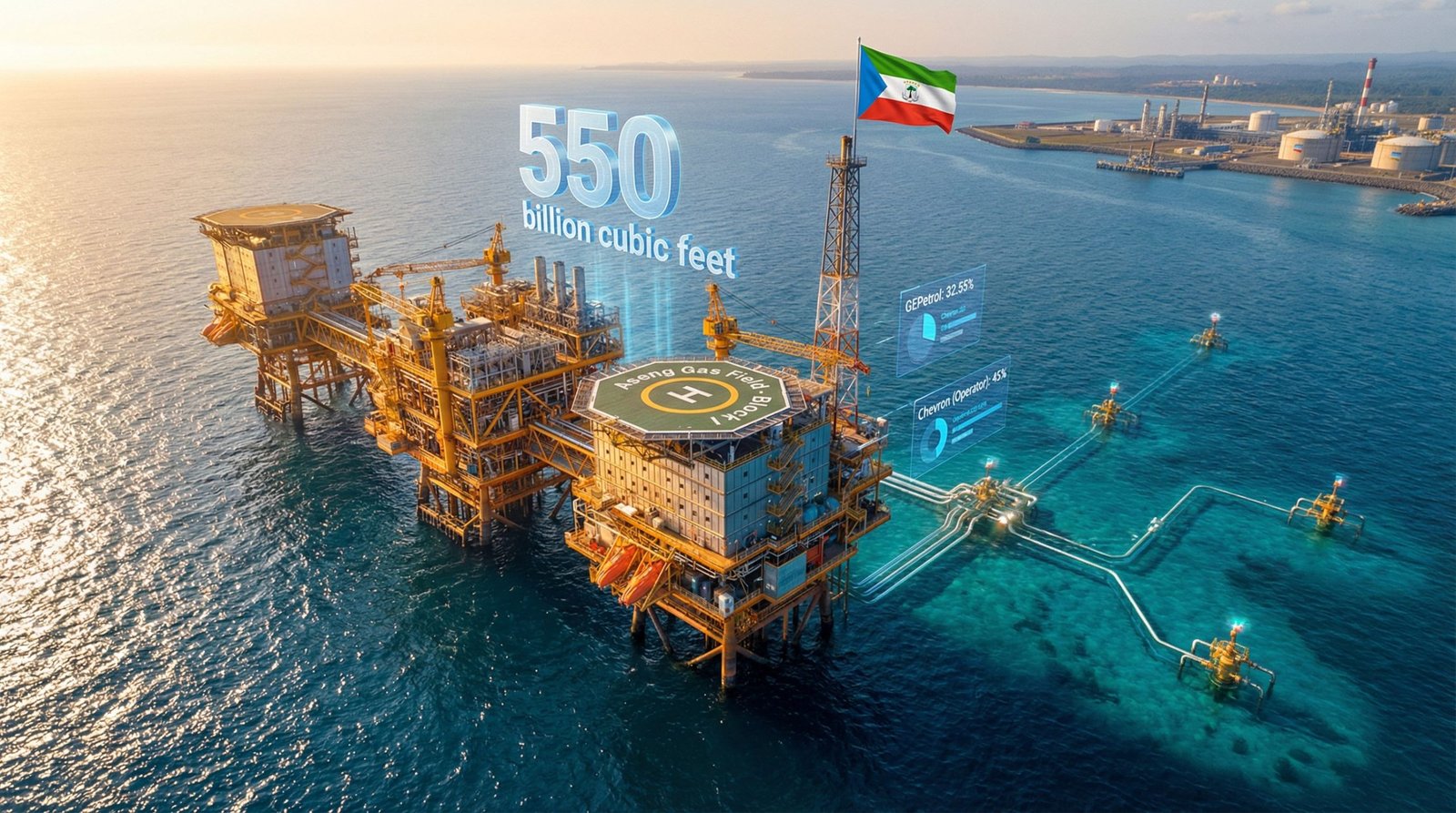
The Aseng Gas Monetization Project stands as a testament to this integrated approach, combining sophisticated subsea production systems with well-established midstream processing capabilities. Situated in the offshore Block I at depths of approximately 3,100 feet, this project encompasses an estimated 550 billion cubic feet of gas-condensate reserves, making it essential for regional energy security while exemplifying modern deepwater development practices.
Key Technical Insights
- Proven Reserves: 550 billion cubic feet of gas-condensate
- Water Depth: 3,100 feet in Block I offshore waters
- Integration: Capable of connecting seamlessly with Punta Europa LNG facilities
- Completion: Utilizes advanced subsea completion technologies
- Connectivity: Direct pipeline integration with established midstream infrastructure
The advantageous positioning of the Aseng field facilitates opportunities for cross-border collaboration, particularly with neighboring territories, enhancing shared infrastructure use that aligns with the broader Gas Mega Hub strategy designed to consolidate regional operations.
Economic Integration through Established Infrastructure
Leveraging existing midstream facilities fundamentally alters project economics compared to new developments. The Punta Europa LNG processing complex offers established capabilities in gas treatment, liquefaction, and exports, drastically reducing capital expenditures typically associated with new infrastructure construction. This collaborative model not only cuts overall development costs but also accelerates project timelines by streamlining engineering and construction processes.
Benefits of Capital Efficiency
- Reduced capital expenditure (CAPEX) via infrastructure sharing
- No necessity for new processing facilities
- Access to shared operational expertise and workforce
- Established regulatory pathways and permitting precedents
- Improved internal rate of return (IRR) due to expedited development timelines
This quick access to international LNG markets enables earlier revenue generation, a crucial advantage in the current landscape shaped by evolving global LNG demand dynamics.
Government Engagement and Project Viability
The shift in ownership structures shows a strategic alignment between international operators and national energy policies. GEPetrol, for example, increased its stake from 5% to 32.55%, underscoring a commitment to long-term success and enhancing local economic benefits.
| Entity | Previous Stake | Current Stake | Role |
|---|---|---|---|
| Chevron (Noble Energy EG) | ~60% | ~45% | Technical operator & development leader |
| GEPetrol | 5% | 32.55% | Local oversight & state involvement |
| Glencore | ~20% | ~12% | Marketing & trade specialization |
| Gunvor | ~15% | ~10% | Additional trading capabilities |
The Equatorial Guinea energy milestone achieved in September 2025 established comprehensive fiscal and commercial frameworks supporting sustainable development economics.
Components of the Fiscal Framework
- Competitive tax structures that favor international investment
- Balanced revenue-sharing models between state and private entities
- Incentives for sustained development
- Local content requirements to foster workforce development
- Technology transfer initiatives for skill enhancement
Implementing the Regional Gas Mega Hub Strategy
The Aseng Gas Monetization Project acts as a critical building block in Equatorial Guinea’s Gas Mega Hub development strategy. By consolidating various field developments around centralized processing infrastructures, the approach optimizes capital deployment and maximizes resource recovery across the broader regional portfolio.
Integrated Development Framework
- Aseng Field: Primary project in Block I
- Alen Field Extension: Development leveraging existing infrastructures in Block O
- Yoyo-Yolanda Cross-Border Field: Opportunities spanning multiple jurisdictions
- Exploration Blocks EG-06 and EG-11: Supporting future project expansions
- Alba Field Integration: Additional consolidation potential
This hub-centered development model enhances operational efficiencies, reducing individual project costs while improving reservoir management and extending facility lifespans.
Cross-Border Development Possibilities
The strategic location of the Aseng field facilitates integration with broader resources, particularly with cross-border projects like the Yoyo-Yolanda field, which requires sophisticated regulatory coordination but offers significant benefits in cost and efficiency.
Key Benefits of Regional Integration
- Shared subsea infrastructure minimizes development expenditures
- Coordinated reservoir management across borders enhances resource utilization
- Consolidated processing and export operations create operational efficiencies
- Strengthened negotiating position with international LNG consumers
- Reduced environmental impact through infrastructure synergy
Advanced Subsea Technologies and Infrastructure
Developing deepwater gas-condensate at depths of 3,100 feet necessitates cutting-edge subsea engineering solutions that balance economic performance with technical reliability. The Aseng Gas Monetization Project employs advanced technologies to optimize production, including high-spec subsea wellhead systems and modular designs for future expansion.
Infrastructure Requirements
- High-specification subsea wellhead systems
- Advanced subsea manifolds and pressure management solutions
- Flexible riser systems or rigid pipelines for fluid transport
- Comprehensive monitoring and control systems to ensure reliability
- Protection from corrosion through cathodic means
Technical Innovations
Utilizing modern subsea technologies ensures the project maintains cost-effectiveness and operational efficiency. Features include:
- Multi-well subsea manifold systems for optimized routing
- Real-time production optimization capabilities
- Integrated flow assurance systems for operational reliability
- Modular designs to support future logistical needs
Regional LNG Supply Dynamics
The Aseng Gas Monetization Project fortifies Equatorial Guinea’s place within global LNG supply infrastructures, ensuring production capabilities hold steady into the mid-2030s. The established processing networks facilitate immediate access to international markets, securing the country’s reputation as a dependable LNG supplier.
Strategic Market Positioning
- Continued LNG export capacity through mid-2030s
- Proven operational reliability and effective cargo delivery
- Access to both European and Asian markets through established channels
- Flexible production arrangements according to market fluctuations
Timely Investment and Development Milestones
The project follows a carefully planned timeline allowing for market adaptability. The Final Investment Decision set for March 2026 will pave the way for subsequent engineering and procurement phases, ensuring the project’s robustness in a dynamic market environment.
Key Milestones
- March 2026: Completion of Final Investment Decision
- Q2 2026: Commencement of detailed engineering and procurement
- Q4 2026: Final approvals and project initiation
- 2027-2028: Fabrication and installation of subsea infrastructure
- 2029-2030: Start of gas production and LNG exports
Broader Implications for West African Energy Development
The Aseng Gas Monetization Project sets a promising precedent for government-operator collaborations within West African energy initiatives. Its balanced ownership structure and infrastructure utilization offer a pathway to enhancing local economies while unlocking stranded gas resources.
Key Development Elements for Broader Application
- Effective government-operator partnership models
- Strategic sharing of infrastructure for efficient capital use
- Multi-field development approaches for resource optimization
- Commitment to technology transfer and workforce enhancement
Long-Term Energy Security Benefits
Continued LNG export earnings provide a foundation for economic growth and international collaboration, highlighting how natural resource development can strengthen economic stability and foster strategic partnerships.
Economic Development Impacts
- Sustained revenue supporting economic diversification
- Improved energy infrastructure fostering industrial growth
- Long-lasting effects of technology transfer and workforce training
Utilizing this integrated approach, the Aseng Gas Monetization Project not only marks a significant achievement for Equatorial Guinea but also lays a framework for the future of West African energy development.
For insights into ecological and economic efficiency in energy, explore current trends in gas and US natural gas forecasts.
