

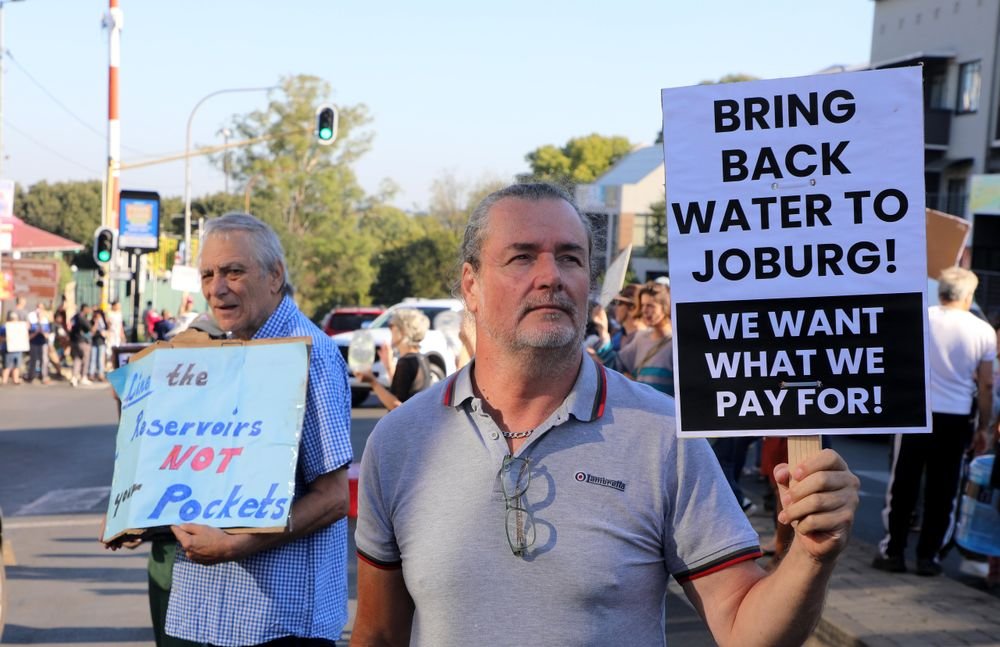
Build One South Africa (BOSA) Plans Legal Action Over Water Crisis

BOSA’s Call to Action Amid Water Crisis
Build One South Africa (BOSA) is gearing up to challenge the government in court, citing a deteriorating water crisis that infringes on citizens’ constitutional rights. This announcement was made during a Human Rights Day debate in Parliament by BOSA’s deputy leader, Nobuntu Hlazo-Webster.
Legal Rights to Water
Hlazo-Webster emphasized that “Section 27 of our Constitution guarantees that everyone has the right to have access to sufficient water,” asserting that this right is legally enforceable. She referred to the landmark ruling in Mazibuko v City of Johannesburg, which reinforced the government’s duty to ensure access to water.
Current Situation Across South Africa
Currently, many South Africans are facing severe water shortages and sporadic supply issues. “If the taps aren’t completely dry, then water throttling is implemented,” Hlazo-Webster stated, noting a striking resemblance to the ongoing electricity crisis. She accused the current administration of creating a “new form of systemic failure,” likening the current scenario of water shortages to past electricity outages.
Accountability Issues Within Government
BOSA attributes the crisis to unclear accountability across various government levels. Hlazo-Webster pointed out that responsibility seems to be shifting between different authorities. “The Minister of Water says it’s the job of municipalities, while municipalities say it’s the water boards,” she elaborated, highlighting the frustration felt by residents who are left without coherent answers.
The Epicenter of Crisis in Johannesburg
Specifically, Johannesburg has become the “epicenter” of this water crisis, suffering prolonged outages due to aging infrastructure and poor governance. BOSA has declared that, if the government fails to act, they will pursue legal action for “direct relief.” Details of this legal pursuit are expected to be unveiled before Human Rights Day.
Call for Cooperative Efforts
BOSA urges the government led by President Cyril Ramaphosa to avoid opposing the legal measures. “All efforts should be directed towards supplying clean water to every citizen,” Hlazo-Webster remarked, emphasizing the need for cooperative efforts rather than defensive actions.
Regional Agreements and Future Solutions
This legal threat coincides with South Africa’s ongoing attempts to secure long-term water cooperation agreements. Just recently, Water and Sanitation Minister Pemmy Majodina signed a revised treaty with Eswatini concerning shared water resources in the Komati River Basin. Majodina stated, “This is a project which started 33 years ago because we want to conserve and preserve water within the countries,” indicating the collaborative approach needed for sustained water access.
As nations work together, the broader implications of water security emerge, underscoring the universal necessity of clean water for life and health. “Without water, there is no life, no health,” affirmed Prince Lonkhokhela Dlamini of Eswatini, highlighting the critical importance of maintaining peace and cooperation between countries for shared water resources.
For more information about South Africa’s water management and legal actions, updates will be available as the situation progresses.
