

South Africa’s Automotive Industry Faces Pivotal Challenges Amidst Morocco’s Ascent
Beni Mellal – The automotive sector in South Africa is approaching a crucial turning point, with Volkswagen Group Africa highlighting that a lack of decisive policy changes could jeopardize thousands of jobs and future manufacturing investments.
Morocco Surpasses South Africa in Vehicle Production
In a significant shift, Morocco has surpassed South Africa to become the leading vehicle producer on the continent, fundamentally altering the landscape of Africa’s automotive industry. This change is attributed to Morocco’s strategic policies and competitive advantages in manufacturing.
Concerns from Volkswagen
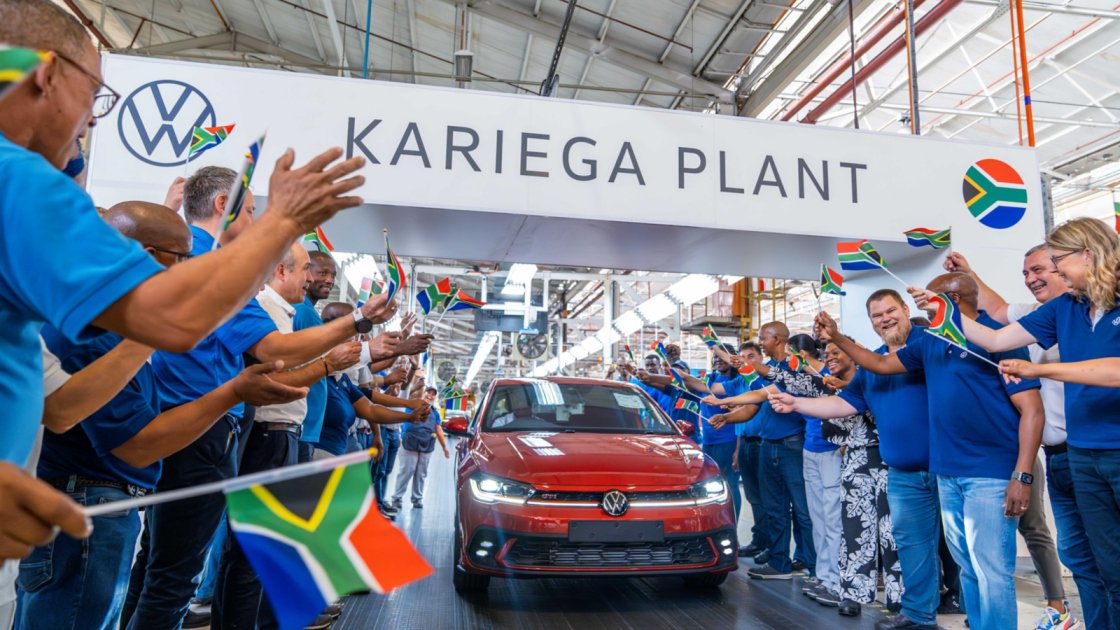
Volkswagen has voiced serious concerns about the future viability of its Kariega manufacturing plant, which supports over 4,000 jobs directly and countless others within the broader automotive supply chain. The German car manufacturer has invested more than $538 million since 2011, including a planned $210 million upgrade in 2024 for a new SUV set to launch in 2027. However, Volkswagen asserts that the current policy framework in South Africa is inadequate.
“2026 will be a make-or-break year for Volkswagen in South Africa,” warned Martina Biene, Chairwoman of Volkswagen Group Africa, during the third annual Volkswagen Indaba. She emphasized that decisions about significant future investments are now being evaluated on a global scale, stating, “Words without action are not leadership – they are negligence.”
Wider Manufacturing Trends
Volkswagen’s apprehensions are consistent with trends seen across the manufacturing sector, where several major automakers are reconsidering their positions within South Africa. For instance, Nissan recently ceased local manufacturing activities and divested its Rosslyn plant to Chery, putting an end to the production of its Navara pickup.
While Chery has committed to retaining most of Nissan’s workforce, the uncertainty surrounding full employment highlights broader instability in the industry. There’s growing concern that South Africa could be losing its strong manufacturing base to nations like Morocco, which offer clearer incentives and stronger growth prospects.
Industry Inspections and Policy Implications
Media outlets in South Africa recognize that the country’s automotive model is more than just experiencing cyclical pressures; it is in structural decline. A critical factor is the slowdown in transitioning to new energy vehicles (NEVs), an area where South Africa’s policies lag behind global markets.
Currently, the national NEV framework is overly focused on battery electric vehicles, which Biene argues are not affordable or suitable for the majority of African consumers. “We need a broader definition of new energy vehicles,” she stated, emphasizing the necessity for hybrids and transitional technologies to remain competitive.
The State of Production and Imports
South Africa’s automotive industrial complex is ‘cooked’
The repercussions of these trends are already visible. In 2025, South Africa produced nearly 600,000 vehicles, significantly below the one million needed to sustain a competitive environment. Currently, imports account for approximately two-thirds of new vehicle sales, diminishing the incentives for local manufacturing.
With rising EU carbon penalties impacting export orders, Volkswagen has reported a notable reduction in its European vehicle orders. In 2006, 56% of vehicles sold in South Africa were produced domestically, but this figure has now fallen to around 33%, with imports dominating the market.
Experts caution that even basic vehicle assembly increasingly relies on imported components, weakening local supply chains and complicating long-term investment in domestic production capacity.
Morocco’s Competitive Edge
Recently, Morocco has gained recognition for exceeding South Africa in vehicle production totals, reaching an impressive one million units annually. This achievement is a result of favorable industrial policies, such as extended corporate tax exemptions and competitive labor costs, alongside a commitment to align with European electrification standards.
“Headquarters are not merely comparing South Africa to previous years,” Biene noted. “They are measuring South Africa against Morocco, India, and other competing markets.”
Morocco’s industrial environment has successfully attracted major global companies, including Chinese EV manufacturer BYD, positioning the kingdom as a preferred automotive hub for Europe. Meanwhile, while South Africa debates policy changes, Morocco is executing strategies that provide scale, certainty, and speed—priorities for multinational manufacturers.
Calls for Urgent Action
Labor unions in South Africa are now advocating for immediate government intervention, warning that the country risks losing its industrial foundation. “We are openly being raided, and there is no sense of urgency,” asserted Irvin Jim, General Secretary of the National Union of Metalworkers of South Africa.
As investment opportunities dwindle and global automakers realign for a future beyond combustion engines, the gap between South Africa and Morocco widens. The African automotive landscape is shifting, with the center of gravity moving north.
