

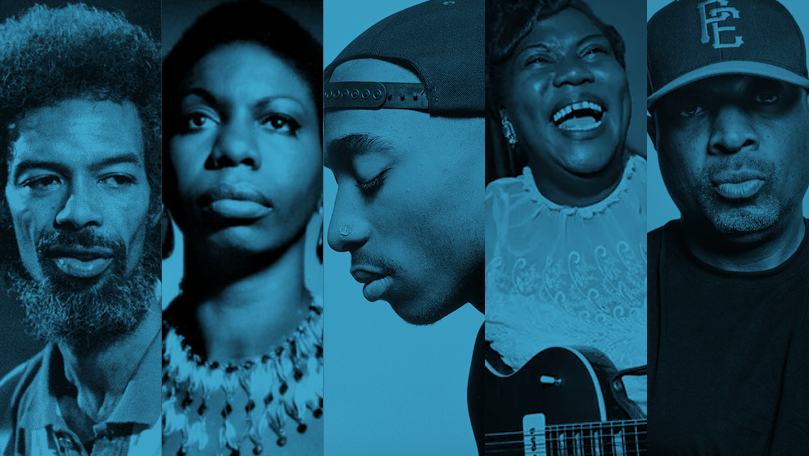
The Power of Music in African American Resistance
Music serves as a profound medium for communication and expression within the African American community, beginning during the period of enslavement and continuing to influence contemporary society. It has historically facilitated the exchange of ideas and emotions, becoming a critical tool for activism.
Historical Significance of Slave Songs
During slavery, slave songs—often referred to by musicologists—were not merely a form of entertainment but vital instruments of communication. These melodies conveyed messages about planned escapes and acts of resistance. More poignantly, they reinforced the hope that slavery was a temporary state, with freedom awaiting in the future. A notable example is “Swing Low Sweet Chariot,” a song still frequently sung in African American churches and featured in many of Paul Robeson’s performances. Its imagery is rich with metaphorical meanings, referring both to divine deliverance and hope for escape to the North.
The Evolution of Jazz and Its Political Influence
Jazz music emerged as a significant cultural influence for African Americans in the early 1900s. Although predominantly instrumental, jazz has long supported progressive politics. Following the tragic Birmingham church bombing by the Ku Klux Klan in 1963, which killed four young girls, jazz musician John Coltrane responded with the haunting composition “Alabama.” Its emotional weight is conveyed through complex chord structures rather than lyrics.
Protest Through Music
Beyond jazz, R&B artists have addressed social issues through their music. Sam Cooke’s “A Change is Gonna Come” became an anthem for the Civil Rights Movement, inspired by Cooke’s personal experiences of racial discrimination. In 2007, this song was chosen for preservation by the Library of Congress, highlighting its cultural significance.
Similarly, James Brown’s powerful statement in “Say It Loud: I’m Black and I’m Proud” resonated deeply during a time of identity re-examination among African Americans. The Temptations’ “Ball of Confusion” similarly tackled pressing social issues within the community, demonstrating a shift toward deeper lyrical content in popular music.
The Role of Hip-Hop in Social Advocacy
In the contemporary landscape, hip-hop has become a vital voice for addressing social injustices affecting African Americans. Artists like Nas and Kendrick Lamar use storytelling to highlight challenges faced by their communities. Public Enemy and KRS-One further utilize their platforms to raise awareness about systemic issues and advocate for change.
The Fight for Recognition
During the 1980s, a national movement arose to recognize Martin Luther King Jr.’s birthday as a holiday. Stevie Wonder’s song “Happy Birthday” played a pivotal role in popularizing this cause. Additionally, poets like Gil Scott-Heron, whose piece “Johannesburg” rallied support against apartheid, exemplified the intertwining of poetry and activism.
Honoring Music’s Legacy
Today, African American music continues to explore themes of resistance, resilience, and hope. From historical slave songs to contemporary hip-hop, the journey reflects a rich tapestry of struggle and triumph. Music remains an essential part of African American identity, shaped by the ongoing narrative of the fight for equality and justice.
Explore the rich history of these musical forms, available on platforms like Apple Music and Spotify.
Images: African American artist collage. Fred Barr. CPUSA; Louis Armstrong. National Archive/Creative Commons; Gil Scott-Heron performs at WOMAD in 2010. Stuart Madeley. Flickr/Creative Commons.
