

Understanding South Africa’s Economic Vulnerability within a Global Context
South Africa’s stock market does not operate independently; rather, it exists as a “satellite node” within a global financial system dominated by the United States. Recent research highlights how political decisions now influence financial variables extensively, impacting everything from currency dynamics to equity valuations and capital market liquidity.
This insight comes from the paper titled When Politics Prices Capital: China, US Financial Power, and Geopolitical Shock Transmission in Emerging Capital Markets, which emphasizes that South Africa’s economic challenges stem not from fundamental factors like debt or government spending, but rather from the overarching influence of American political and monetary power. This dependency may pose a severe risk of a sudden market crash.
AGOA: A Crucial Financial Anchor or Mere Trade Deal?
For years, leaders have touted the African Growth and Opportunity Act (AGOA) as a means to enhance exports. However, this paper presents a more nuanced perspective, arguing that AGOA serves primarily as a macro-financial stabilizer, bolstering export revenues and investor confidence.
Notably, statistics indicate a substantial trade relationship. In 2024, bilateral goods trade was projected to reach approximately $20.5 billion (R325 billion), with US imports from South Africa estimated at $14.7 billion. The automotive sector plays a significant role, comprising around 64% of South Africa’s AGOA-linked exports, translating to approximately R28.6 billion in vehicles shipped to the US.
However, what happens if this lifeline is severed? The paper outlines a troubling scenario: a sudden withdrawal of AGOA benefits or an escalation of US tariffs could trigger a catastrophic chain reaction: “Export shock → FX depreciation → inflation pass-through → policy rates → earnings and discount rates → equity valuation.”
Interestingly, the paper points out that equity repricing is less influenced by direct earnings losses and more by shocks to discount rates and risk premiums. Consequently, even strong companies could suffer — not due to poor sales, but because global investors demand higher returns for South African investments.
In extreme cases, the paper predicts severe consequences: currency depreciations exceeding 25%, sovereign yield shocks of 250 to 400 basis points, and equity market declines ranging from 35% to 55%.
China’s Role in South Africa’s Economic Landscape
Adding complexity to the situation is China’s rapid ascendancy, which has dramatically changed the dynamics surrounding trade agreements like AGOA. The paper refers to a “collapse of industrial time horizons,” suggesting that China’s economic rise has compressed lengthy industrial transitions into mere years.
South Africa faces a dual challenge. On one hand, it must navigate geopolitical constraints on trade access; on the other, it faces technological pressures that could render its manufacturing base less relevant. While China has become South Africa’s most significant trading partner and source of infrastructure investment, it does not provide the liquidity or stability needed to fortify the local financial landscape.
Chinese investment is often “project-based, bilateral, and illiquid,” contrasting sharply with the liquid and benchmark-driven capital flows from the US and European systems. Thus, South Africa finds itself in a precarious situation: reliant on US financial systems for stability yet competing against China in the industrial arena. This unfortunate alignment exposes South Africa’s capital markets to the whims of US political sentiment.
The Johannesburg Stock Exchange: A Foreign Entity?
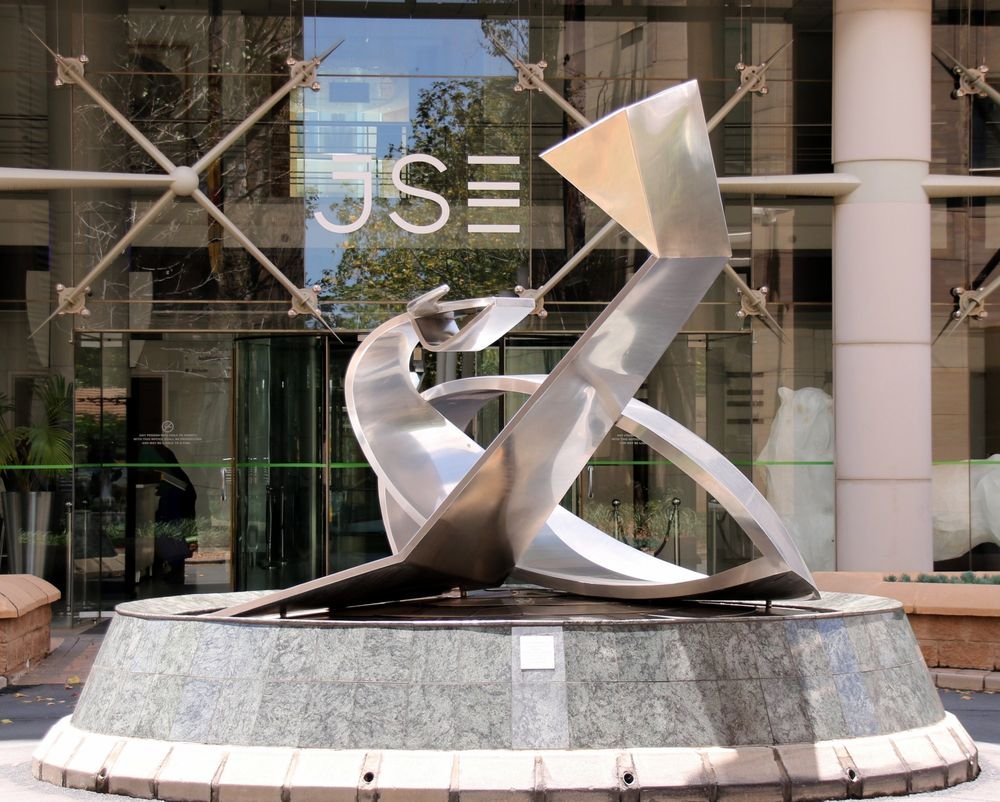
One of the study’s most striking assertions is that the Johannesburg Stock Exchange (JSE) is not a truly local entity. It is, in fact, a “satellite node” in a US-centered global financial framework. Even with a local central bank, the JSE is tied to US dollar funding, investor sentiment, and American financial indices.
Three key links underscore this integration:
- “The JSE is intricately tied to global benchmark indices, primarily tracked by US institutional investors.”
- “The valuation of JSE-listed firms is largely dollar-referenced, with industry pricing closely linked to US interest rates.”
- “Market structure is heavily influenced by US and UK financial institutions for trading, clearing, and brokerage services.”
This reliance becomes particularly evident during periods of US rate hikes or global tensions, causing the JSE to behave more like a peripheral market than a standalone exchange. Foreign ownership accounts for approximately 35% to 45% of JSE free-float equities and 25% to 30% of South African government bonds, placing control in the hands of major US investment firms.
These firms, which manage trillions of dollars, dictate much of the investment landscape, influencing everything from index inclusion to risk classifications through frameworks dominated by US interests.
Capital Gravity: A Missing Component of Stability
The paper introduces the idea of “capital gravity,” defined as the ability of a market to attract and retain investment through institutional credibility and deep market liquidity. Unfortunately, South Africa struggles in this area, exhibiting characteristics of a “low-gravity market,” which makes it sensitive to fluctuations in foreign portfolio flows.
Lack of capital gravity means that U.S. economic changes can exert undue pricing power over South African assets. Further analysis suggests that between 120 and 180 JSE-listed firms, representing 55% to 70% of total market cap, are acutely sensitive to shifts in U.S. economic conditions.
This vulnerability extends to the banking sector as well, with profitability closely linked to sovereign bond yields and domestic funding spreads that are reactive to U.S. monetary policy shifts.
The Geopolitical Landscape: A Double-Edged Sword
In today’s era of nationalism, the structural dependence of South African financial markets on the U.S. becomes increasingly unstable. The AGOA agreement, initially intended as a development tool, is now subject to geopolitical agendas, leading to a politicized landscape where capital flows can be influenced by diplomatic maneuvering.
As economic relationships shift from multilateral frameworks to more transactional interactions, South Africa finds its financial stability increasingly contingent on U.S. political decisions. This reality signifies a perilous juncture, as what was once a stable connection evolves into a precarious dependency.
The paper stresses that positioning the JSE as a central hub for capital aggregation in Africa could offer a pathway to regain some autonomy. Whether through infrastructure finance, climate transition funding, or regional equity listings, the goal should be to internalize capital flows and reduce reliance on external pricing mechanisms.
As South Africa stands at a crossroads, it must choose whether to elevate its status as a financial epicenter for Africa or remain susceptible to external shocks. This decision carries immense weight and must be made promptly as geopolitical dynamics continue to evolve.
