

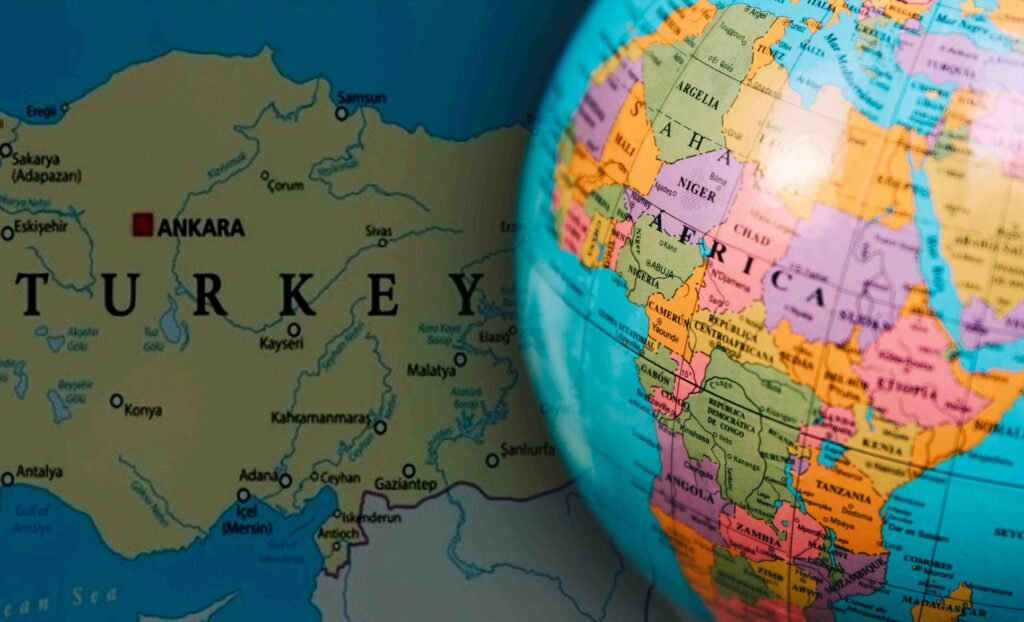
Turkey’s Expanding Influence in Africa: A Comprehensive Overview
Introduction to Turkey’s Strategy in Africa
Turkey is strategically enhancing its presence in Africa through an integrated approach that combines trade, defense, and infrastructure development. Unlike traditional powers such as the United States, China, and Russia, Turkey is fostering lasting relationships across the continent by embedding its systems into various sectors, thereby potentially shaping Africa’s economic and geopolitical landscape.
A Strategy of Multifaceted Engagement
Turkey has adopted a unique strategy to engage African nations, creating a network of trade agreements, energy initiatives, and military support. According to Jamie Akol, an expert on African policy, Turkey’s blend of hard and soft power enables it to create influential connections that withstand political changes and the ebb and flow of contracts.
Booming Trade Relations
Turkey’s trade with African nations is on the rise, with figures surpassing $37 billion in 2024 and projected to reach $40 billion by 2025, according to the Turkish trade ministry. This growth underscores Turkey’s commitment to building robust economic partnerships across the continent.
Infrastructure Development
Turkey has completed over 2,000 infrastructure projects in Africa, valued at approximately $100 billion. These projects range from airports and roads to hospitals and housing, laying the groundwork for stronger bilateral partnerships.
Energy Partnerships in Somalia
One of Turkey’s most notable engagements is its energy collaboration with Somalia. In February 2024, Turkey deployed its deep-sea drilling vessel, Cagri Bey, to Somali waters for energy exploration. This mission is grounded in a hydrocarbon cooperation agreement that grants Turkish Petroleum Corporation rights to explore and develop oil and gas resources in Somalia.
Strengthening Military Ties
Moreover, Turkey maintains a military presence in Somalia through its largest overseas base established in Mogadishu in 2017. Turkish military training for Somali security forces is complemented by the management of Mogadishu’s port and airport.
Expanding Influence in Ethiopia
Turkey’s involvement in Ethiopia has also accelerated. In February 2026, Turkish President Erdoğan visited Addis Ababa for the first time in over a decade, during which both countries signed a Memorandum of Understanding on energy cooperation. Turkish investments in Ethiopia have now surpassed $2.5 billion, further solidifying Turkey’s standing as the second-largest foreign investor there.
Maritime and Port Investments
Turkey’s maritime initiatives extend beyond Somalia and Ethiopia. Turkish firms operate concessions at key ports, including Mogadishu and Suakin in Sudan, as well as in Libya, reinforcing Turkey’s maritime links across the Mediterranean. In Mozambique, ENKA, a Turkish contractor, is building a 456-megawatt power plant, highlighting Turkey’s commitment to energy infrastructure.
Broader Regional Engagement
Turkey’s influence is not limited to bilateral relations. Its diplomatic outreach has quadrupled the number of its embassies in Africa since the early 2000s, facilitating project agreements and reinforcing its political presence. Turkish Airlines has enhanced connectivity between Istanbul and numerous African cities, fostering people-to-people ties that bolster trade, tourism, and cooperation.
Education and Cultural Initiatives
In addition to commercial ventures, Turkey is investing heavily in educational initiatives through the Maarif Foundation, which operates schools in over 20 African countries. Turkish state scholarship programs have also attracted thousands of African students to institutions in Turkey.
Challenges and Considerations
Despite these advancements, Turkey’s presence in Africa raises concerns regarding governance, transparency, and potential dependencies created by long-term agreements. Critics note that while embedding Turkish systems can enhance influence, it may create complexities that could be difficult to extricate from local contexts.
Conclusion: Turkey’s Long-term Vision for Africa
Turkey’s systematic approach to establishing its influence in Africa highlights a long-term vision. By integrating economic, military, and cultural frameworks, Ankara is poised to shape the continent’s future strategically. In this multipolar world, Turkey represents an alternative partner for African nations, focusing on trust-building and sustainable development.
For more insights on Turkey’s foreign policy, visit Turkey’s International Relations.
Additional Resources
This article consolidates Turkey’s strategic interests in Africa, emphasizing its growing influence through diverse initiatives across the continent.
