

The Strategic Development of South Africa’s Energy Infrastructure
The energy landscape worldwide is undergoing substantial transformation, with traditional baseload power systems needing to adapt to new economic realities and pressing environmental demands. In this context, South Africa’s energy infrastructure highlights a significant evolution. The country’s electricity generation system, long dominated by coal—which has fueled industrial growth for over a century—now faces immense pressure to modernize. Key to this transition is the establishment of gas-fired power stations in South Africa, which play a pivotal role in redefining the nation’s energy strategy.
The Importance of Gas-Fired Power in South Africa’s Energy Transition
The Coal Dependency Challenge and Grid Stability
Currently, approximately 80% of South Africa’s electricity generation relies on coal, creating a highly concentrated risk profile that extends beyond environmental involvement into economic vulnerabilities and operational reliability concerns. This overreliance on a single fuel source has resulted in frequent load-shedding, causing billions in productivity losses.
The drawbacks of aging coal infrastructure become particularly pronounced during peak demand and grid frequency regulation periods. Traditional coal plants can take 6 to 12 hours to initiate, making them ill-suited for rapid response to sudden demand changes or the intermittency of renewable energy. This inflexibility has led to notable disruptions in industries reliant on continuous power. To mitigate grid outages, many mining operations, which significantly contribute to the GDP, have resorted to costly diesel backup systems, further eroding their competitiveness in global markets.
Advantages of Natural Gas as a Bridge Fuel
Modern combined-cycle gas turbine (CCGT) technology presents a stark contrast, offering operational flexibility that coal cannot match. Gas-fired power stations in South Africa can achieve startup times of just 30 to 60 minutes—a significant improvement over traditional methods. Furthermore, CCGT facilities can operate at efficiencies of 50% to 60%, compared with coal plants that average only 35% to 45%.
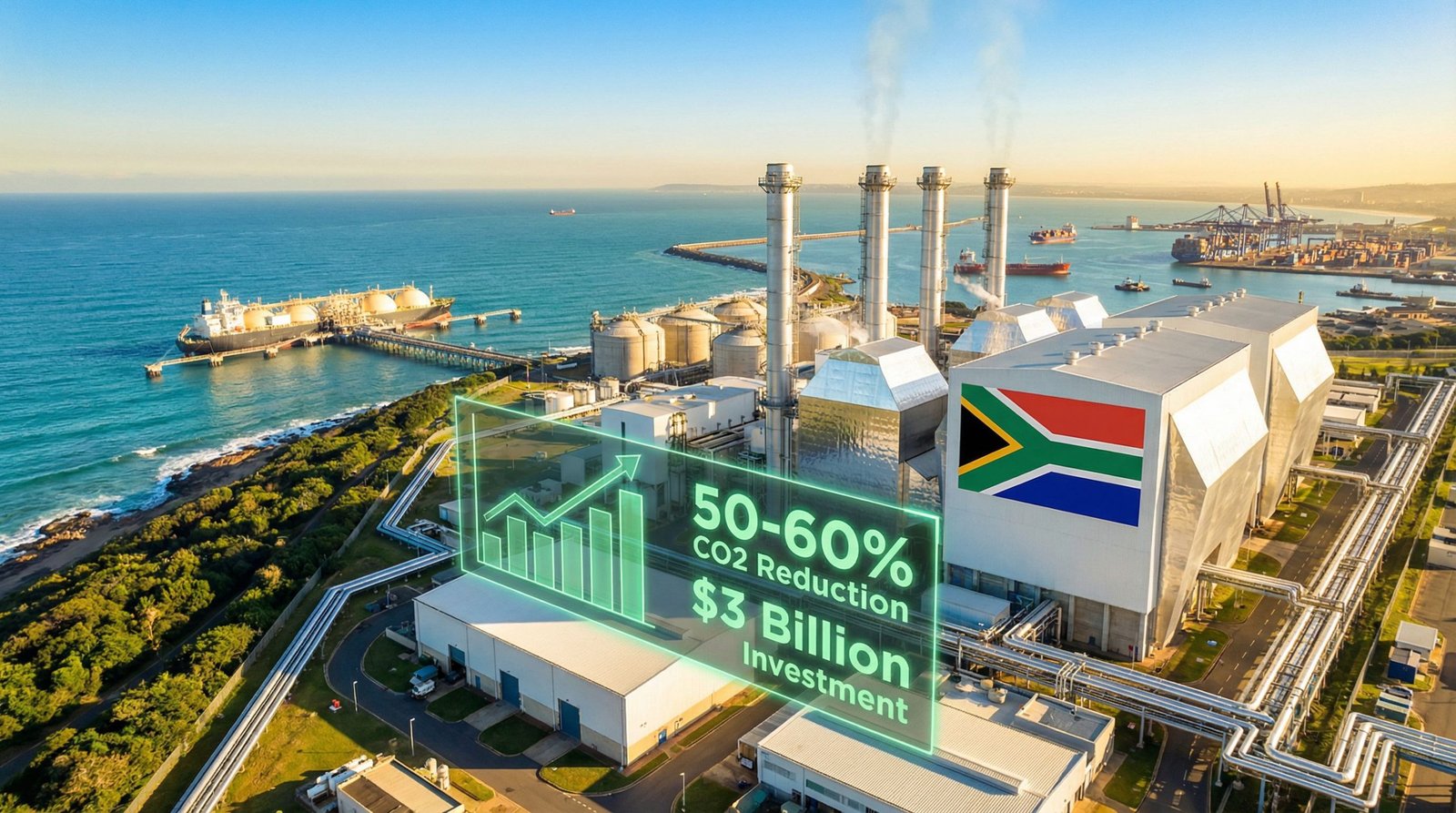
The emissions profile of gas-fired generation showcases a considerable improvement, with reports indicating 50% to 60% lower CO2 emissions compared to coal. This reduction is vital for South Africa’s compliance with international climate agreements and positions gas as a transitional technology essential for immediate environmental gains.
| Factor | Coal-Fired | Gas-Fired CCGT |
|---|---|---|
| CO2 Emissions (kg/MWh) | 820-1,050 | 350-490 |
| Efficiency Rate | 35-45% | 50-60% |
| Startup Time | 6-12 hours | 30-60 minutes |
| Capital Cost ($/kW) | 3,500-4,500 | 1,000-1,500 |
| Operating Flexibility | Limited | High |
| Maintenance Intervals | Extended downtime | Modular maintenance |
The Durban Gas Terminal Project and Its Impact
Multi-Billion Dollar Investment Framework
The development of a gas-fired power station in Durban is marked by a $3 billion investment that signifies a comprehensive shift toward enhanced energy supply chains. This ambitious project aims to establish LNG import capabilities alongside gas-powered generation facilities, targeting a capacity between 1,000 to 1,800 MW—approximately 2% to 3% of the country’s installed generation capacity.
The initiative’s strategic location is also expected to maximize its impact on grid stability beyond mere megawatt contributions. Furthermore, 20 hectares of marine terminal space have been allocated at Durban port for LNG infrastructure, emphasizing its importance in regional energy development.
Strategic Partnerships and Consortium Structure
The project is bolstered by a consortium of entities with diverse expertise—ACWA Power, Vitol Group, and VTTI—bringing together experience in power generation, supply chain security, and local market acumen. For example, ACWA Power has deep knowledge in gas-fired technologies, while Vitol ensures access to global LNG markets—critical for managing fuel price fluctuations.
Emerging Opportunities and Market Dynamics
Call for Investment Capital and Financing Structures
The substantial $3 billion project requires robust financing solutions including project finance and development assistance from institutions like the World Bank and African Development Bank. Their involvement not only supports climate-centric infrastructure but also aids in risk mitigation.
In addition, carbon credit revenues from displacing coal could enhance project viability, benefiting both environmental goals and financial returns.
Local Content and Technology Transfer Benefits
CCGT technology presents substantial opportunities for local manufacturing and engineering sectors. Fulfilling local content mandates can stimulate turbine component manufacturing and other essential services, while specialized training programs could foster high-skilled job creation within South Africa.
Long-Term Strategic Advantages for Energy Security
Grid Modernization and Integration of Renewable Energy
As South Africa gears up for a greener future, modernizing the grid becomes vital. Advanced grid management systems that facilitate the integration of variable renewables with gas generation are essential for optimizing energy supply and reducing overall costs. These capabilities also enable industries to play active roles in grid services while minimizing energy costs.
Alignment with National Energy Targets
The Durban project aligns seamlessly with South Africa’s Integrated Resource Plan, which forecasts 16 GW of new gas-fired capacity by 2039. This initiative lays the groundwork for further gas generation and supports coal facility decommissioning, addressing evolving energy demands while maintaining grid stability.
Regional Energy Hub Potential
Durban’s geographic advantage positions it to serve as a pivotal energy hub for neighboring countries like Botswana, Zimbabwe, and Zambia. This could spur cross-border power trading, cultivating economic development while ensuring energy security across Southern Africa.
Conclusion
The strategic development of gas-fired power infrastructure in South Africa is a transformative approach that addresses vital energy security concerns while generating economic stability within industrial sectors. By utilizing natural gas, the country can offer a reliable power supply essential for enhancing the competitiveness of its manufacturing and mining industries, eventually aligning with global climate objectives.
For further insights into the evolving energy landscape and investment opportunities, explore Discovery Alert’s dedicated discovery page and commence your journey towards unlocking potential market returns today.
