

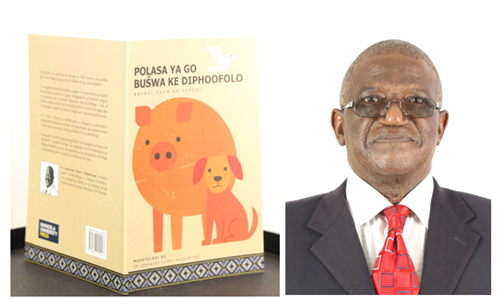
Multilingualism in education is gaining traction, especially with the recent translation of George Orwell’s classic novel Animal Farm into Sepedi. This initiative, spearheaded by Dr. Lenkwane Henry Mathunyane and published by Nelson Mandela University Press, underscores the importance of multilingual access to political discourse, critical thinking, and classroom debate for learners studying in languages other than English.
The translation was formally introduced at the 2nd Annual Multilingualism Indaba held at Nelson Mandela University in Gqeberha, Eastern Cape, from March 25 to 27, 2026. The event focused on “Intersections of Knowledge: Language, Multilingualism(s), and Language Policy,” gathering scholars, students, and language practitioners to delve into the significance of language in knowledge production and education.
A cornerstone of the Indaba was the unveiling of the University’s revised Language Policy on March 27, which coincided with International Multilingualism Day. According to Professor Pamela Maseko, Executive Dean of the Faculty of Humanities, Nelson Mandela University is “deeply committed to advancing multilingualism as a cornerstone of inclusive and equitable education.” The translation of Animal Farm into Sepedi not only makes classical literature more accessible but also affirms its relevance within diverse cultural, social, and political backgrounds.
Transforming Education Through Language
Dr. Mathunyane believes that this translation is pivotal in creating equality among learners. Although Animal Farm has been widely included in South African school curricula, it has primarily catered to English Home Language learners. This has often left second-language learners facing linguistic obstacles. “Certain topics, particularly in politics and governance, are often locked away to those studying solely in English,” he notes. “Translating this text into Sepedi aims to bridge that gap.”
Language as a Gateway to Learning
With decades of experience in South Africa’s education sector, Dr. Mathunyane has repeatedly encountered language barriers that hinder communication and understanding among learners. “When students struggle with the language of instruction, they are less likely to participate meaningfully in discussions,” he states. To combat this issue, he emphasizes the necessity for access to literature in multiple languages.
The Relevance of Animal Farm
First published in 1945, Animal Farm serves as a powerful allegory about the corruption of revolutionary ideals, depicting farm animals who replace their human owner in pursuit of an equal society, only to see their new leaders become just as authoritarian. Dr. Mathunyane asserts that the novel’s themes resonate strongly with contemporary South Africa, allowing learners to explore topics of power, leadership, and accountability in their mother tongue.
A Collaborative Translation Process
Choosing to translate Animal Farm into Sepedi was a personal choice for Dr. Mathunyane, as it is his mother tongue. The translation process, however, took over ten years, demanding an attentive approach to the nuances of satire and political symbolism present in the original text. Collaborating with Sepedi educators and subject advisors was essential to formulating a standardized version suitable for different readerships.
Encouraging Critical Thinking
Although presented as a children’s book, the Sepedi edition of Animal Farm is likely to benefit secondary school learners and university students, especially since the novel is often prescribed for Grades 10 to 12. “Second-language learners must also have access to literature in their native tongues,” Dr. Mathunyane says. The text encourages discussions around its political themes, fostering an inclusive environment for debate and dialogue in classrooms.
Utilizing Literature in Education
Dr. Mathunyane recommends that educators utilize the text creatively, suggesting activities like dramatizing scenes from the novel to help students grasp abstract concepts related to social justice and equality. This engaging approach can stimulate interest in multilingual literature and encourage collaborative activities, such as debating societies.
Multilingualism Indaba: A Fitting Venue
The Multilingualism Indaba offered an apt backdrop for launching the translation. Highlights of the program included a masterclass on the epistemic value of multilingualism in Africa, a colloquium for postgraduate students, and a keynote address by Finex Ndhlovu. Dr. Mathunyane emphasized that the act of translation is vital for promoting multilingualism and unity in diversity, asserting that culture and language are intertwined and affect all aspects of life.
Future Prospects for Multilingual Literature
Now retired but still engaged in community leadership, Dr. Mathunyane hopes his project will inspire a new generation of scholars to contribute to multilingual literature in South Africa. “Age and health may be against me, but I encourage the youth to pick up the mantle and continue this essential work,” he concludes.
Accessing the Translation
Book: Animal Farm (Sepedi translation)
Translator: Dr. Lenkwane Henry Mathunyane
Published: January 2026
Length: 56 pages
Official launch: March 26, 2026, at Nelson Mandela University
Where to access the book:
• African Sun Media
• Takealot
• Amazon
• Google Books
• JSTOR
• African Sun Media eBook store
Distribution:
The book is available through educational channels and bookstores.
