

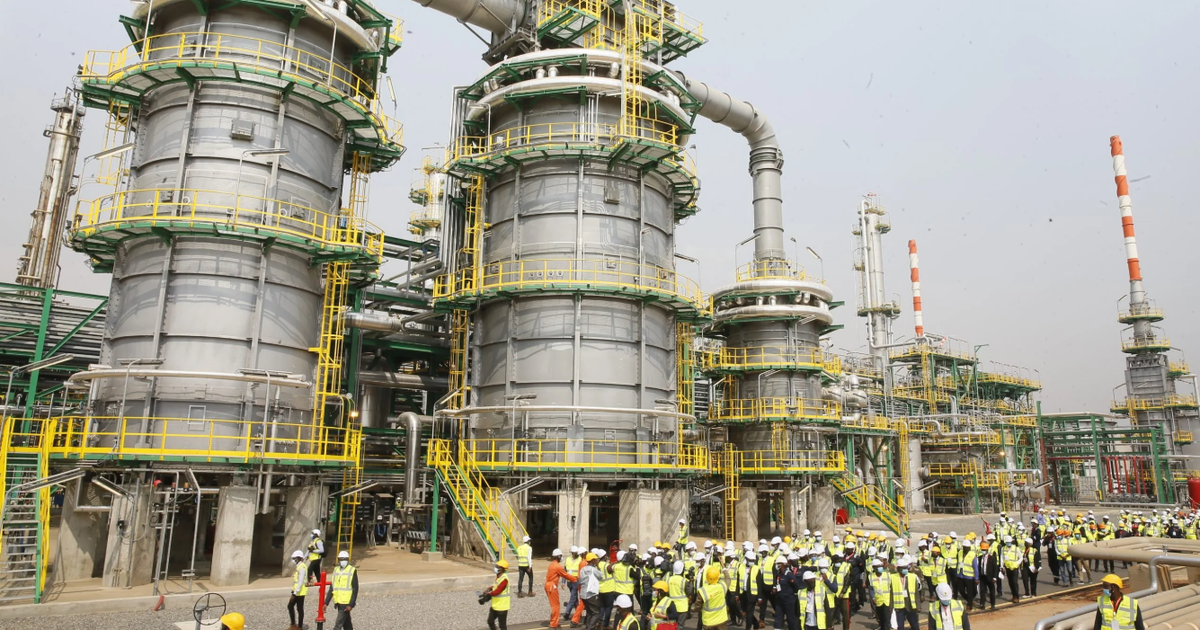
The Impact of Chinese Financing on Africa’s Energy Sector
Over the past two decades, China has emerged as the leading external financer of Africa’s energy sector, investing tens of billions of dollars in various projects, including oil production, power generation, and electricity transmission. This strategic financial commitment has significantly transformed the energy landscape across the continent.
Comprehensive Financing Strategy
China’s engagement in Africa is part of a wider financing initiative that encompasses diverse sectors. Since 2000, the country has provided 1,319 loans totaling approximately $180.9 billion to African nations, targeting critical infrastructure, mining, transportation, and energy projects that are essential for economic growth.
Securing Strategic Interests
Such extensive investments have enabled Beijing to gain access to vital natural resources, while concurrently deepening trade relationships and expanding its geopolitical influence throughout Africa.
Russian Influence in Africa
In contrast to China, Russia has concentrated on nuclear energy partnerships and oil and gas development, establishing itself as an alternative strategic ally for African nations. This adds another layer to the competitive landscape within Africa’s energy sector.
Beijing’s readiness to finance high-risk, capital-intensive projects—especially in oil-rich and energy-deficient countries—has made it the go-to partner for numerous African nations eager to advance their infrastructure swiftly. For more insights on China’s loans in Africa, check out this informative article.
Leading African Nations Benefiting from Chinese Energy Loans
Here are the top ten African countries that have received significant Chinese energy loans from 2000 to 2024:
- Angola — $27.3 billion (41 loans)
Angola stands as the largest recipient of Chinese energy financing in Africa, with the majority of loans directed towards oil production and refinery infrastructure, often linked to crude oil supply agreements.
- South Africa — $4.5 billion (3 loans)
China has supported major electricity generation initiatives to help alleviate persistent power shortages in Africa’s most industrialized nation.
- Sudan — $4.2 billion (21 loans)
- Ethiopia — $3.4 billion (19 loans)
These funds have fostered the development of hydroelectric dams and transmission lines, aligning with Ethiopia’s aspirations to become a regional energy exporter.
- Zambia — $3.1 billion (16 loans)
Financing has targeted hydropower and electricity infrastructure essential for the mining sector.
- Uganda — $2.6 billion (7 loans)
The loans have promoted oil development and expanded electricity access in line with Uganda’s growing petroleum industry.
- Ghana — $2.3 billion (14 loans)
China financed power plants and electric grid infrastructure to stabilize the nation’s electricity supply.
- Equatorial Guinea — $1.8 billion (8 loans)
Funding is primarily directed towards offshore oil production and export infrastructure.
- Kenya — $1.8 billion (14 loans)
- Côte d’Ivoire — $1.6 billion (5 loans)
Supported thermal power generation and industrial energy infrastructure initiatives.
China’s predominance in African energy financing underscores its strategic objectives to secure long-term access to resources while fortifying economic ties with the continent. As competition intensifies from Western nations and Russia, Africa’s energy sector is becoming a pivotal geopolitical battleground that could shape the continent’s future economic trajectory.
