

Netflix’s "One Piece" Season 2: A Game-Changer in Sustainable Filmmaking
The eagerly awaited second season of One Piece, Netflix’s live-action adaptation of the iconic anime, has taken the streaming world by storm. The series has maintained a spot in the platform’s top 10 for three weeks, amassing an impressive 5.9 million views and a substantial 47.5 million hours of watch time. This success is significant not just for viewership but also for its notable production footprint in Cape Town, South Africa.
Filming in South Africa: A Unique Connection
The shooting of One Piece takes place at the renowned Cape Town Film Studios, a premier destination for film and TV productions. This facility has previously hosted major films and series like Tomb Raider, Monster Hunter, and the critically acclaimed Raised by Wolves. With its multiple sound stages, underwater facilities, and realistic 18th-century town set, the studio is well-equipped for diverse filming needs.
Despite its stunning visuals and unique setting, One Piece stands out as the largest production ever filmed on African soil, both in scale and budget. This heightened demand for resources has led to increased energy consumption, necessitating creative solutions to power the ambitious project.
Sustainable Energy Solutions: Cinergy’s Role
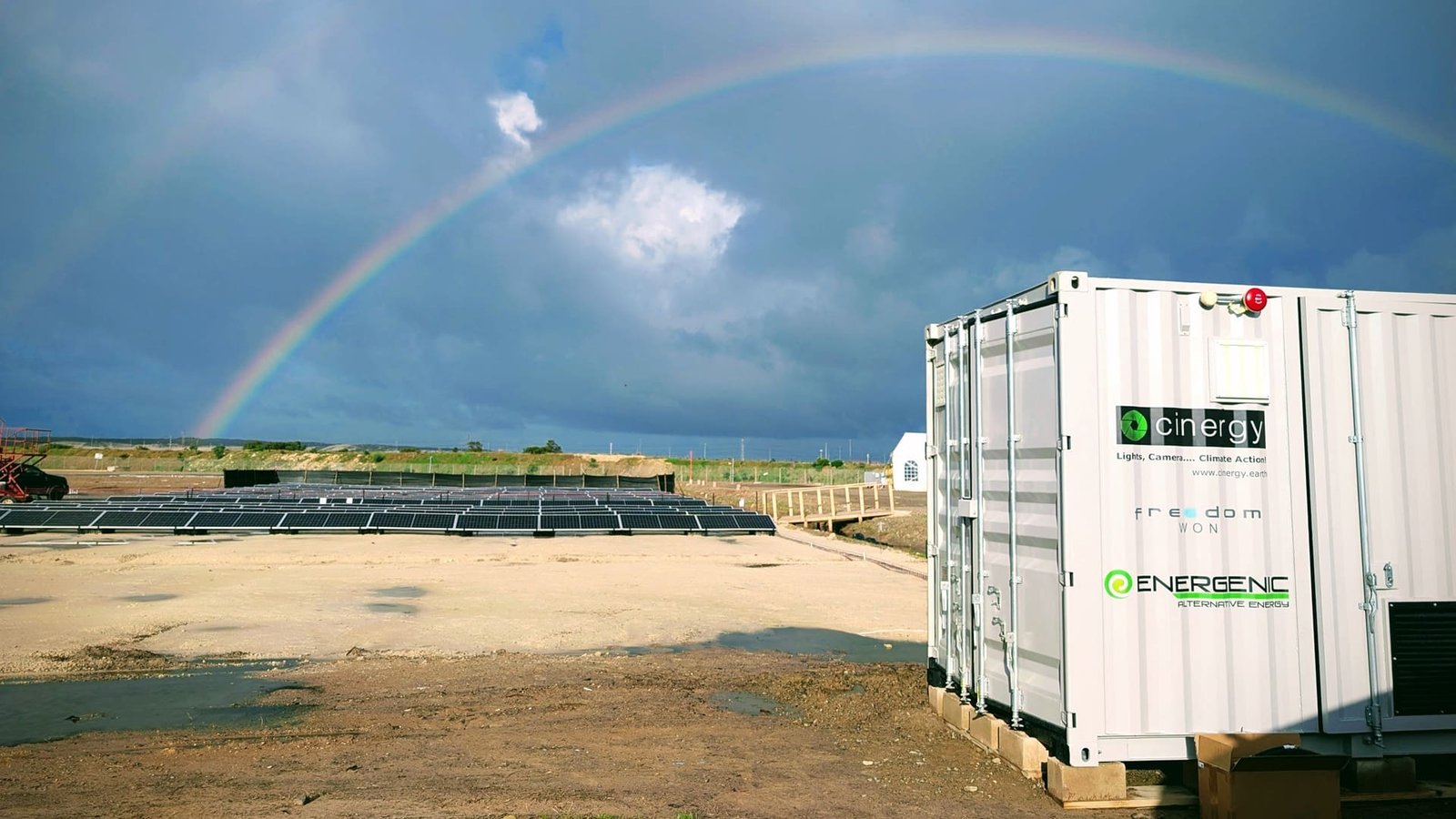
In response to the energy needs of One Piece, Netflix turned to Cinergy, a forward-thinking energy company that specializes in sustainable power solutions for film productions and large events. Cinergy’s co-founder, Abe Cambridge, explained that their environmentally-friendly approach utilizes solar power instead of traditional, noisy generators.
The Advantage of Solar Power
Cambridge elaborated on the complexities of solar energy deployment, emphasizing that it requires meticulous planning and technical know-how. Unlike diesel setups that are often oversized and inefficient, solar systems can be designed to meet specific energy requirements upfront. Once established, they offer an autonomous, “fit and forget” solution that simplifies ongoing management, ensuring a consistent energy supply.
“Diesel is easy to set up but ultimately inefficient. Solar requires a more considered approach,” says Cambridge.
However, a significant challenge lies in the spatial requirements for solar layouts, which necessitate pre-planning. Quick location changes can complicate matters, but Cinergy has proven its adaptability by developing temporary solar arrays even in remote locations.
How Did Cinergy Secure the Contract?
Cinergy’s ambition and capability caught Netflix’s attention early in the pre-production phase. The original plan was for One Piece to implement various clean energy solutions, but Cinergy proposed a comprehensive system that would power the entire base camp through solar energy. This idea resonated with the production team and led to a collaborative effort to customize solutions tailored to their specific needs.
In collaboration with local film services and sustainability experts from Greenset, Cinergy created a robust proposal that garnered Netflix’s enthusiastic support.
An Eco-Friendly Approach Pays Off
With the rising costs and availability issues surrounding fuel, especially amidst ongoing global conflicts, the industry is feeling the pressure. Shifting toward sustainable energy solutions allows productions to lessen their environmental impact while catering to eco-conscious investors. Cinergy’s efforts alone resulted in a remarkable 93 tonnes of CO2 emissions being avoided during the filming of One Piece.
Cambridge emphasized, “Clean power changes the equation. It reduces costs and makes it much harder to justify diesel-heavy setups.”
Focus on Adaptability
Cinergy’s systems are designed to adapt to the specific power needs of any production. Should crews need to film overnight or require additional energy, the solutions provided can easily accommodate these requests. Their plug-and-play system mirrors traditional diesel generators, enabling seamless integration for film crews.
Proven Success in Challenging Environments
Cinergy’s reputation for reliability was tested at events like AfrikaBurn, where power is essential but must come from isolated sources. The company successfully navigated the complexities of providing energy in one of South Africa’s most remote and challenging environments.
Moreover, Cinergy’s success extends beyond South Africa, proving its capabilities in other regions, such as recently powering a base camp in Ghana for eight weeks using solar energy alone.
Conclusion
With projects like One Piece, Netflix is not only setting new benchmarks for viewership but also demonstrating a commitment to sustainability in film production. The focus on clean energy solutions by Cinergy highlights a growing trend in the industry, enhancing South Africa’s appeal as a filming destination. As the film industry continues to evolve, innovations in sustainable energy will play an increasingly vital role in shaping its future.
To explore more about Cinergy and their sustainable energy initiatives, visit their official website. Be sure to check out One Piece Season 2, now streaming on Netflix.
