

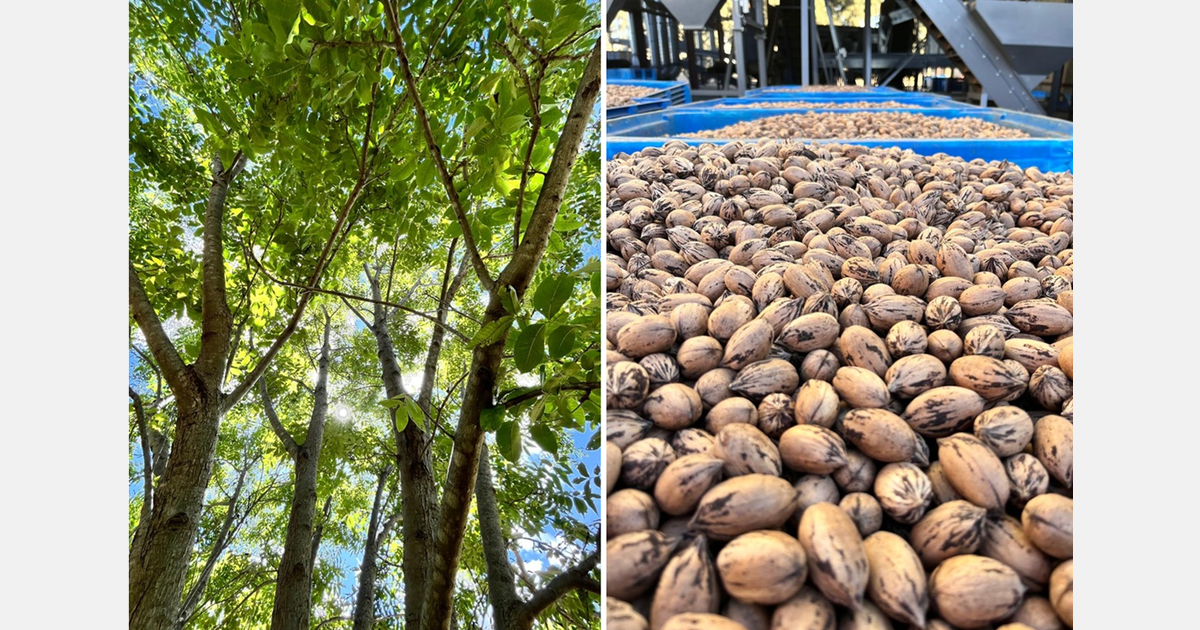
The Growing Demand for South African Pecans on the Global Market
© SAPPA The recent Gulfood 2026 event highlighted the increasing popularity of pecan nuts across global menus, according to RP Campher, an agricultural economist with the South African Pecan Nut Producers Association (SAPPA). Currently, an impressive 94.7% of South African pecans are exported to China, particularly in shell form, with demand peaking just before the Chinese New Year.
China’s Expanding Interest in Pecans
Campher emphasizes the significant rise in China’s pecan consumption, attributing it to the development of new pecan-based products. “China is also exploring the potential for exporting pecans to the Middle East and Europe,” he notes. This has prompted SAPPA to focus heavily on catering to the Chinese market, while still hoping to expand export opportunities to Europe and local markets.
Production Growth Trends
Over the past decade, South Africa has seen a remarkable fourfold increase in pecan production. The harvest season begins in May, coinciding with the dropping of leaves, and initial shipments typically start in June. “We anticipate producing between 52,000 and 55,000 tonnes this year,” says Cobus van Rensburg, SAPPA’s general manager. As maturation continues among numerous young trees, production is expected to rise further through 2030 and beyond.
A Shift in Global Market Dynamics
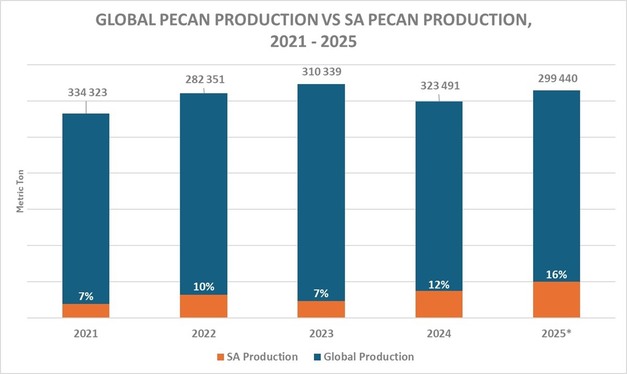
While the pecan harvest from the United States and Mexico has been declining due to various environmental challenges, global consumption of pecans is on the rise. This trend presents South Africa with an excellent opportunity to solidify its role in the global pecan market.
 © SAPPA
In 2025, South Africa accounted for 16% of the global pecan crop
Prospects for European Market Access
The South African pecan industry is optimistic about resuming exports to the European Union this year. Current exports are stalled due to newly implemented regulations on nickel residue levels in pecan nuts. The EU’s stringent limit of 3.5 ppm is considered unrealistic by SAPPA, which notes that nickel is essential for specific plant physiological processes. South African soils generally have high nickel levels, complicating compliance.
Van Rensburg mentions that samples from both sprayed and unsprayed orchards consistently surpass this limit, raising concerns about the impact of these regulations on trade. The pecan industries in both Argentina and the United States share this viewpoint, and together, they have proposed a more reasonable residue limit of 10 ppm, comparable to limits for other nut varieties.
Looking Ahead
“We expect to be able to export our pecans to Europe by 2026,” Van Rensburg states confidently, keeping the future bright for South African pecans in both existing and new markets.
For additional insights, connect with the South African Pecan Nut Producers’ Association via their website at www.sappa.za.org.
