

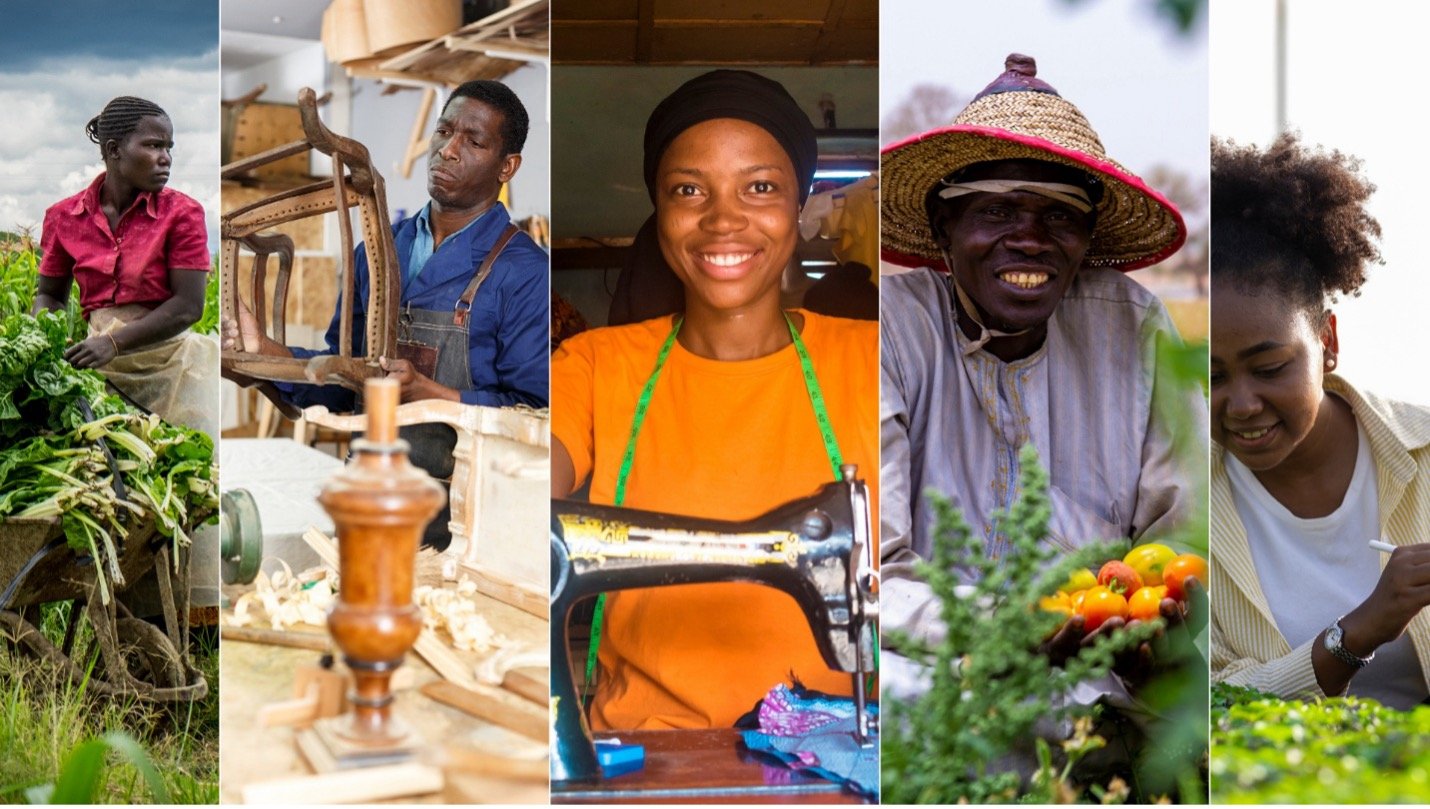
Unlocking Economic Potential: The Role of MSMEs in Africa’s Growth
In the industrial zone on the outskirts of Abidjan, Côte d’Ivoire, a small food-processing company exemplifies the untapped potential of micro, small, and medium-sized enterprises (MSMEs). Employing 28 young individuals, this business has witnessed a surge in product demand, reliable suppliers, and steady orders. For years, however, growth was stunted—not due to ambition or opportunities, but because of misaligned financing structures. With tailored financing now available, the company doubled its workforce in under two years. This transformation underscores a pivotal notion: when finance aligns with operational realities, progress follows.
The Demographic Shift in Africa
Over the next three decades, approximately 740 million working-age individuals will enter the African labor market. However, the continent’s financial systems remain largely outdated, structured for a bygone economic era. The trajectory—whether this demographic boom yields economic dividends or serves as a hindrance—hinges on a crucial factor: Africa’s capacity to generate productive jobs en masse.
The Backbone of African Economies
MSMEs account for over 90 percent of businesses in Africa and are responsible for approximately seven in ten jobs, thereby forming the economic backbone of several nations. With strategic investments, MSMEs can evolve into dynamic enterprises, creating millions of jobs and strengthening community resilience. Conversely, without adequate funding, the burgeoning demographic wave threatens to collide with economic exclusion.
Bridging the Financing Gap
Despite $4 trillion in local savings and assets within Africa, much of this capital remains unconnected to the enterprises that require it. Formal financing for MSMEs is still an exception rather than the standard. This shortfall is not due to a lack of opportunity but arises from outdated risk perceptions that dominate financial decision-making.
Traditional banking models have historically deemed MSMEs too small, informal, or complex to serve profitably. The repercussions are evident: an estimated $331 billion financing gap in sub-Saharan Africa and an additional $187 billion in North Africa and the Middle East. Collectively, this constitutes a half-trillion-dollar market opportunity waiting to be unlocked.
Technological Advancements Transforming Financial Inclusion
What has shifted is not the importance of MSMEs but the feasibility of servicing them effectively at scale. Technology and data are transforming the landscape of financial inclusion. Digital platforms, mobile banking, alternative data, and advanced credit analytics now empower financial institutions to address the MSME sector profitably. Institutions that have adapted to this evolution are experiencing higher returns on assets and equity, often surpassing banking sector averages.
The Future of MSMEs in Africa
As African economies formalize, millions of new enterprises will emerge, each acting as a catalyst for job creation, innovation, and demand for financial services. These businesses will need capital, irrespective of traditional financial institutions’ involvement. Thus, the strategic query becomes: Who will meet these enterprises where they are?
Addressing Structural Barriers to MSME Financing
The World Bank Group is striving to convert this pivotal moment into actionable solutions by tackling three principal structural barriers that have traditionally constrained MSME finance.
1. Mitigating Currency Mismatch
In the West African Economic and Monetary Union, the introduction of multi-seller, multi-country pooled securitization platforms represents a significant advancement for MSME financing. This structure facilitates long-term local currency financing, thus eliminating foreign exchange risks and opening the door to billions in new lending capacity tailored to how African businesses operate.
2. Achieving Multifaceted Objectives with MSME Financing
Egypt’s inaugural $500 million sustainability bond—the largest issued by a private African bank—illustrates how capital can be directed towards MSMEs while promoting climate-smart initiatives. Similarly, a $50 million investment in South African SME property developers showcases how targeted financing can address urban housing shortages and stimulate local entrepreneurship.
3. Altering the Risk Assessment Paradigm
The Small Loan Guarantee Program in West Africa, backed by $120 million in concessional financing from IDA, empowers local banks to lend to previously overlooked sectors, especially women-led enterprises. Concurrently, the African Local Champions Initiative fortifies entire value chains by scaling anchor firms across regions like the Sahel and Central Africa, enhancing MSMEs as suppliers, distributors, and service providers.
A Path Forward for Financial Institutions
Sustainable job creation involves more than isolated transactions; it requires systems that enable collective enterprise growth. These approaches create synergies that demonstrate a clear result: when MSMEs obtain financing that reflects their operational realities, the outcome includes robust financial returns, resilient businesses, and substantial job creation.
To harness this potential, financial institutions must adopt forward-thinking regulations that foster innovation while ensuring stability. They need to develop financial instruments tailored to MSMEs—from working capital facilities to long-term growth financing. Enhanced data systems will allow investors to accurately assess risks instead of relying on outdated assumptions, facilitating better decision-making.
A Shift in Mindset Is Essential
A convergence of demographics, technology, and enterprise models presents an unparalleled opportunity for Africa. The continent’s youthful workforce is poised to establish businesses and seek financing—whether or not established financial institutions choose to be involved. The capital is available, the models are effective, and the returns are evident.
The future growth phase for Africa will be shaped by those willing to collaborate to amplify successful strategies. For banks, funds, and non-bank financial institutions, partnering with the World Bank Group offers a pathway to deploy capital efficiently, anchored in validated models, enriched data, and shared risk. By engaging in co-lending, establishing long-term investments, and providing local-currency solutions, financial institutions can enhance their pipelines, refine risk assessments, and uncover commercially viable opportunities.
Seizing the Moment
Ultimately, the crucial question is whether Africa’s financial institutions will embrace this moment to redefine their role within the continent’s economic landscape. For those ready to act, the message is clear: banking Africa’s MSMEs represents not just a vital developmental strategy but one of the most compelling business opportunities of our time. This moment transcends mere capital—it’s about creating jobs, enhancing productivity, and transforming potential into tangible progress.
For more information on MSMEs and their impact on African economies, visit IFC’s MSME Solutions.
This SEO-optimized article uses targeted keywords, informative H2 and H3 headings, and external links to enhance discoverability while communicating the importance of MSMEs in Africa’s economic growth.
