

This week, significant developments across Africa are reshaping the region’s economic future. From strong capital markets in Ghana to initiatives aimed at boosting energy investment and regional trade reforms, these trends reveal a commitment to converting the continent’s abundant resources into real economic benefits.
Insights from the Accra Street Journal (ASJ) illustrate a cohesive narrative in which investment, governance reforms, and infrastructure enhancement play crucial roles in redefining Africa’s economic framework.
Ghana’s Capital Market: A Beacon of Optimism
The Ghana Stock Exchange is witnessing remarkable activity, with the GSE Composite Index soaring over 77 percent year-to-date in 2026. This growth signifies one of the strongest performances among frontier markets worldwide. Rising investor interest signals a growing confidence in Ghana’s corporate sector and financial stability, especially after previous economic turbulence.
Financial stocks are at the forefront of this rally, bolstered by improved earnings and macroeconomic conditions. This momentum serves as a clear indicator that Ghana’s capital markets, which have historically been underutilized, may be entering an era of greater significance.
A thriving stock market enhances a company’s capital-raising capacity and fosters domestic wealth creation.
Energy Investments Propel Growth
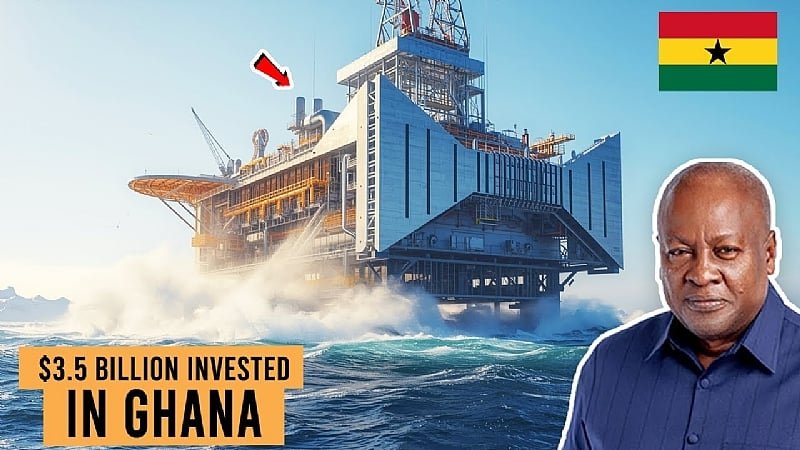
Ghana is actively pursuing extensive investments in its energy sector. In preparation for the upcoming African Energy Week 2026 in Cape Town, the government has announced a $3.5 billion energy investment initiative. This plan aims to bolster upstream oil and gas ventures as well as enhance gas infrastructure and power generation capacities.
Key components of this initiative include increasing the processing capacity at the Atuabo Gas Processing Plant and constructing a 1,200-megawatt thermal power plant to strengthen electricity supply for various industries.
Additionally, production licenses for the Jubilee Oil Field and TEN Oil Field have been extended until 2040, offering sustained stability for investors in Ghana’s offshore petroleum sector. These measures aim to facilitate the country’s transition to a gas-to-power energy model, thereby minimizing reliance on imported fuels while promoting industrial growth.
Mining Governance Under Scrutiny
Resource governance is increasingly becoming a focal point in Ghana’s policy debates. The Ghana Extractive Industries Transparency Initiative (GHEITI) has proposed extending the sliding-scale mineral royalty system to encompass the small-scale mining sector.
Currently applicable mainly to larger mining operations, this policy aligns royalty payments with global commodity prices, thereby allowing for potential revenue increases as prices rise while mitigating the financial burden on operators during downturns. Extending this framework to small-scale miners could incentivize thousands to formalize their businesses, ultimately broadening the royalty base and enhancing environmental oversight.
The artisanal and small-scale mining sector plays a significant role in Ghana’s gold production and rural job creation, underscoring a critical balance between economic opportunity and regulatory accountability.
Retail Growth Energizes Ghana’s Printing Sector
Beyond the natural resource sector, Ghana’s printing and visual communications industry is also witnessing growth, driven by the burgeoning retail market, projected to reach $54 billion by 2031.
The outdoor advertising sector alone contributes approximately $60 million annually, generating strong demand for large-format printing solutions used in billboards and event marketing. Companies like Chroma Digital Solutions are investing in advanced technologies such as the Canon Colorado M5W wide-format printer to produce top-quality graphics suitable for West Africa’s climate.
This trend highlights the emerging significance of linking branding, marketing, and retail infrastructure within Ghana’s evolving consumer economy.
Resource Revenue Redistribution in West Africa
In West Africa, governance reforms are gaining traction. Mali has initiated a program to redistribute mining revenues directly to local municipalities, allocating around $33 million from its Local Mining Development Fund across various communities.
This initiative, spearheaded by President Assimi Goïta, seeks to direct mining revenues toward enhancing infrastructure, education, healthcare, and local development in areas impacted by resource extraction.
The approach aligns with a broader trend in Africa where governments are striving to ensure that mineral wealth benefits local communities, rather than being concentrated at the national level. As Mali expands its lithium exploration alongside its prominent gold industry, this policy could enable communities to derive greater value from the mining sector.
East Africa Tackles Trade Barriers
In East Africa, economic integration efforts are making headway. Tanzania and Uganda have committed to eliminating long-standing non-tariff barriers that have hindered cross-border trade.
This agreement, established during the latest session of the Uganda–Tanzania Joint Permanent Commission in Dar es Salaam, aims to streamline customs processes and reduce administrative delays, thereby enhancing trade flows.
Infrastructure improvements, such as the development of Tanzania’s Standard Gauge Railway, are expected to further lower transportation costs and strengthen regional supply chains, providing landlocked Uganda with improved access to Tanzanian ports, thus augmenting trade efficiency and export competitiveness.
African Economic Transformation: A Collective Shift
Collectively, these developments signify a pivotal shift in Africa’s economic landscape. Across various sectors, including energy, mining, manufacturing, finance, and trade, governments and businesses are adapting policies aimed at fostering growth while enhancing governance and regional collaboration.
From Ghana’s thriving stock market to Mali’s resource revenue reforms and East Africa’s trade integration efforts, the continent is progressively working towards more structured economic systems that can sustain long-term development.
As the Accra Street Journal has consistently reported, Africa’s narrative is evolving. Its economic prosperity is increasingly influenced not just by natural resources, but also through policy reforms, investment streams, and institutional innovations.
For those observing Africa’s economic ascent, a clear message emerges: the continent’s transformation will not stem from a singular sector or breakthrough moment; rather, it will arise from several interconnected shifts—rising markets, evolving policies, and modernizing industries working in concert.
