

Senegal’s Travel Restrictions Amid Oil Price Surge: Analyzing Responses in African Economies
Senegal’s recent crackdown on ministerial travel amid soaring oil prices illustrates a critical response from developing economies facing global energy market volatility. The dramatic increase in petroleum costs has placed immense budgetary strain on African governments, compelling them to implement swift policy interventions. Recent trends in oil pricing have exposed fiscal vulnerabilities, prompting leaders to reshape public expenditure priorities in urgent response to these challenges.
Understanding Economic Vulnerabilities in Africa
Macroeconomic Vulnerability Pathways
African nations exhibit varying degrees of susceptibility to fluctuations in petroleum prices, influenced by their import dependency and fiscal structures. A surge in crude oil prices triggers immediate challenges for governments, manifesting through several channels: increased import costs, currency pressure from higher foreign exchange demand, and escalating transportation and production costs.
Senegal’s recent experience highlights these dynamics, where petroleum prices surged to nearly twice their budgeted levels, prompting fiscal stress and immediate crisis management. Prime Minister Ousmane Sonko’s administration enacted travel restrictions for ministers as part of an emergency response.
Moreover, the economic elasticity of government budgets to oil price changes varies significantly across the continent. Nations with debt-to-GDP ratios above crucial thresholds face heightened vulnerability during energy crises. For instance, Senegal’s public debt, surpassing 130% of GDP, showcases the compounded fiscal stress necessitating more aggressive policy responses compared to lower-leveraged economies.
Budget Variance and Emergency Responses
Emergency frameworks in African governments typically activate when key economic indicators deviate from set thresholds. However, rapid increases in petroleum prices often test these systems. In instances where oil costs double within a short period, conventional budget variance triggers may fall short, leading to immediate emergency interventions.
The fiscal multiplier effects of energy price shocks extend beyond direct import costs. Increased expenses across transportation, logistics, and production put additional pressure on already strained government budgets. This cascading effect explains why many governments resort to comprehensive spending freezes rather than selective adjustments.
Traditionally, African governments react to budget variance through a sequence of measures: initiating travel restrictions, freezing operational expenditures, deferring capital projects, and eventually enhancing revenue strategies, depending on the magnitude and duration of the crisis.
Assessing Continental Vulnerability
Import Dependency and Fiscal Stress
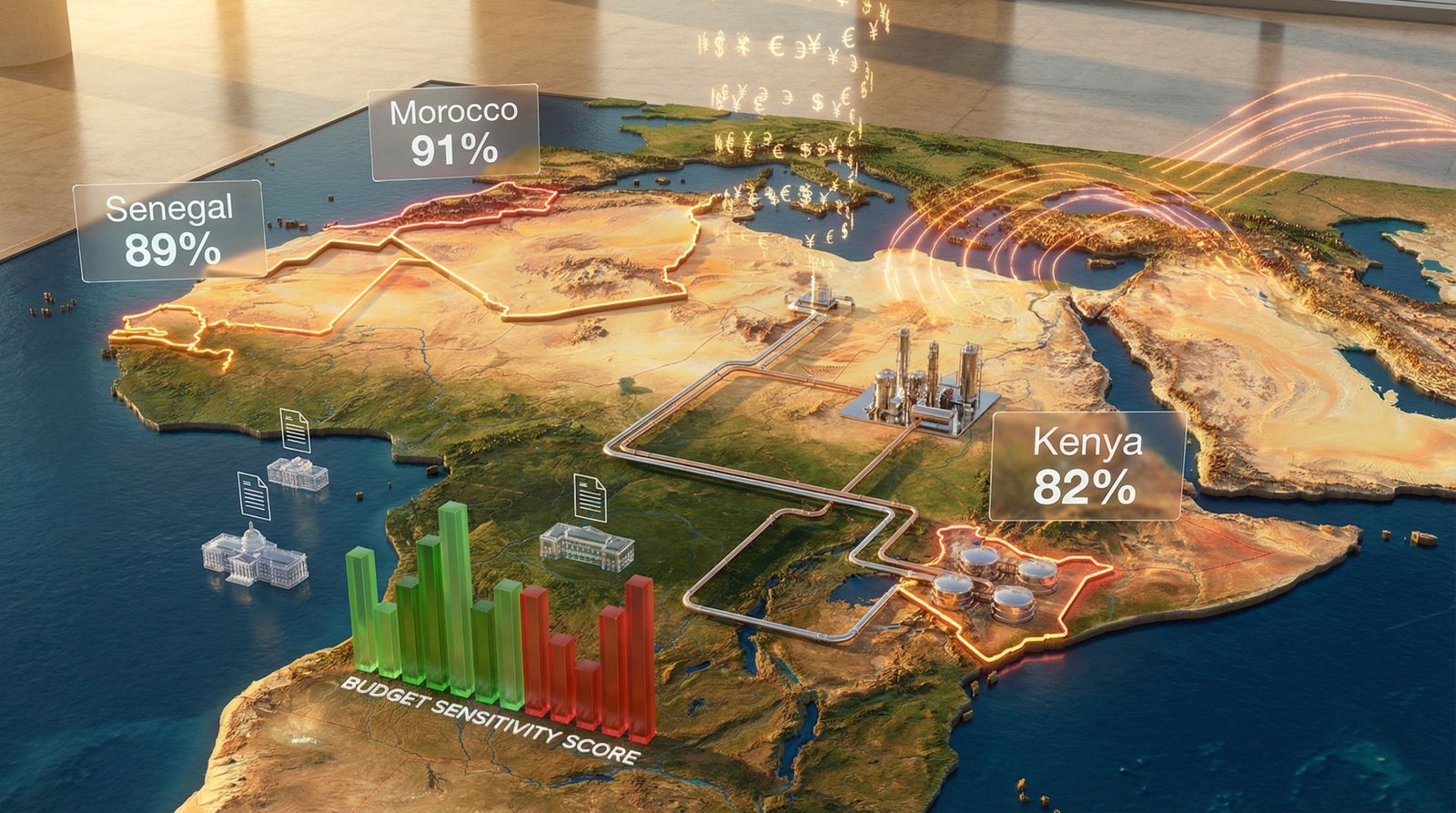
African countries exhibit substantial variation in their vulnerability to global energy price swings. By analyzing import dependency ratios alongside fiscal stress indicators, we can determine each nation’s exposure to energy shocks. The following table illustrates this assessment:
| Country | Import Dependency Level | Fiscal Stress Indicator | Response Timeline |
|---|---|---|---|
| Senegal | Very High | Debt > 130% GDP | Immediate |
| Ghana | High | Moderate debt burden | 1-2 weeks |
| Kenya | High | Growing fiscal pressure | 1-2 weeks |
| Morocco | Very High | Manageable debt levels | Rapid |
Senegal’s heavy reliance on imported fuel coupled with elevated debt levels has made it acutely vulnerable to rising oil prices, compelling quick policy changes.
Effects of Debt-to-GDP Ratios
Countries with high debt-to-GDP ratios encounter amplified vulnerability during energy crises due to diminished fiscal flexibility. Governments operating near or exceeding 100% debt thresholds are often forced to make immediate expenditure adjustments in response to external shocks.
Senegal’s debt burden (over 130% of GDP) exemplifies how underlying fiscal stress intensifies external pressures, thereby limiting policy options and necessitating immediate spending cuts.
Geopolitical Factors and Supply Chain Pressures
Global Energy Market Sensitivities
The global energy landscape is sensitive to geopolitical developments, particularly in the Middle East, where key maritime routes risk disruptions. Recent trade dynamics have compounded supply chain vulnerabilities, affecting not just oil but also essential commodities like fertilizer, thereby threatening agricultural productivity across Africa.
These impacts extend to food security, with warnings of potential crises emerging in regions already vulnerable to climate variability.
Currency and Trade Balance Challenges
The rise in energy import costs puts significant strain on foreign exchange reserves and trade balances within import-dependent African nations. When oil prices escalate, a larger share of foreign currency reserves is diverted to fuel imports, restricting funds for vital imports.
Central banks grapple with policy decisions amid dwindling reserves, often balancing between currency stability and financing imports. Patterns observed during energy price crises showcase the structural vulnerabilities of economies lacking significant export diversification.
Beyond Travel Restrictions: Diverse Fiscal Strategies
Expenditure Reduction Frameworks
Governments in Africa are employing a variety of strategies to address fiscal pressures triggered by energy crises. For instance, South Africa has opted for fuel tax reductions to alleviate domestic price burdens while maintaining revenue streams. In contrast, Ethiopia and South Sudan have opted for supply-side rationing, affecting public services.
Revenue Enhancement and Domestic Substitution
Certain nations, such as Zimbabwe, are exploring domestic substitution strategies like increasing ethanol blending in petrol to mitigate dependence on fuel imports. While these strategies can foster local agriculture and reduce import reliance, they must consider food security implications.
To sustain essential services during fiscal pressure, governments frequently turn to revenue diversification efforts through luxury goods taxation and amendments to import duties.
The Energy Producer Paradox in Africa
Refining Capacity Challenges
Some African countries face the paradox of abundant crude oil reserves yet remain vulnerable to price shocks due to limited domestic refining capacity. Senegal, while progressing in developing its energy sector, still heavily relies on fuel imports, reflecting structural challenges in energy value chain development.
Infrastructure Investment Needs
Investment in refining capacity and other critical infrastructure typically requires long-term planning, which can be difficult to implement amid immediate fiscal crises. Regional cooperation frameworks may improve infrastructure development timelines.
Regional Integration and Crisis Management
West African Economic Cooperation
Mechanisms for regional integration across West Africa may provide frameworks for collective energy crisis management, though effective implementation is tied to existing institutional capacities. Senegal’s ministerial travel restrictions symbolize a broader trend of countries grappling with similar challenges.
Cross-Border Infrastructure Investment
Long-term strategies focused on diversifying energy supply can mitigate risks, but immediate fiscal pressures may necessitate prioritizing urgent investments.
Role of International Financial Institutions
IMF Relationships and Crisis Responses
The interactions between African governments and the International Monetary Fund (IMF) heavily influence crisis management strategies, especially for nations facing debt sustainability challenges. Senegal’s recent travel restrictions align with traditional IMF program specifications.
Alternative Financing Mechanisms
World Bank support and regional development bank frameworks may offer potential solutions during energy crises. Immediate disbursement mechanisms can provide temporary relief, though effectiveness depends on demonstrated policy commitment.
Long-Term Structural Reforms
Fiscal Discipline Development
Energy crises often catalyze public financial management reforms, yielding opportunities for efficiency improvements. Senegal’s travel restrictions may represent the initiating phase of wider fiscal discipline reforms.
Energy Transition Investments
The pressures from energy crises can accelerate prioritization of renewable energy infrastructure as governments seek alternative solutions to minimize import dependency.
Concluding Thoughts on Economic Resilience
The interconnections between energy security, fiscal stability, and food security outline the complex landscape of African economies during periods of global commodity volatility. Understanding these dynamics is vital for policymakers and investors aiming to boost continental resilience in uncertain times.
Emerging from fiscal constraints can provide a pathway to permanent improvements in public financial management systems. As nations like Senegal respond to immediate challenges, the potential for long-term structural reforms and energy transition prioritization significantly influences future directions in African economic policies.
For further insights into African energy market developments and investment opportunities, explore additional resources.
Disclaimer: This article includes forward-looking statements regarding economic policy effectiveness and market developments. Actual results may differ from projections. Always consider multiple information sources when analyzing investment opportunities.
