

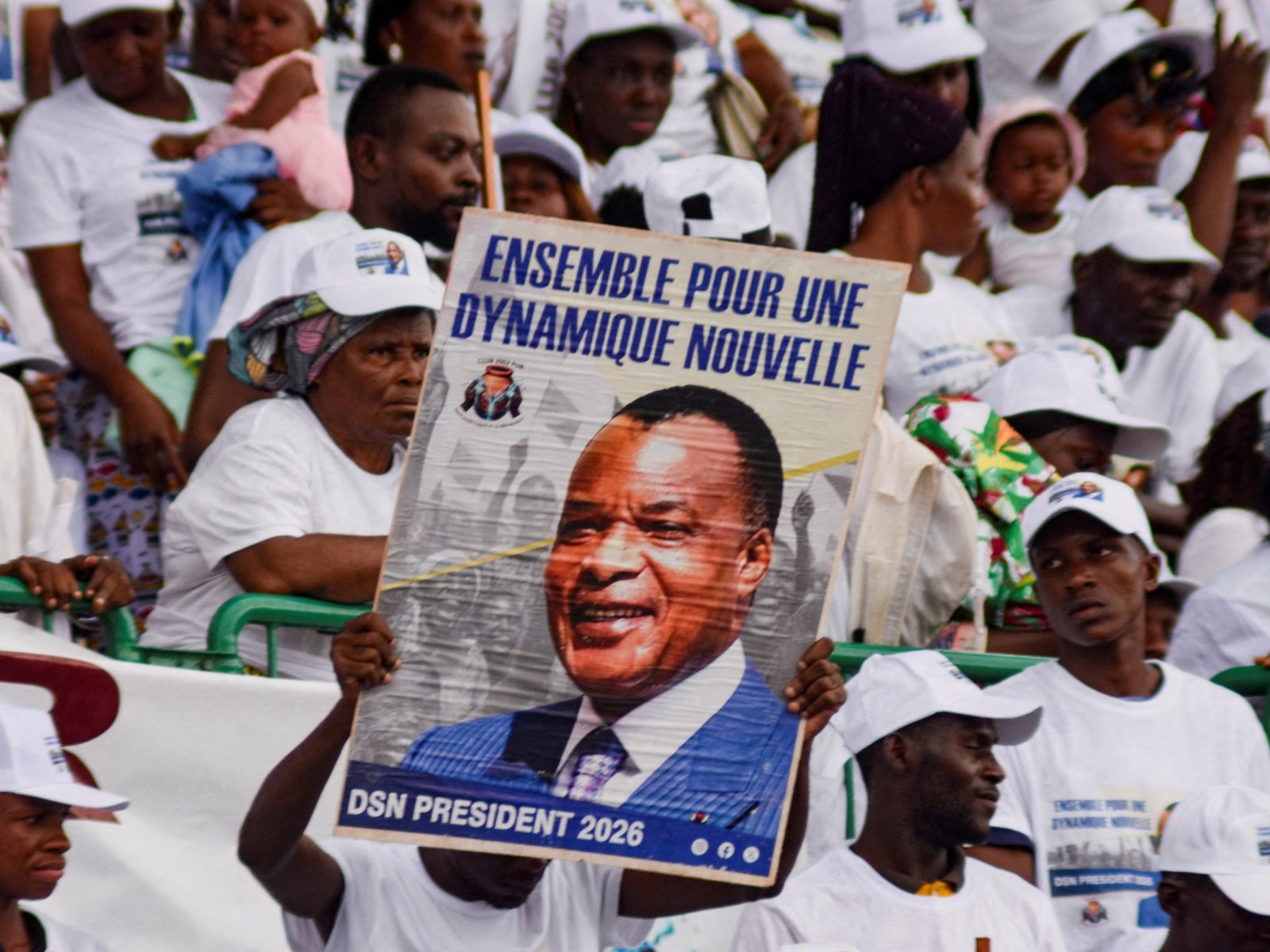
On Sunday, voters in the Republic of Congo are set to cast their ballots for the next president. However, political analysts predict that longtime leader Denis Sassou Nguesso may be reelected without significant opposition, maintaining his grip on the nation after over four decades in power.
The Republic of Congo is regarded as one of Africa’s most politically repressive countries, rated just 17 out of 100 for freedom by Freedom House. This environment raises concerns about the integrity of the electoral process and the potential for genuine political change.
Additional Insights
list of 4 itemsend of list
Despite its status as Africa’s third-largest oil exporter, producing between 236,000 and 252,000 barrels per day, the nation struggles with significant economic challenges. Analysts point to widespread corruption and mismanagement, positioning the Republic of Congo 171st out of 193 nations on the United Nations Human Development Index.
The country boasts rich biodiversity, with its vast tropical rainforests forming part of the Congo Basin—an ecological treasure teeming with wildlife, including elephants and endangered lowland gorillas.
When Do Polls Open?
The polls will be open on March 15 from 6 AM to 6 PM local time. Approximately 2.6 million eligible voters aged 18 and older will be able to participate in the election. The 2021 election saw a voter turnout of 67.7%. Notably, authorities have announced that borders will be closed during voting.
Presidential elections generally see candidates winning by an absolute majority, although a runoff can occur among the top two candidates. Following a 2015 constitutional amendment, Nguesso now faces no age limit or term limitations, allowing him to extend his presidency.
Who’s Running?
Denis Sassou Nguesso: At 82 years old, Nguesso has been a dominant force in Congolese politics since his initial election in 1979. Despite a brief period out of power, he returned through a violent civil war in 1997. Critics highlight his legacy of corruption and economic decline, prompting calls for his removal. The 2015 referendum that eliminated presidential term and age restrictions further solidified his control.
Melaine Deston Gavet Elengo: The 35-year-old engineer is the youngest candidate and leads the Republican Movement. His campaign, focusing on transparency and inclusive development, aims to attract disillusioned voters. Elengo represents a potential youth shift in leadership.
Joseph Kignoumbi Kia Mboungou, 73: Leader of The Chain party, he aims to bring political change through economic diversification, though he has faced electoral defeats previously.
Uphrem Dave Mafoula, 43: As the leader of The Sovereigns, Mafoula runs for change and reforms following a poor showing in the last election.
Vivien Romain Manangou, 43: This first-time independent candidate emphasizes institutional reforms and national unity.
Mabio Mavoungou Zinga, 69: Running under the Alliance party, he promises to combat corruption and advocate for imprisoned opposition leaders.
Anguios Nganguia Engambe: Attempting his fourth run, he focuses on improving political participation and reducing divisions within the country.
Targeted Opposition Leaders
Key Issues Facing the Republic of Congo
Poverty Amid Oil Wealth
Despite its rich oil resources, with over 80% of export revenue derived from oil, Congo battles high poverty levels, with nearly half the population living below the poverty line. Unemployment hovers around 40%, as inadequate infrastructure hampers economic opportunities.
Forests and Agriculture
Historically reliant on agriculture, the country’s shift to oil has made it dependent on food imports. With vast arable land largely untapped, the government is working to enhance local food production while managing environmental concerns linked to deforestation.
Political Freedom and Future Leadership
Social unrest is rarely tolerated, with protests frequently met with force and opposition figures imprisoned. Many anticipate Nguesso’s victory, leading to speculation around the succession race, with potential successors, including his son, Denis-Christel Nguesso, and other political figures, entering the fray.
As the elections approach, the prospect for genuine change remains uncertain, leaving many to question how long Nguesso’s rule can endure and who the future leaders of the Republic of Congo may be.
