

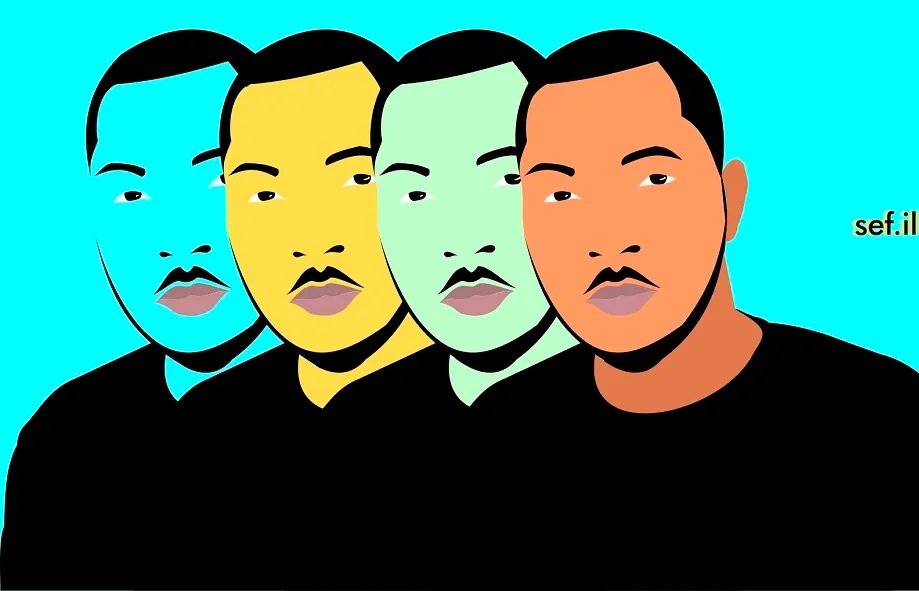
Exploring the Vibrant Intersection of African Heritage and Contemporary Art: The Work of Sef Adeola
Introduction to Sef Adeola
Nigerian illustrator and textile designer Sef Adeola has created a unique visual sphere where ancient traditions meet modern narratives. Known for his striking illustrations characterized by bold silhouettes and intricate patterns, Adeola’s artwork resonates deeply, leaving a lasting impact on viewers.
The Art of Narrative in Illustration
For Adeola, illustration transcends mere decoration; it acts as a vital medium for storytelling. His illustrations often enhance the emotional undertones of accompanying texts while maintaining their own artistic integrity. The mysterious silhouettes of men and women in his work evoke a spectral presence, bridging ancestral memories and contemporary experiences.
Roots of Influence
Adeola’s distinct artistic style can be traced back to his early days as a fine artist. During his studies, the simplicity and symbolism of ancient art forms such as cave paintings and early Egyptian imagery captivated him. This fascination laid the groundwork for the signature silhouettes that define his work today.
His grandmother, a textile dealer on Lagos Island, introduced him to a rich tapestry of colors, fabrics, and Yoruba textile traditions. The complex patterns and rhythms of Yoruba textiles have significantly influenced his visual language, integrating cultural heritage into modern art.
A Blend of Timeless and Contemporary Aesthetics
In Adeola’s creations, ancient inspirations manifest in modern contexts. His spare silhouettes recall ancient cave art while vibrant backgrounds reflect Yoruba fabric designs. This harmonious blend creates an artwork that’s both timeless and contemporary.
Addressing Underrepresented Narratives in African Art
As Adeola began his professional journey, he noticed a gap in the representation of contemporary African experiences through imagery. Though literature has long captured African voices, there remained a dearth of visual interpretations of modern African narratives. (African storytelling) became a central theme in his work as he aimed to reflect the cultural identity, struggles, and imaginative spirit of African societies.
Delving into the Horror Genre
In recent years, Adeola has ventured into the horror genre, pushing the boundaries of African visual culture. His publications in Ojuju Magazine and AC|DC Literary Magazine explore darker themes, utilizing symbolism and atmosphere rather than explicit imagery.
One notable piece titled "The Foreboding" (2025) showcases his innovative approach. The illustration portrays a solitary figure under the menacing presence of a descending spider. The tension imbued in the patterned background intensifies the viewers’ unease, highlighting Adeola’s ability to evoke potent emotional responses.
Ambiguity as a Tool for Emotional Engagement
Adeola’s use of open-ended narratives allows viewers to engage personally with his work. By intentionally leaving interpretations ambiguous, he encourages individual reflections, making the artwork a mirror of diverse fears and emotions.
Exploring African Imagery in Horror
Adeola believes that horror in African visual culture is an underexplored area. Unlike Western horror, which often relies on familiar tropes, African horror is rich with cultural significance. Childhood tales used to instill discipline through fear have shaped his understanding of horror’s role in societal narratives. One memorable story warned that anyone who picked money from the ground would turn into a tuber of yam, encapsulating a crucial moral lesson about integrity.
In his work "A Lurking Spider," published in Ojuju Magazine, the spider serves as a potent symbol of misfortune, drawn from deep-seated spiritual beliefs within various African communities.
The Psychological Dimension of Adeola’s Art
Adeola’s horror aesthetic thrives on subtlety and atmosphere rather than graphic elements. He believes that psychological horror provides a richer canvas for exploring uniquely African fears and cultural memories. His creative process begins with identifying a central theme within a written work, constructing visual representations that encapsulate the narrative’s emotional core.
The Convergence of Art Forms
In Sef Adeola’s masterpieces, illustration and textile design converge beautifully. His expertise in textiles informs his approach to repetition, rhythm, and balance, while illustration allows him to expand these principles into visual storytelling.
Conclusion: Art as a Reflection of African History
Through Sef Adeola’s artistry, we witness a compelling tapestry where pattern transcends into language, and silhouettes narrate stories steeped in African history. His work not only resonates with contemporary themes but also honors the rich legacy of African cultural storytelling.
By embracing the complexities of identity and heritage, Adeola’s illustrations not only reflect the past but also shape the narrative landscape of the future.
