


Oklahoman Influence Shines at the 98th Academy Awards with "Sinners"
The ongoing evolution of film culture is undeniable, and the recent 98th Academy Awards showcased a remarkable blend of talent with deep roots in Oklahoma, particularly through the movie "Sinners." This standout film, directed by Ryan Coogler, garnered significant attention and discussions surrounding its impact on modern cinema.
A Surprising Oscars Night
With both "Sinners" and Paul Thomas Anderson’s film "One Battle After Another" vying for Best Picture, viewers could feel the tension rising throughout the ceremony. Ultimately, Anderson’s film claimed the accolade, but "Sinners" left an indelible mark that resonated deeply with audiences and critics alike. It successfully secured four Oscars from a remarkable 16 nominations, including Best Actor for Michael B. Jordan, Best Original Screenplay for Coogler, and Best Original Score for Ludwig Göransson.
The Academy Museum of Motion Pictures in Los Angeles, California. (ZOE.ELROD/Okla City Free Press)
Rooted in Real History
The storyline of "Sinners" focuses on Sammy, a blues musician navigating the complexities of life in the Mississippi Delta during the Jim Crow era. The film explores his entanglement with a juke joint run by twin brothers and the ominous vampire forces lurking nearby. This innovative blend of horror and history illustrates a culturally rich narrative driven by the artistry of blues music.
“Sinners” not only highlights the resilience of its characters but also addresses the importance of cultural institutions like juke joints, which serve as havens of freedom and communal joy. This intricate depiction comes largely from input by Karlos Hill, a historian from the University of Oklahoma, whose expertise in racial violence and historical memory helped shape the film’s narrative.
The Voice of an Expert
Karlos Hill collaborated with Ryan Coogler from the inception stages of "Sinners." His contributions hark back to his own connections with the Mississippi Delta, providing critical historical context that enriched the film’s storyline. Hill expressed his excitement over the film’s awards, particularly emphasizing the significance of its win for Best Original Screenplay.
"Those are huge accomplishments. Although I do believe it should have won Best Picture, those four awards make a lot of sense to me, and they were certainly richly deserved," he stated.
Hill’s role extended to providing archival materials, including 1930s photographs depicting Black life under the plantation economy, which became integral in shaping the film’s authenticity.
Celebrating Cultural Heritage Through Film
The cultural significance of "Sinners" extends beyond its narrative, as it engages with themes deeply rooted in African American history and the broader struggle against oppression. River Lunsford of Oklahoma Film Exchange noted how the film has inspired discussions surrounding the historical context of the Southern United States, encouraging a more profound understanding of its community dynamics.
The film also places blues music at its core—an art form born from deep-seated emotions and experiences of African Americans. Coogler’s direction, intertwined with Hill’s insights, effectively portrays the juke joint as a vital space for healing and freedom, representing a broader cultural experience that transcends the horrors of its era.
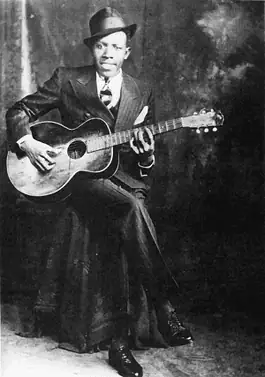
The only known image of blues legend Robert Johnson, an inspirational figure in "Sinners."
The original song “I Lied to You” from the film, performed live at the Oscars, further emphasizes the depth of the musical landscape that "Sinners" engages with, showcasing how the continuum of Black music itself acts as a transformative force.
A Historic Academy Awards
The night at the Academy Museum of Motion Pictures was not just about accolades; it marked a significant cultural moment in film history. Notably, "Sinners" was part of a record-setting night for horror films, securing eight Oscars across various categories. Arguably, the most notable achievement was Autumn Durald Arkapaw becoming the first woman to win an Academy Award for cinematography, highlighting a critical milestone in the movement toward greater representation behind the camera.

Audience at the 98th Academy Awards inside the David Geffen Theater (ZOE.ELROD/Okla City Free Press)
Bridging Art and History
As audiences reflect on "Sinners," it becomes clear that the film serves not only as entertainment but also as a significant cultural artifact. By blending historical insight with narrative, the film emphasizes the powerful role that storytelling has in shaping societal understanding.
Karlos Hill epitomizes the bridge between historical scholarship and cinematic narrative, illustrating how film can engage audiences on emotional and intellectual levels that traditional texts cannot reach. His future ambitions include supporting Black filmmakers striving for authentic representations of Black lives in history.
Through "Sinners," and the voices that contributed to its creation, we witness how art can profoundly affect the world, revealing the stories that deserve to be told. This film’s journey has showcased the enduring legacy of creativity rooted in the historical consciousness of our society.
For more details on "Sinners," visit the Academy Awards official page or explore the OKCMOA events.
