

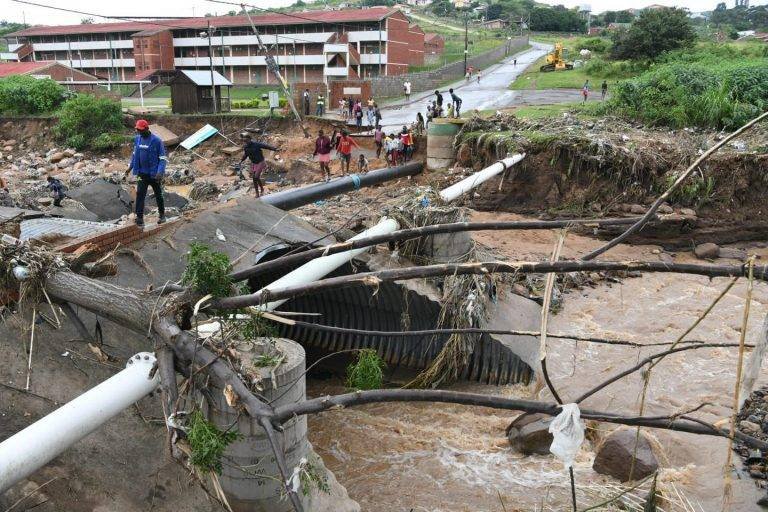
The KwaZulu-Natal province recently suffered from a devastating sequence of natural disasters, aggravated by heavy rains linked to ongoing climate change, as indicated by official reports.
Recurring Natural Disasters in South Africa
South Africa finds itself trapped in a cycle of seasonal natural disasters, primarily driven by severe flooding. KwaZulu-Natal’s recent calamities follow a devastating incident last year in the Eastern Cape, which incurred damages exceeding R5 billion. This year, Mpumalanga is facing losses estimated at R2 billion, while Limpopo has reported preliminary damage assessments totaling R10 billion. Almost half of South Africa’s provinces have felt the impact of these extreme weather events, leading to immense and multifaceted challenges.
A Call for Accountability
As communities mourn lost lives and property, the societal norm appears to shift back to acceptance. The tragedies in KwaZulu-Natal and the Eastern Cape have ignited discussions among affected victims and various leaders, but as time passes, politicians often make only superficial visits. A haunting silence frames the conversations on belonging, highlighting a stark disconnect between the experiences of the victims and the promised responses from leadership. The pattern of inaction suggests that similar tragedies will unfold in the future.
Informal Settlements: A Growing Crisis
In 1994, South Africa was home to approximately three hundred informal settlements. Fast forward thirty-two years, and this number has ballooned to over four thousand, housing more than four million individuals. Recent data from Zandile Phiri of the United Democratic Movement reveals that nearly three thousand shacks were razed by fire over the last two years across the nation’s informal settlements. Examples like those in Imizamo Yethu and Masiphumelele illustrate the perils faced by vulnerable communities. South Africans have seemingly normalized the unsettling reality of inadequate housing and the tragic loss of life.
The Land Administration Dilemma
Central to the persistent challenges of flooding and fire are fundamental issues surrounding land administration in post-1994 South Africa. The relationship between democracy and land ownership must be scrutinized, especially in a nation that emerged from a liberation struggle focused on land restitution. The increase in informal settlements from 300 to 4,000 highlights an alarming oversight of communities striving to reclaim dignity and escape the overcrowding typical of apartheid-era bantustans.
The Urgent Need for Reform
The discussion on land administration involving national authorities, traditional leaders, and local municipalities has become crucial. Recent disasters not only illustrate the effects of climate change but also underscore the decade-long neglect of land governance. Residents of unregulated areas continue to face dire consequences, from destructive winter fires to devastating summer floods. It is clear that leadership has faltered in facilitating appropriate land use for human settlements.
Understanding Inequality and Land Hunger
Recent shifts in South Africa hint at systemic failures in land administration since 1994. As affluent homeowners invest in upper-class properties on unregulated rural land, the marginalized continue to stake claims in informal settlements. The ongoing issue of land hunger affects individuals across various economic strata, illustrating stark divisions in access to essential housing. Poor land management has perpetuated societal disparities that have persisted long after apartheid.
Democracy and the Fight for Land
The essence of democracy in South Africa should inherently address land hunger and the needs of communities impacted by both winter fires and summer floods. The question remains: How does democracy translate into tangible benefits for the millions affected? There is an urgent requirement for a strategic approach to combat the rising tide of informal settlements. A democracy grounded in the fight for land must embody the aspirations of those sacrificed for social justice.
The Racial Dynamics of Land Administration
A troubling aspect of inadequate land administration is its disproportionate impact on black communities. The pursuit of dignity in life and death remains elusive amidst a lack of effective land policies. Even after passing, individuals in informal sectors are often laid to rest in graveyards that mirror the precarious conditions they lived in. Until land governance is recognized as vital for restoring dignity, the struggle for land will remain unfulfilled.
The Path Forward
Since April 1994, adequate land administration has lagged in South Africa. The roles of the Congress of Traditional Leaders of South Africa, the Department of Rural Development and Land Reform, and other entities must evolve to close the current gaps. Leaders cannot stand by passively as historical inequalities resurface, creating further cycles of disaster.
