

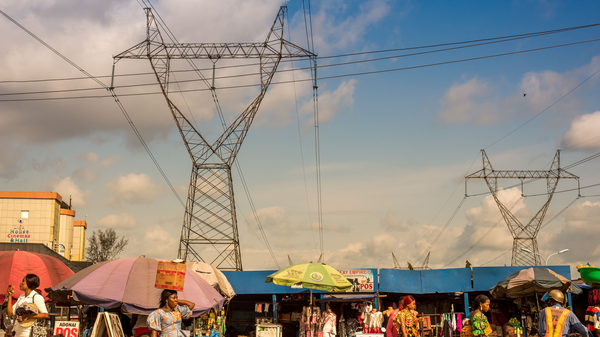
The Impact of Shifting U.S. Energy Policy on Africa: Insights from the Energy for Growth Hub
Understanding U.S. Energy Initiatives in Africa
In early 2025, the Power Africa initiative, a significant program run by the U.S. Agency for International Development (USAID), faced an abrupt discontinuation. This program aimed to fight energy poverty and expand electricity access across Africa but was dismantled along with USAID as part of the U.S. government’s restructuring efforts.
With approximately 600 million people in Africa lacking access to electricity, energy poverty remains a pressing challenge. The cessation of Power Africa raised crucial questions about the impact on energy assets, partnerships, and the overall landscape of energy development in the continent.
The History and Goals of Power Africa
Launched in 2014 during the Obama administration, Power Africa was designed around a bipartisan agreement that addressed energy poverty as a barrier to economic development. The initiative sought to connect 60 million homes and businesses to electricity and add 30,000 megawatts of new generating capacity by 2030. By 2023, the program helped facilitate the financial closure of projects that added 14,000 megawatts of new generation capacity and connected 41 million homes and businesses to reliable electricity.
Many U.S. agencies, including the State Department and the U.S. Development Finance Corporation, collaborated on Power Africa, illustrating a unified approach to tackling energy challenges in Africa. This multi-agency engagement proved effective in expediting energy projects and demonstrated what coordinated efforts among U.S. agencies could achieve.
Transitioning to DOGE: The Shutter of USAID
The transition towards what was termed the Department of Government Efficiency (DOGE) led to significant changes. The shutdown of USAID created an environment marked by confusion and uncertainty. Restrictions were placed on communication and collaboration among U.S. agencies, leaving on-ground partners without vital support or clarity regarding ongoing projects.
Although there was initial hope that programs like Power Africa would endure due to their economic development focus and potential benefits for U.S. companies, the shutdown was sudden and chaotic. Other development agencies, such as the Millennium Challenge Corporation, also halted operations, effectively stalling the entire foreign assistance ecosystem in Africa for months.
The Repercussions for Energy Development in Africa
One of the most notable casualties of the Power Africa shutdown was the credibility of the U.S. as a partner in energy development. The initiative cultivated a commitment to energy market development, advocating for transparent and competitive energy systems. However, the abrupt cancellation of support undermined U.S. credibility, requiring future administrations to rebuild trust to re-engage effectively with African nations.
The chaos surrounding the shutdown reflects the complexity of energy development. Unlike immediate sectors such as health, where disruptions are evident, the long-term impacts on energy infrastructure may take longer to quantify. The long-term consequence will be felt in several areas, affecting the ability to finance infrastructure and provide technical assistance.
The Opportunities Created for Other Countries
With the transition within the U.S. government, China and various Arab states have heightened their involvement in Africa. China’s Belt and Road Initiative had already established its presence before the shutdown, but the gap left by the U.S. may incentivize further engagement from other nations. While dismissing fears that China could simply step in to replace U.S. efforts, experts suggest that countries like the United Arab Emirates are increasing investments in African energy sectors.
Historically prosperous countries such as Kenya, Ghana, and South Africa may continue attracting investments due to their established energy markets. However, confronting the challenge of building energy systems in less developed nations will necessitate focused efforts, particularly in establishing regulatory frameworks.
Navigating the Minerals Landscape
The U.S. administration’s recent focus appears to center on securing minerals like those abundant in Zambia and the Democratic Republic of the Congo. The challenges are significant, as regions rich in minerals often struggle with unreliable energy supply due to factors like drought and infrastructural limitations. This juxtaposition highlights the need for integrated strategies encompassing both energy and mineral resource management.
As U.S. foreign policy evolves, it is crucial to foster a transparent, cooperative approach that respects the sovereignty and needs of African nations. This transition may redefine conventional power dynamics in the region and offer new avenues for sustainable energy development.
Conclusion: A New Era for Energy Policy in Africa
In summary, the dismantling of Power Africa and the broader termination of USAID raised substantial implications for energy development in Africa. With a need for renewed commitment from the U.S., there lies an opportunity for reformation in energy policy that could balance the interests of various international actors competing for influence on the continent.
The evolving landscape presents opportunities for the U.S. to redefine its role, strengthen partnerships, and rebuild its credibility in the international energy sector. As African nations navigate this transition, the collaboration among multiple stakeholders could lead to a more diversified and resilient energy investment landscape, ultimately benefiting the local populations most in need of reliable electricity.
