

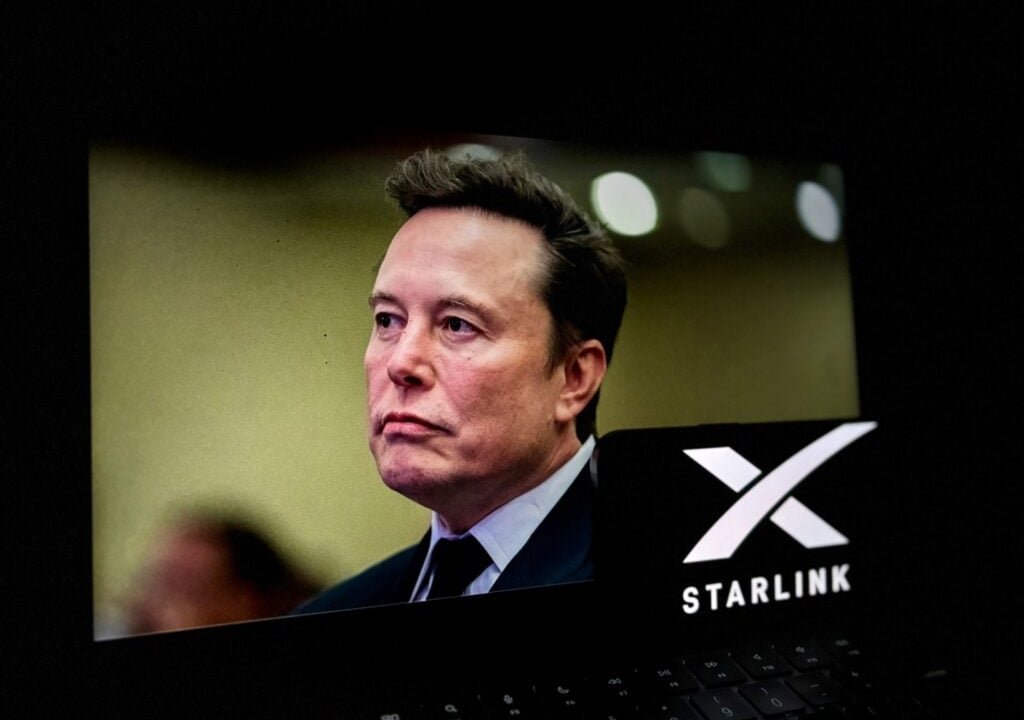
Elon Musk recently sparked controversy by claiming that South African officials are blocking the licensing of Starlink due to his race. Although born in South Africa, Musk alleges that the denial of a license is linked to his being “not Black.” This situation unfolds as discussions about Starlink’s satellite internet breakthrough gain momentum, with venture capitalist Marc Andreessen praising its effectiveness where other satellite internet initiatives have failed.
In a recent post on X, Musk stated that South Africa “won’t allow Starlink to be licensed” and directly linked the denial to racial discrimination. He claimed he was offered several paths to approval involving misrepresentation of local management—a proposal he rejected on principle.
Musk articulated that discrimination, regardless of the targeted group, should not be accepted, urging people to refuse to support politicians he deemed racists. His assertions hold particular weight as Starlink has emerged as a central player in providing high-speed internet connectivity globally, while South Africa’s situation appears to be uniquely marred by political factors.
South Africa won’t allow Starlink to be licensed, even though I was BORN THERE, simply because I am not Black!
We were offered many times the opportunity to bribe our way to a license by pretending that a Black guy runs Starlink SA, but I have refused to do so on principle.… https://t.co/m6G1ZQcC1C
— Elon Musk (@elonmusk) April 12, 2026
The gravity of Musk’s allegations is heightened by the increasing recognition of Starlink as a viable solution for connectivity. His claims indicate a political obstacle distinct from engineering challenges or market demand, particularly as he underscores his personal connection to South Africa.
Andreessen has highlighted the importance of understanding Starlink’s success, describing it as a technological advantage that succeeded where previous ventures, such as Motorola’s Iridium and the Teledesic initiative associated with Bill Gates and Craig McCaw, struggled to establish a sustainable model.
How Starlink Is Disrupting Global Connectivity
On a recent podcast with David Senra, Andreessen emphasized that Starlink’s competitive edge is significantly attributed to SpaceX’s reusable rocket technology, which has enabled frequent launches and rapid advancements. He noted that unlike previous attempts, SpaceX manufactures satellites specifically for its network, allowing it to maintain a consistent launch rhythm.
Reports indicate that Starlink has garnered millions of global subscribers, with some users, including Senra, praising its service. Andreessen views Starlink’s rise as a fusion of engineering innovation and scale, evolving from a sideline project to a crucial element of global infrastructure.
As competition intensifies, SpaceX continues to enhance Starlink’s offerings, rolling out mobile upgrades meant for higher speeds and increased capacity. Additionally, tech giant Amazon has expanded its Project Kuiper through telecom partnerships, focusing on improving existing networks in underserved areas, marking a departure from SpaceX’s direct-to-consumer model.
Starlink’s influence is being felt in the aviation industry as well, with reports that American Airlines Group Inc. is considering partnerships to bring Starlink on board as a connectivity solution for their fleet. This comes in conjunction with discussions tied to Amazon’s Kuiper, as airlines evaluate various satellite providers to enhance in-flight internet capabilities.
Starlink’s Bold Move Toward Global Affordability
Aligning with Musk’s mission to increase accessibility, Starlink is actively pursuing initiatives to reduce costs and offer free hardware, particularly targeting underserved markets. Musk clarified that this strategy is independent of Amazon’s initiatives, focusing solely on making Starlink more affordable for consumers. The implications of this strategy could reshape access to internet services in developing regions.
The ongoing expansion includes a recent agreement for direct-to-cell connectivity in the European Union, underlining Starlink’s commitment to enhancing global connectivity amid rising competition from other satellite services.
The IPO That Could Change Everything
Andreessen’s remarks come as SpaceX secretly files for an initial public offering, projecting a staggering valuation of $1.75 trillion. The narrative surrounding Starlink’s growth significantly influences this estimate, given its rapidly expanding user base and its dual role as a linchpin for SpaceX’s broader launch business.
Additionally, Musk has indicated that Starlink is making strides to lower costs and, in certain instances, offering hardware at no charge, with the goal of increasing its reach in various markets. He characterized these efforts as essential for broader access to satellite internet services, emphasizing affordability as a driving factor.
