

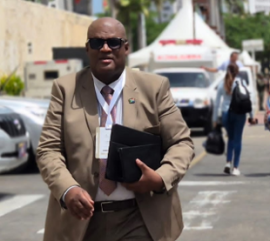
Land Reform: The Cornerstone of Development in South Africa
In a powerful address at the International Conference on Agrarian Reform and Rural Development (ICARRD+20) held in Cartagena de Indias, Colombia, Land Reform and Rural Development Minister Mzwanele Nyhontso emphasized the non-negotiable nature of land issues in South Africa. He described land as essential to genuine social and economic progress and crucial for restoring dignity to millions of South Africans.
Land: A Fundamental Issue for Social Justice
Minister Nyhontso asserted that the question of land is at the heart of South Africa’s ongoing democratic project and liberation struggle. He stated, “There can simply be no compromise on the question of redress for the atrocious legacies of the colonial and past regimes which continue to linger.” He further warned that without resolving land issues, the nation would struggle to address climate challenges and hunger.
Remembering the Legacy of Robert Sobukwe
As the conference coincides with the upcoming 49th anniversary of the death of liberation leader Robert Mangaliso Sobukwe, the Minister invoked his legacy to highlight how land dispossession has been a key factor in the oppression of the African majority and the pursuit of national self-determination.
Global Context of Land Struggles
Nyhontso contextualized South Africa’s land struggles within a broader narrative of the Global South. He pointed out that, two decades after the original ICARRD conference in Porto Alegre emphasized the need for equitable land access, the concentration of land ownership has worsened, leaving marginalized communities in a precarious position.
“We are here in Cartagena to declare that land should not be hoarded by a few,” the Minister passionately stated, describing land as “the foundation of life” essential for the collective survival of humanity.
Debunking Misinformation Surrounding Land Reform
During his address, Minister Nyhontso criticized various “distortions” surrounding South Africa’s land reform initiatives. He specifically challenged narratives about a so-called “white genocide,” labeling them as deliberate misinformation aimed at delegitimizing necessary redress measures, including public interest expropriation.
He urged that in regions across Africa, Asia, and Latin America, natural resources like forests and water sources are being privatized, pushing small-scale producers and fishers into further marginalization. “There can be no ‘just transition’ if it is associated with the displacement of small-scale producers,” he asserted.
Historical Context of Land Dispossession
Nyhontso emphasized over 300 years of dispossession in South Africa, culminating in the infamous 1913 Natives Land Act and the institutionalization of apartheid from 1948 to 1993, which confined the African majority to just 13 percent of the nation’s land. He noted, “The quality of this land remains marginal, and the territories we refer to as communal areas are overcrowded and underdeveloped.”
The Ongoing ICARRD+20 Conference
The ICARRD+20 conference, taking place from February 24 to 28, 2026, serves as a crucial forum for governments, social movements, and international organizations to engage in discussions about global challenges such as land and water grabbing, climate vulnerability, and the urgent need for redistributive land reform.
By placing land reform at the forefront of social and economic discourse, Minister Nyhontso highlighted an undeniable truth: equitable access to land is indispensable for peace, food security, and sustainable development not just in South Africa, but across the globe.
