

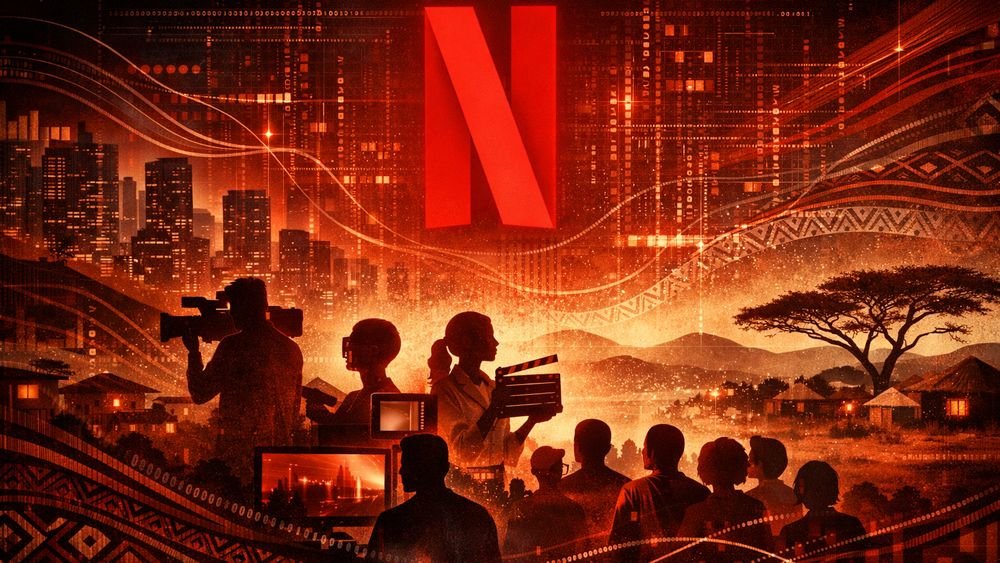
Evaluating Netflix’s Impact on South African Storytelling: A Symposium at UWC
As South Africa commemorates a decade since Netflix’s debut in 2016, students from the University of the Western Cape (UWC) are critically assessing whether the streaming giant has enhanced local storytelling or created a new form of digital neo-colonialism.
Symposium Overview
A pivotal academic symposium took place at UWC on January 27 and 28, 2026, focusing on the influence of global streaming platforms on culture, identity, and power dynamics within the South African media landscape. The event attracted both local and international researchers, who engaged in discussions about the transformation of media in a digital age reshaped by streaming services.
The backdrop of the symposium was particularly relevant given the recent acquisition of MultiChoice (owner of DStv and Showmax) by Canal+ for $3.2 billion. This deal catalyzed discussions around the potential emergence of a transnational media monopoly, moving the conversation beyond the influence of individual platforms.
Research Initiative and Objectives
The symposium was organized by the UWC Chair in Media Inclusion and Diversity and was part of a collaborative research initiative spearheaded by Associate Professor Sisanda Nkoala from UWC’s Linguistics Department, along with Professor Leo van Audenhove from Vrije Universiteit Brussels (VUB). Their joint research aims to strengthen ties between South Africa and Belgium, exploring issues of media inclusiveness in the Global South.
“Over the past ten years, we’ve reflected on our narratives, our policies, and our shifting identities in a digital context,” Prof. Nkoala remarked in her keynote address. “We are delving into essential questions about visibility and representation within our cultural narratives.”
Netflix’s Evolution in the South African Market
Prior to Netflix’s entrance, South African viewers primarily accessed content through traditional broadcasters and a handful of video-on-demand options such as Showmax, launched in 2015. Netflix’s subscription model and extensive catalogue of original programming revolutionized how audiences consumed and produced content.
Since its inception in South Africa, Netflix has progressively shifted from offering an extensive array of international titles to actively commissioning local productions like Queen Sono, Blood & Water, and How to Ruin Christmas. While this has broadened the global exposure of South African stories, debates about representation, cultural authenticity, and narrative control have intensified.
Current Industry Challenges
Researchers at the symposium indicated that Netflix has indeed set the benchmark for the streaming industry, but it now faces unprecedented change. Prof. van Audenhove emphasized the urgency of understanding how global streaming trends manifest differently in South Africa compared to Europe.
“With Canal+ entering the market, we recognize that our knowledge about South Africa’s streaming landscape is limited,” he stated. The MultiChoice acquisition prompts new inquiries into production dynamics, representation, and cultural sovereignty, especially considering Canal+’s established influence in Francophone Africa and the potential for a pan-African media powerhouse.
Digital Access Barriers
Amidst these discussions of content and platform access, the symposium also addressed significant barriers, particularly regarding the “hard” infrastructure of media access. Keynote speaker Axelle Asmar from VUB underscored that high data costs and limited broadband availability hinder the streaming revolution’s reach, especially for many South Africans in rural areas.
“Our analysis extends beyond mere content,” stated Prof. Nkoala. “We must consider issues such as limited broadband penetration and high data costs that restrict access to media, raising questions about who is being represented and who remains ‘coded out’ by algorithms.”
Future Directions in Media Research
The symposium marked the beginning of a long-term research campaign aimed at amplifying South African narratives in global media discussions. A dedicated panel has already been approved for the upcoming International Communication Association (ICA) conference scheduled for June in Cape Town.
The UWC Chair in Media Inclusion and Diversity is also committed to fostering a new generation of scholars. Notably, Carin Hector, a second-year master’s student in the Linguistics Department, presented her research titled The South African Algorithm: Race and Gender. Her work aligns with the Chair’s mission to empower emerging researchers in examining the intricate intersections of language, identity, and algorithms within South Africa’s dynamic digital media framework.
Conclusion
As Netflix’s presence in South Africa continues to evolve, its role in shaping local storytelling and cultural identity remains a complex and timely issue. The discussions initiated at the UWC symposium are a vital step towards understanding how global streaming platforms can influence narratives while ensuring that diverse voices are represented in the digital age.
For more insights into the impact of streaming services globally, visit Canal+ and Netflix’s original productions.
This comprehensive exploration not only addresses the implications of Netflix’s decade-long presence in South Africa but also emphasizes the importance of accessibility and representation in the global media narrative.
