

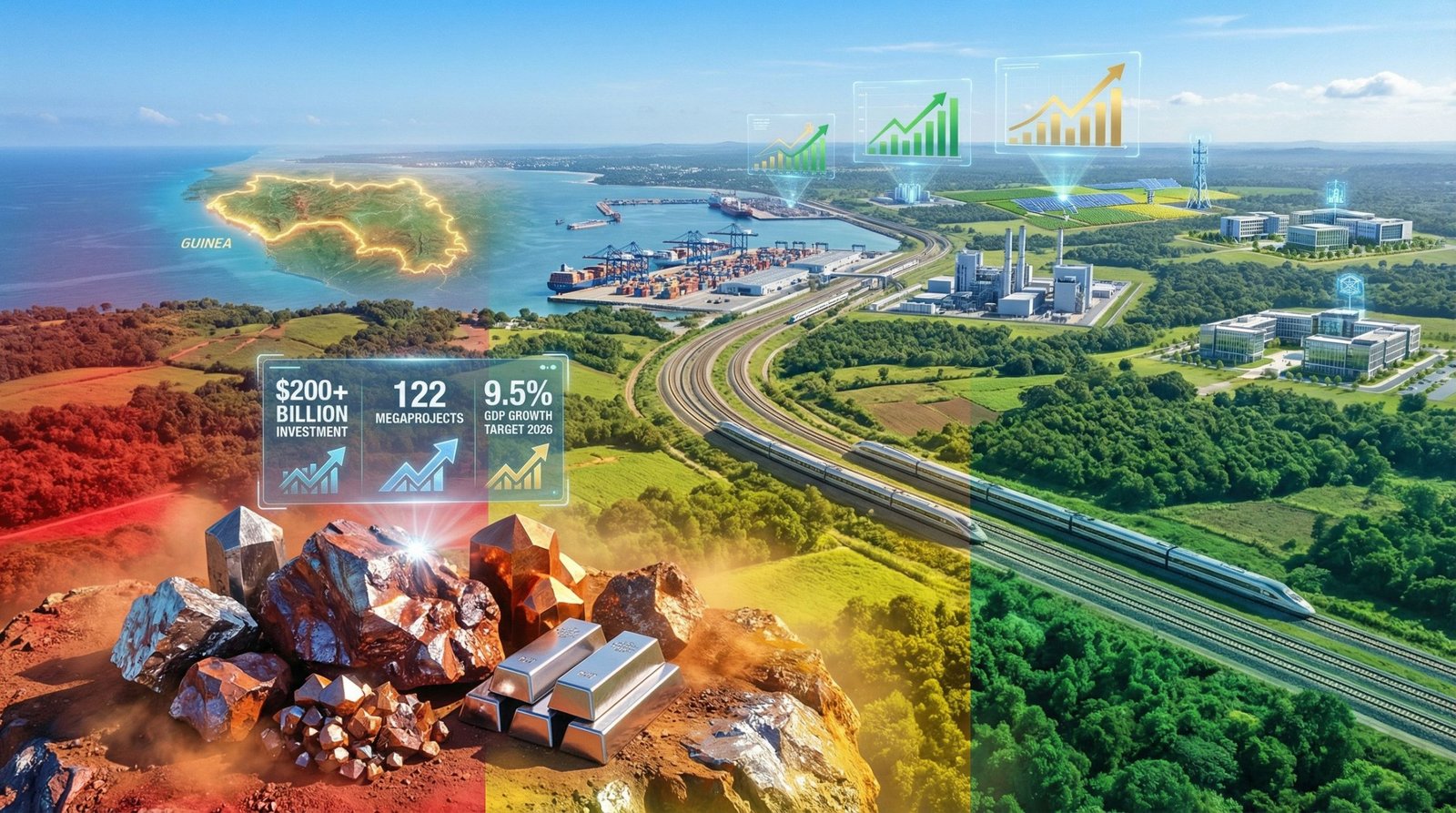
Strategic Framework for African Resource Development
Africa’s mineral-rich nations are undergoing a profound transformation in resource development. This shift aims to escape the traditional extraction-export cycle that has long characterized the continent’s economic interactions with global markets. More than mere policy changes, this movement signals a revolutionary approach to leveraging natural resources as platforms for broad industrial advancement rather than only as commodities for export.
Integrated development models are gaining traction, showcasing the potential of mining infrastructure to spur economic transformation across diverse sectors simultaneously. This revised perspective on resource-led growth prioritizes value addition, regional connectivity, and the strengthening of institutional capacities as pivotal elements in sustainable development strategies.
Economic Transformation Through Strategic Resource Leverage
Guinea serves as an exemplary case of how exceptional mineral resources can be harnessed to drive systematic economic change. With the world’s largest reserves of high-grade bauxite and substantial iron ore deposits, Guinea is poised to embark on integrated industrial development that transcends conventional mining practices.
This strategic framework focuses on diversifying economic bases by transforming raw material advantages into robust sectors such as manufacturing, agriculture, infrastructure, and services. Recognizing that sustainable growth necessitates enhancing productive capacity across various industries, this approach moves away from dependencies on commodity price fluctuations and external demands.
Investment Scale and Partnership Architecture
The Simandou 2040 plan mobilizes substantial capital investments through meticulously structured international partnerships. Notable collaborations with Chinese steel giants like China Baowu Steel Group and Chinalco, alongside Western corporations such as Rio Tinto, create a balanced partnership that merges capital availability with technological expertise.
Regional development entities and multilateral financial institutions complement private investments, ensuring that infrastructure developments align with broader continental integration objectives. This diversified financing approach mitigates dependence on single funding sources while fostering strategic autonomy in decision-making for project implementation.
Such partnerships intentionally balance varying technological methodologies and market access strategies, thereby maximizing knowledge transfer across different industrial sectors and preventing reliance on any single economic relationship.
Phased Implementation Strategy
The development model is systematically sequenced into phases that capitalize on prior achievements while managing inherent risks. The first phase emphasizes establishing foundational transportation, energy, and telecommunications networks that support both mining activities and overall economic growth.
Subsequent phases gradually shift focus toward value-added processing, manufacturing growth, and service sector expansion. This strategic sequencing facilitates human capital development and institutional capacity enhancement, thereby supporting effective management of increased economic complexity.
Furthermore, regional consolidation phases leverage Guinea’s strengthened economic position to enhance trade relations and investment flows throughout West Africa, ultimately evolving the nation from a mere resource exporter into a diversified regional economic hub.
How Does the Simandou Iron Ore Project Drive Economic Diversification?
The monumental iron ore project acts as an economic catalyst, stimulating various sectors through integrated infrastructure and targeted value-added initiatives. This model redefines mining from a standalone operation into a cornerstone for broader industrial development.
Integrated Mining Infrastructure Development
The initiative includes a comprehensive 650-kilometre railway system, linking interior mining regions to deepwater ports capable of handling annual export volumes surpassing 100 million tons. This transport infrastructure fosters new economic opportunities for agricultural producers, manufacturers, and service providers situated along the corridor.
The railway system also supports passenger services alongside freight operations, enhancing mobility and commercial activity beyond mining logistics. The accompanying port facilities are designed for efficient cargo handling, thus facilitating broader economic engagement.
Energy infrastructure developments are tailored to meet both mining demands and regional needs, paving the way for energy-intensive industries and ensuring reliable access to electricity.
Value-Added Processing Capabilities
Strategically, the focus is on establishing steel processing plants and downstream manufacturing operations that capture higher-value segments of the iron ore supply chain. Local beneficiation mandates ensure that a significant proportion of extracted ore undergoes preliminary processing before export, thereby creating job opportunities and local expertise.
This processing strategy not only targets domestic market enhancement but also opens up export opportunities, fostering industrial competencies that can satisfy regional steel demands while cultivating expertise applicable across Guinea’s resource wealth.
Technical training initiatives associated with these processing facilities aim to build a skilled workforce, thus equipping citizens to contribute to various industrial development efforts beyond mining alone.
Regional Connectivity Enhancement
Guinea’s transportation infrastructure extends its economic reach to neighboring nations by improving logistics networks, dramatically lowering trade costs and enhancing commercial ties. Cross-border railways facilitate landlocked neighbors’ access to Atlantic shipping routes via Guinea’s ports.
This new connectivity positions Guinea as a regional logistics and trade hub, unlocking revenue streams from transit services and strengthening broader economic integration within the ECOWAS framework.
Improved transport networks also promote labor mobility and knowledge exchange, allowing Guinea to tap into regional capabilities and contribute to the overall development goals of West Africa.
What Are the Five Strategic Pillars of Guinea’s 2040 Vision?
Guinea’s comprehensive development framework is organized around five interlinked strategic pillars, each targeting distinct aspects of economic transformation while maintaining a cohesive underlying vision. This multi-pillar approach ensures that the benefits of development are broadly shared across society rather than concentrated solely in the extractive sectors.
Agriculture and Food Industry Modernisation
Transforming agriculture focuses on mechanization, improved irrigation systems, and enhanced processing capabilities that boost productivity and strengthen Guinea’s competitiveness in regional food markets. The strategy encompasses both subsistence farming enhancements and the promotion of commercial operations to ensure food security and economic growth.
Key agricultural initiatives target:
• Mechanizing 75% of cultivated land by 2035
• Establishing 50 agro-processing facilities nationwide
• Developing irrigation systems covering 200,000 hectares
• Creating 500,000 jobs in the agricultural sector through modernization efforts
Education and Cultural Development Framework
Human capital development emphasizes technical education and vocational training, alongside programs aimed at the preservation of Guinea’s rich cultural heritage. Strategic investments in education target immediate workforce requirements while fostering long-term advancements in the knowledge economy.
Vocational training aligns closely with industrial needs, ensuring citizens are well-suited to fill created employment opportunities as mining innovations and manufacturing expand. Higher educational programs focus on engineering and management, vital for navigating complex industrial operations.
Preserving cultural heritage as development advances ensures that traditional values are respected, promoting social cohesion alongside technological progress.
Infrastructure and Technology Integration
Digital infrastructure improvements encompass telecommunications networks, data centers, and e-government platforms that support industrial operations and citizen services alike. Tech adoption accelerates across governmental and private sectors through comprehensive digitization strategies.
The development of smart cities within major urban centers integrates modern planning principles with technological solutions to create efficient and sustainable environments that not only attract investment but also enhance quality of life for residents.
Transportation systems are expanded to include urban transit networks, intercity highways, and airport upgrades, all vital for tourism, commerce, and interregional connectivity.
Financial Services and Economic Management
The modernization of the banking sector involves capital market development, refined financial regulations, and improved access to credit for small and medium enterprises. Strengthened financial infrastructures underpin business growth across all sectors while securing macroeconomic stability.
Fiscal reforms prioritize transparency in budgeting, effective tax collection, and balanced debt management, instilling investor confidence while enabling crucial public investments in infrastructure and human capital.
The growth of capital markets will provide fresh avenues for both local and international investment into Guinean enterprises, catalyzing private sector expansion while generating alternative funding sources for developmental initiatives.
Healthcare and Social Development
Advancements in healthcare infrastructure involve facility construction, procurement of essential medical equipment, and comprehensive training for healthcare workers. Improved health infrastructure not only addresses fundamental human developmental needs but also supports increased productivity across the economy.
Social protection frameworks seek to safeguard vulnerable communities while contributing to economic transformation through skills training and job placement assistance. Such frameworks ensure that the fruits of development reach all societal segments, rather than only those in educated urban centers.
Community development initiatives foster local engagement in planning and execution, aligning national development goals with local capacities and priorities.
Which Growth Scenarios Does the 2026 Budget Implementation Target?
The National Transitional Council of Guinea has adopted a robust 2026 budget totaling 64,181 billion Guinean francs (roughly $7.3 billion), marking an 18.3% increase over the prior fiscal year. This substantial budget allocation directly supports the launch of the Simandou 2040 sustainable development initiative while pursuing ambitious economic growth targets.
Short-Term Economic Acceleration (2026-2027)
The enhanced budget aims for a remarkable 9.5% GDP growth in 2026, significantly accelerating from Guinea’s historical performance levels. Between 2019 and 2023, average annual GDP growth was 5.1%, according to World Bank data, with 2024 projected growth at roughly 5.7%, influenced by both mining and non-mining sectors.
Projected total revenue is expected to rise by 27.06% from the revised 2025 budget, driven by improved tax collection practices and augmented mining royalty receipts. This revenue growth offers the necessary fiscal space for continued infrastructure investment while targeting a manageable fiscal deficit of 2.6%.
Eleven ministries have been designated to pilot program-based budgeting methodologies, marking a strategic shift toward assessing outcomes and outputs over conventional input-based funding. This institutional transition aims to enhance the efficiency of resource allocation toward development initiatives.
Key 2026 Targets:
• GDP Growth: 9.5%
• Budget Increase: 18.3% ($7.3 billion total)
• Revenue Growth: 27.06%
• Fiscal Deficit: 2.6%
• Inflation Target: Below 5%
Medium-Term Diversification Outcomes (2028-2030)
In a projection from Standard & Poor’s, economic growth rates are expected to approach 10% annually from 2026 to 2029, bolstered by the ramp-up of the Simandou integrated initiative, increased refining capabilities, and critical infrastructure investments. This external validation aligns Guinea’s growth forecasts with independent economic assessments.
During peak infrastructure development phases, mining is anticipated to contribute approximately 26% to GDP expansion, while non-mining sectors will gradually enhance their economic significance. This approach to balanced growth diminishes reliance on volatile commodity price shifts while fostering a diversified productive landscape.
Infrastructure investments during this phase will focus on finalizing transportation networks, energy systems, and telecommunications frameworks that support both mining solutions and broader economic activities. Enhanced infrastructure will promote private sector investment by decreasing operational costs.
Long-Term Structural Transformation (2031-2040)
The final phase emphasizes the expansion of manufacturing, services, and knowledge-based economic activities that build on earlier infrastructure investments. Regional economic leverage will grow through trade partnerships and improved connectivity with adjacent countries.
Manufacturing efforts will concentrate on steel processing, equipment fabrication, and consumer goods catering to both domestic demands and regional markets. The services sector’s expansion will encompass financial services, logistics, telecommunications, and tourism, benefiting from enhanced infrastructure and rising prosperity.
Knowledge economy initiatives will prioritize technology transfer, R&D capabilities, and greater higher education access, ensuring continued economic advancement beyond the 2040 planning horizon.
What Investment Opportunities Emerge from Simandou 2040 Implementation?
The holistic development program opens doors to extensive investment opportunities across various sectors as infrastructure projects enable private sector growth and industrial diversification. Opportunities extend from immediate infrastructure developments to long-term manufacturing and service ventures.
Infrastructure Development Contracts
Initial infrastructure projects are estimated to require engineering, construction, and project management services totaling more than $65 billion. Opportunities abound in railway construction, port developments, and highway projects for both international firms and local contractors via subcontracting arrangements.
Energy infrastructure projects involve power generation facilities and distribution networks that cater to both mining operations and broader economic activities. Of particular interest is the emphasis on renewable energy solutions, aligning industrial growth with environmental sustainability objectives.
Telecommunications infrastructure expansion also presents opportunities for network equipment vendors, system integrators, and service providers as digital connectivity becomes increasingly essential for modern economic activities.
Major Infrastructure Investment Categories:
| Sector | Investment Scale | Timeline | Key Opportunities |
|---|---|---|---|
| Railway Transport | $25-30 billion | 2026-2030 | Engineering, construction, rolling stock |
| Port Development | $8-12 billion | 2026-2028 | Marine engineering, cargo handling systems |
| Power Generation | $15-20 billion | 2026-2035 | Renewable energy, grid infrastructure |
| Telecommunications | $5-8 billion | 2026-2030 | Network equipment, fiber optic deployment |
Manufacturing and Processing Ventures
Local content mandates and value addition requirements establish protected market avenues for steel processing, equipment manufacturing, and various industrial services. Joint venture agreements with international firms are encouraged through favorable regulatory frameworks and access to infrastructure.
Steel processing facilities benefit from secure iron ore supplies and preferential access to regional markets, creating opportunities for businesses with metallurgical skills. Equipment manufacturing serves both mining and wider industrial development endeavors throughout West Africa.
Moreover, industrial services such as maintenance, logistics, and tech support generate prospects for smaller enterprises, benefiting from the expanded industrial ecosystem without needing extensive capital investments.
Agricultural and Agribusiness Expansion
Mechanization initiatives fuel private sector investment in agricultural tools, irrigation systems, and processing facilities that advance Guinea’s agriculture modernization agenda. Efforts to ensure food security lead to stable domestic markets while fostering export growth.
Agro-processing facilities stand to gain from enhanced transportation networks and improved access to raw materials and export avenues. Processing operations will encompass grain milling, fruit and vegetable processing, and livestock processing, all maximizing the value of agricultural outputs.
Furthermore, agricultural finance services present opportunities for specialized lenders and investment funds aimed at supporting farmer modernization and agribusiness growth across Guinea’s diverse agricultural landscape.
How Does Guinea’s Strategy Compare to Other African Resource-Led Development Models?
The Simandou 2040 strategy stands as a unique framework among African resource-led developmental initiatives, emphasizing thorough economic transformation over mere sectoral growth. Comparative analyses reveal both parallels and crucial distinctions from other national development pursuits across the continent.
| Country | Primary Resource | Development Timeline | Investment Scale | Diversification Focus |
|---|---|---|---|---|
| Guinea (Simandou 2040) | Iron Ore/Bauxite | 15 years | $200+ billion | Manufacturing, Agriculture, Services |
| Botswana (Vision 2036) | Diamonds | 12 years | $50 billion | Financial Services, Tourism |
| Ghana (40-Year Plan) | Gold, Oil, Cocoa | 40 years | $150 billion | Technology, Manufacturing |
| Rwanda (Vision 2050) | Services/Human Capital | 25 years | $75 billion | Knowledge Economy, Services |
| Angola (2025 Plan) | Oil, Diamonds | 10 years | $120 billion | Agriculture, Manufacturing |
Resource Curse Mitigation Strategies
Guinea’s approach places a strong emphasis on economic diversification, institutional fortification, and social development, aiming to circumvent the resource dependency traps observed in other mineral-rich nations. The five-pillar strategy guarantees that the benefits of development extend beyond just the extractive industries, establishing lasting economic foundations.
Fiscal management reforms incorporate the establishment of a sovereign wealth fund, transparent revenue management practices, and sustainable debt protocols, which are crucial in avoiding the boom-bust cycles typical of economies reliant on commodities. Such proactive safeguards set Guinea’s model apart from other resource-led strategies that lack similar protective measures.
Equally, human capital development receives focused attention alongside infrastructure spending, acknowledging that sustainable resource development necessitates a skilled workforce adept at managing complex economic ecosystems beyond mere extraction.
Regional Integration Benefits
Distinct from isolated resource initiatives that primarily serve external markets, the Simandou 2040 plan fosters cross-border infrastructure and trade ties, benefitting neighboring economies while enhancing Guinea’s economic stance.
Transportation improvements allow landlocked nations to connect to Atlantic shipping routes via Guinea’s enhanced ports, creating revenue from transit services and further nurturing regional trade relations. This framework helps position Guinea as a regional economic hub, transitioning it beyond simple exportation.
Enhanced labor mobility and skills exchange deliver knowledge advantages across borders, contributing to regional strength while allowing Guinea to tap into broader labor markets and opportunities across West Africa.
What Challenges Could Impact Simandou 2040 Implementation Success?
While ambitious and resource-intensive, the Simandou 2040 initiative faces significant implementation challenges that could affect its ultimate prospects and necessitate adaptive management throughout the development timeline.
Poverty Reduction and Social Inclusion
A substantial 52% of Guinea’s population currently lives in poverty, according to government statistics, escalating the need for development initiatives to yield tangible improvements in living conditions and employment prospects. Striking a balance between long-term infrastructure development and immediate poverty alleviation is critical.
Income inequality may widen during initial growth phases, as skilled and urban populations might benefit more swiftly from industrial advancements than rural communities reliant on traditional agriculture. Targeted social initiatives will be crucial to securing broad-based political backing.
Generating employment across various skill levels is essential to ensure that development benefits reach the less educated portions of the population. Success hinges on creating sufficient job opportunities for Guinea’s sizable youth demographic.
Fiscal Management and Debt Sustainability
Effectively managing large-scale infrastructure developments while adhering to fiscal discipline calls for sophisticated financial planning and governance. With a projected fiscal deficit of 2.6%, Guinea has little room for cost overruns or revenue dips that often plague extensive infrastructure projects.
Debt sustainability emerges as a crucial concern as international funding supports infrastructure initiatives. The government’s commitment to “prudent debt management and tighter control of domestic debt” acknowledges these risks, yet consistent fiscal discipline across multiple budget cycles remains imperative.
Revenue forecasts rest heavily on mining sector performance and commodity price stability, creating exposure to external economic shocks that could limit available resources for ongoing development efforts.
Political Stability and Institutional Capacity
Long-term development strategies necessitate consistent political support and institutional capabilities that can adapt to changing conditions while upholding strategic guidance. The current transitional government context in Guinea introduces uncertainties regarding sustained policy continuity over the long term.
Institutional capacities need to evolve to efficiently manage increasingly complex economic activities that will arise as infrastructure develops and diversification accelerates. Initiatives like the pilot program-based budgeting illustrate institutional advancement, yet broader capacity building remains paramount.
The risk of corruption rises alongside large-scale infrastructure expenditures and resource revenue flows, underscoring the need for robust governance and oversight mechanisms to maintain public trust and confidence from international partners.
How Do International Partners Support Simandou 2040 Objectives?
The achievement of Guinea’s development program significantly relies on sustained international partnerships, providing capital, technology, and market access while honoring Guinea’s strategic priorities and developmental goals.
Chinese Investment and Technology Transfer
Strategic alliances with firms like China Baowu Steel Group and Chinalco lend substantial capital alongside technology transfer possibilities and access to Chinese steel markets. These partnerships provide immediate funding solutions along with guaranteed export demand for iron ore production.
Chinese contributions extend beyond the mining arena, encompassing infrastructure development, equipment provision, and industrial growth that tie into China’s Belt and Road Initiative while reinforcing Guinea’s diversification objectives.
Technology transfer agreements include techniques for steel processing, mining equipment utilization, and infrastructure construction methodologies that bolster Guinea’s internal technical capacities while reducing long-term reliance on foreign expertise.
Western Mining Company Participation
Ongoing participation from entities like Rio Tinto introduces international mining expertise, environmental standards, and access to global markets that enhance the benefits of Chinese collaborations. This Western involvement brings an operational balance as well as adherence to international best practices, improving overall project outcomes.
High environmental and social governance standards associated with such companies enable Guinea to meet global sustainability benchmarks while attracting additional investment from institutions that stress responsible development practices.
Moreover, diversifying markets through Western ties mitigates dependency on Chinese export demands, granting access to European and American steel markets, which offer varied pricing structures and contractual options.
Multilateral Development Institution Support
Organizations like the World Bank and African Development Bank contribute technical assistance, policy direction, and social expertise that complement private sector capital. Multilateral involvement boosts program credibility and operational capability.
Support from these institutions encompasses governance enhancements, environmental protections, and social development initiatives that ensure equitable resource distribution, benefiting vulnerable communities while aligning with international standards for responsible resource management.
Through policy dialogues, international institutions assist Guinea in synchronizing its development strategies with best global practices while maintaining the flexibility to adapt initiatives to local contexts and requirements.
What Regional Economic Impact Will Simandou 2040 Generate?
Guinea’s developmental success is set to cast a wider impact across West Africa, influencing broader economic integration and development trends. The program’s regional implications could catalyze economic restructuring in several neighboring nations while paving the way for innovative continental development models.
West African Trade Flow Transformation
By enhancing transportation frameworks, new trade routes will connect landlocked nations like Mali, Burkina Faso, and Niger to Atlantic ports via Guinea’s refined logistics networks. This regional commerce stands to benefit from reduced shipping costs and improved reliability for trading activities.
Cross-border railway systems will facilitate smoother transactions of goods, people, and services through ECOWAS borders, potentially speeding up economic integration beyond existing trade agreements. As Guinea elevates its status as a regional logistics powerhouse, it opens pathways to revenue opportunities while nurturing neighboring development.
The reduction of transportation barriers and the strengthening of trade relationships will drive regional market integration, thereby fostering larger-scale manufacturing operations that cater to both national and regional demands.
Labour Market and Skills Development
Extensive infrastructure projects will generate employment opportunities across a variety of skill levels, while training initiatives will cultivate the technical competencies necessary for industries across West Africa. Regional mobility of labor will allow workers to seek out new opportunities, benefiting Guinea by broadening its talent pool.
Technical education and vocational programs will produce graduates whose skills are transferable across borders, aiding industrial development in multiple countries while fostering networks of expertise that serve the entire region.
Professional development in areas such as engineering, project management, and industrial operations will create human capital that advances economic initiatives across West Africa, well beyond Guinea’s specific programs.
Economic Integration Acceleration
Guinea’s developmental success could inspire similar comprehensive initiatives in neighboring nations, potentially accelerating ECOWAS economic integration through bolstered transportation and trade ties.
Financial integration prospects are augmented as Guinea’s banking sector upgrades pave the way for cross-border financial services and investment opportunities that facilitate regional economic progress. Improved financial infrastructures will ease trade and investment flows among various countries.
Coordinated policy efforts between Guinea and its neighbors can yield streamlined approaches to infrastructure advancement, trade facilitation, and industrial growth, ultimately maximizing regional gains from individual development strategies.
Key Takeaways: Simandou 2040’s Strategic Significance
Guinea’s Simandou 2040 initiative marks a significant departure from conventional resource development models in Africa, prioritizing comprehensive economic transformation over limited sector-focused growth. The program’s lofty investment of over $200 billion and its 15-year timeframe illustrate an unprecedented commitment to systematic development planning that spans various economic sectors.
The interlinked five-pillar framework ensures broad-based development benefits that enrich sectors such as agriculture, education, infrastructure, financial services, and healthcare—all crucial in addressing Guinea’s 52% poverty rate while building sustainable economic foundations. This inclusive strategy significantly differentiates the program from traditional resource development efforts, which often primarily favor narrow extractive interests.
International collaborations involving Chinese steel companies, Western mining enterprises, and multilateral finance institutions ensure the availability of necessary capital, technology, and expertise for effective program execution, while preserving Guinea’s strategic autonomy in planning and implementation. The balanced approach to partnerships mitigates reliance on singular relationships while optimizing knowledge transfers.
Ultimately, success hinges on adeptly managing implementation challenges, such as maintaining fiscal discipline alongside extensive infrastructure spending, creating job opportunities during industrial expansions, and progressively enhancing institutional capacities to support increasingly intricate economic activities. The government’s transition to program-based budgeting and commitment to transparent debt management reflect an acute awareness of these challenges.
The initiative’s regional implications extend well beyond Guinea’s borders, with transportation enhancements poised to transform West African trade dynamics and catalyze economic integration across the ECOWAS landscape. Furthermore, innovations related to mine reclamation and insights on industry consolidation could set a new continental benchmark for resource-led development, steering clear of traditional pitfalls associated with resource dependency while fostering sustainable economic advancement.
The recent adoption of a 2026 budget reflecting an 18.3% rise to $7.3 billion and an ambitious 9.5% GDP growth target provides a solid foundation for program realization, while the projected 27.06% revenue increase showcases enhanced resource mobilization capabilities that underpin long-term growth objectives.
This analysis draws from economic projections and development plans, which carry inherent uncertainties. Actual results may deviate significantly based on global economic conditions, commodity prices, political developments, and implementation effectiveness. Interested parties should conduct independent due diligence prior to investment related to Guinea’s development initiatives or associated prospects.
Looking to Capitalise on African Resource Development Opportunities?
Discovery Alert offers insights through its proprietary Discovery IQ model, delivering real-time alerts on significant ASX mineral discoveries. Empower yourself to identify actionable opportunities ahead of the market by visiting Discovery Alert’s dedicated discoveries page. Explore historic examples of exceptional outcomes and subscribe for a 14-day free trial today to stay ahead of the competition.
