

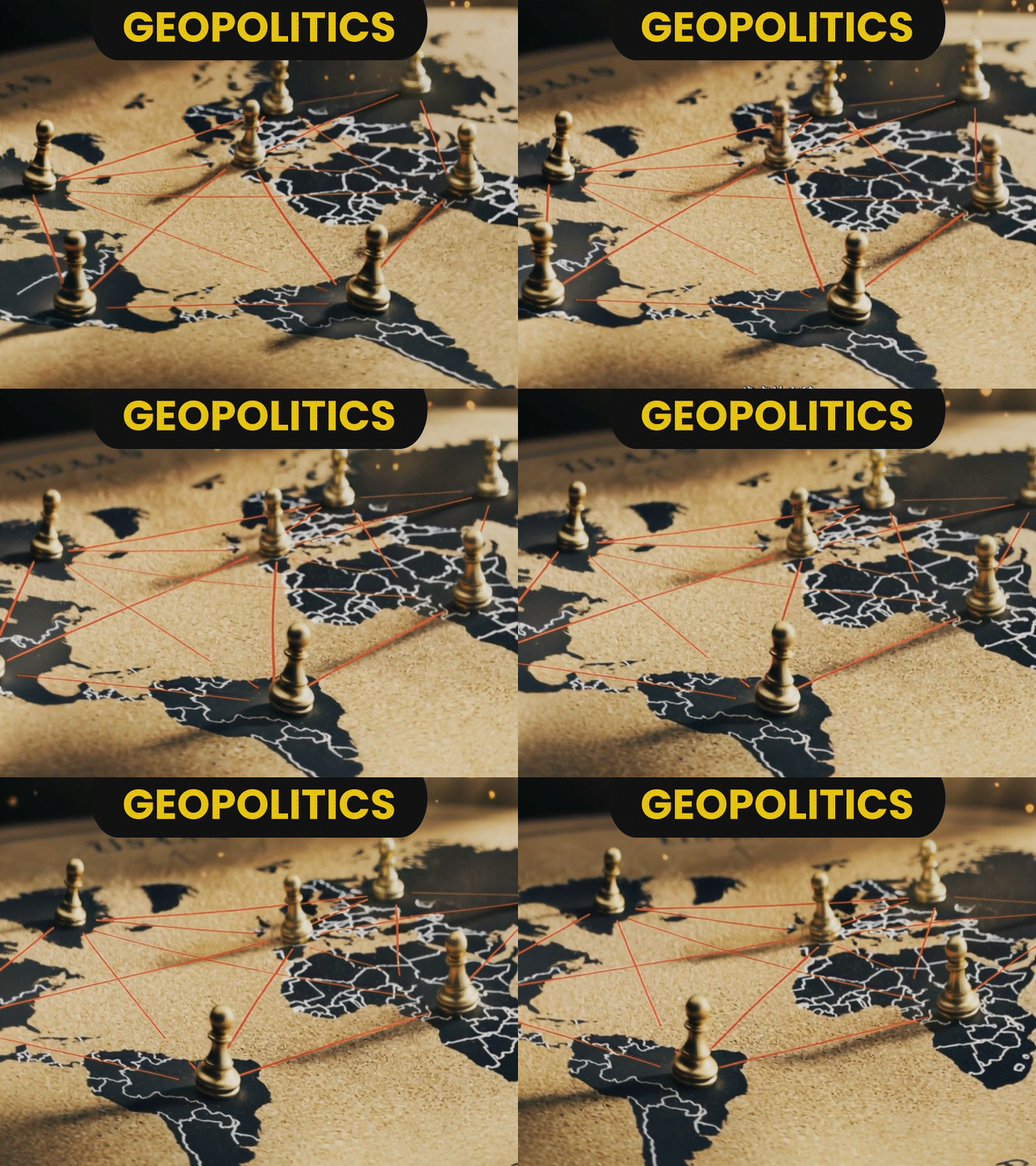
Understanding Geopolitics: Origins, Theories, and India’s Role
Geopolitics is a term that has gained significant attention in contemporary discussions about global affairs. Despite its frequent usage, many might wonder about its origins and implications. This article delves into the historical foundations of geopolitics, its development through strategic theories, and India’s current geopolitical significance.
What is Geopolitics?
Geopolitics examines the interplay between geography, politics, and international relations. It highlights how geographical factors—such as location, resources, and territorial borders—shape the actions and behaviors of nations.
The Birth of the Term
Before the concept was formally articulated, thinkers had already recognized the relationship between geography and political power. German geographer Friedrich Ratzel proposed that countries behave like living organisms that require space and resources to thrive. This early contemplation laid the groundwork for the more formalized study of geopolitics.
In 1899, Swedish political scientist Rudolf Kjellén coined the term Geopolitik, which evolved into the more widely recognized term geopolitics. Kjellén emphasized that a nation’s geographical context plays a crucial role in shaping its policies and actions.
Key Theories Influencing Modern Geopolitics
As geopolitics gained traction, several strategic theories emerged that significantly shaped modern geopolitical thought.
Heartland Theory
In 1904, British scholar Halford Mackinder introduced the Heartland Theory, positing that control of Central Asia and Eastern Europe—termed the "Heartland"—was essential for global dominance. Mackinder famously stated:
“Who rules Eastern Europe commands the heartland, who rules the heartland commands the world island, who rules the world island commands the world.”
Mackinder argued that the Heartland’s geographical position endowed it with crucial advantages:
- Natural land protection against invasions.
- A bridge connecting Europe and Asia.
- The transformative impact of railways on warfare dynamics.
Mackinder’s perspective led to the development of concepts like the World Island, which encompasses Europe, Asia, and Africa, the most populated and resource-rich continents.
Rimland Theory
Contrasting Mackinder’s viewpoint, American strategist Nicholas Spykman proposed the Rimland Theory, which asserted that coastal areas surrounding the Heartland—from Western Europe to East Asia—were more strategically important.
Spykman argued that the Rimland was pivotal for global power struggles due to its control over trade routes, key population centers, and access to both land and sea power.
India’s Geopolitical Significance: Then and Now
Historically, India’s location has made it a crucial bridge between East Asia, Central Asia, the Middle East, and Europe, serving as a vital link in ancient trade networks like the Silk Route.
In contemporary times, India’s geopolitical importance has amplified dramatically. Sitting at the heart of the Indian Ocean Region, India plays a crucial role in maritime security and regional stability, as a considerable volume of global trade routes converge in this area. Membership in strategic partnerships such as the Quad, which includes the United States, Japan, and Australia, further solidifies India’s position on the global stage.
Layers of Modern Geopolitics
Today’s geopolitical landscape extends beyond traditional territorial disputes. Countries are vying for control over:
- Trade corridors
- Energy pipelines
- Technology
- Cybersecurity
- Space resources
This multi-layered competition reflects a world where power dynamics operate on various interconnected fronts, emphasizing the importance of data, technological prowess, and digital influence.
The Future of Geopolitics
Future geopolitical dynamics will likely pivot towards technology, trade routes, energy resources, environmental factors, and digital supremacy rather than just geographical territories. As nations compete for control over critical infrastructure, such as sea routes and technological advancements in areas like Artificial Intelligence and semiconductors, India’s strategic importance is set to grow further due to its robust economy and pivotal geographical location in the Indian Ocean.
German philosopher Immanuel Kant’s words resonate in this context:
“Peace is not a natural state of things.”
Kant’s insights illustrate that the evolving nature of geopolitical interests involves both cooperation and competition, reflecting the transient nature of global relationships.
Conclusion
Understanding geopolitics is essential for grasping the complexities of international relations today. As geographic and strategic considerations continue to evolve, nations like India are poised to wield greater influence on the world stage, making the study of geopolitics more relevant than ever. For additional insights on geopolitics, consider exploring this resource for a deeper understanding of current events and strategic considerations.
