

The Importance of Long-Term Coal Supply Agreements for Energy Security
The recent Exxaro and Eskom coalition showcases how strategic alignments between mining corporations and utilities lay the groundwork for national energy autonomy. In South Africa’s dynamic energy sector, coal remains essential for grid reliability and economic resilience. Multi-decade supply contracts present a stark contrast to the unpredictable nature of spot market transactions, granting operational stability that fosters infrastructure investment and energy transition strategies.
Coal as a Cornerstone for Baseload Power Generation
To ensure consistent frequency stability and manage fluctuating demand, modern power grids require reliable baseload capacity. Coal-fired power plants offer continuous generation capabilities that are crucial to complement intermittent renewable energy sources. Long-term supply agreements also guarantee fuel consistency, allowing facility operators to fine-tune combustion parameters and maintain thermal efficiency over extended periods.
The 17.7-year term of the Matla contract illustrates how extensive agreements support capital investment initiatives. With secured coal supplies lasting until 2043, utilities can confidently justify infrastructure modernisation and emissions control upgrades, proving essential during energy transition efforts where coal stabilizes the grid as renewable capacity scales up.
Mitigating Risks through Multi-Decade Partnerships
The potential for supply chain disruptions poses significant challenges to electrical grid stability, elevating fuel security to a national concern. Long-term agreements shift the burden of price volatility from utilities to mining firms, offering revenue certainty that helps extend mine lifespans and finance community investment projects. The Cost Optimisation and Revenue Enhancement (CORE) program framework reveals that structured procurement can yield 15-20% cost savings compared to spot market purchases during volatile periods.
- Integrated logistics planning between mine and station operations
- Quality specification consistency to optimize maintenance schedules
- Capital investment coordination for transport and handling infrastructure
- Regulatory compliance alignment with emissions standards
Influence of Coal Quality Specifications on Power Plant Efficiency
The efficiency of power generation closely relates to fuel quality consistency. The Matla partnership incorporates stringent coal quality criteria that significantly affect combustion performance, maintenance, and environmental compliance, serving to optimize thermal efficiency and reduce operational costs.
Technical Criteria for Optimal Combustion Performance
Power plant thermal efficiency hinges on various coal quality parameters. Standards for calorific value typically range from 19-26 MJ/kg for South African thermal coal, with higher calorific values yielding greater energy output per ton. Consistent calorific content ensures steady steam generation rates and optimizes turbine performance across varying loads.
Ash content limitations also safeguard equipment from undue wear and minimize maintenance interruptions. Lower ash percentages reduce slag accumulation in boilers, extending equipment lifespan and lowering cleaning frequency—resulting in higher capacity factors and decreased operational expenses for aging power facilities.
Moisture content specifications influence both transportation expenses and combustion efficiency. Excessive moisture compromises calorific value while increasing weights for handling; thus, long-term agreements typically set maximum moisture levels for stable energy density and transportation economics.
Optimizing Environmental Performance through Contract Design
Modern coal supply agreements increasingly emphasize environmental performance targets via quality specifications. Sulphur content regulations directly affect SO2 emissions, where lower sulphur coal lessens environmental impact and compliance costs for utilities. For example, Matla’s focus on reducing its overall carbon footprint underlines how quality specifications bolster emissions reduction initiatives.
- Coal beneficiation technologies for quality enhancement before delivery
- Blending specifications to optimize combustion characteristics
- Ash composition standards to promote beneficial reuse
- Trace element controls to minimize environmental releases
Economic Impacts of Mining Partnerships on Regional Communities
Long-term coal supply agreements often create economic multiplier effects that transcend direct mining employment, as seen in the Matla partnership, which acts as a critical economic pillar in Mpumalanga. These strategic resource developments enhance regional stability and support community investment initiatives, significantly impacting the broader resources sector across mining territories.
Stability in Employment and Skills Development Programs
Direct job creation illustrates the immediate economic benefits stemming from ongoing mining operations. Large-scale coal mining can generate:
| Impact Category | Direct Benefits | Indirect Benefits | Long-term Multipliers |
|---|---|---|---|
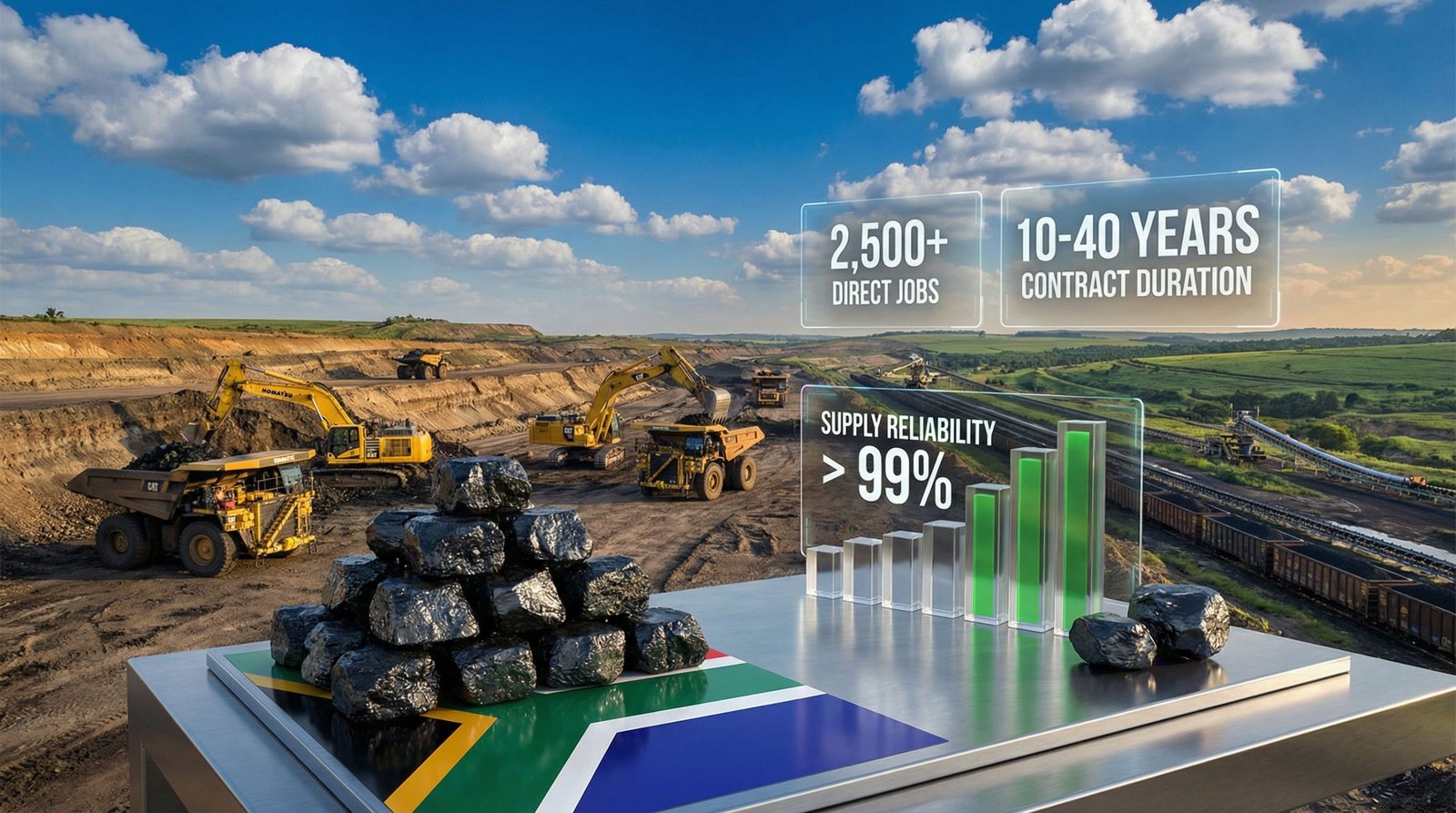
| Employment | 2,500+ direct jobs | 7,500+ indirect positions | Skills training programs |
| Infrastructure | Rail and road upgrades | Community facilities | Enhanced regional connectivity |
| Education | Training centres | Scholarship opportunities | Development of technical skills |
The 40-year legacy of the initial Matla partnership highlights the benefits of job sustainability. Multi-decade contracts furnish workers with opportunities to develop specialized competencies and pursue career advancement, allowing families to invest in local education and housing, establishing sturdy economic foundations.
Infrastructure Investment and Community Development
Mining partnerships stimulate infrastructure investment that benefits entire regions. Improvements in transportation networks, including rail and road enhancements, bolster logistical efficiencies supporting wider economic expansion. These investments yield long-lasting value beyond the mine’s operational lifespan.
Investments in educational facilities symbolize a long-term commitment to community welfare. Training centres born from mining partnerships often transition into regional technical colleges that serve broader industries while scholarship programs open pathways for community members to explore careers in various sectors.
Land-use management initiatives align mining operations with comprehensive community development goals. These efforts encompass:
- Agricultural projects utilizing reclaimed mining land
- Water management systems addressing community needs
- Environmental rehabilitation projects resulting in recreational spaces
- Cultural heritage preservation efforts safeguarding community identity
Influence of Life-of-Mine Extensions on Investment Decisions
The longevity of mines directly affects capital allocation strategies throughout the mining chain. The Matla Life of Mine (MLoM) expansion initiative highlights how extending supply agreements catalyzes significant infrastructure investments to enhance operational capabilities and prolong economic benefits.
Capital Allocation Strategies for Sustained Operations
Extensions of mine life necessitate aligned investment strategies between mining firms and utility providers. Eskom’s infrastructure investments under the MLoM project bolster mine capability while securing long-term fuel reserves. This collaborative approach maximizes operational advantages while distributing capital obligations between parties.
- Upgraded mining equipment enhancing extraction efficiency
- Modernized processing facilities improving coal quality stability
- Expanded transportation systems increasing handling capacity
- Advanced environmental controls satisfying evolving regulations
Market Positioning through Operational Stability
Long-term agreements confer competitive advantages extending beyond immediate operational perks. Mining firms with secured contracts can negotiate more favorable financing terms for growth projects and attract institutional investment capital. This financial security facilitates strategic positioning during periods of industry consolidation, especially when implementing volatility hedging strategies.
Operational certainty aids strategic planning across various timeframes:
- Short-term optimization of production schedules and quality oversight
- Medium-term capacity expansion assessments and equipment sourcing
- Long-term resource development and community investment strategies
- Transition planning for post-mining land use
Cost Optimization Programs and Utility Recovery
State-owned utilities encounter intricate financial recovery challenges demanding comprehensive cost management strategies. The CORE framework exemplifies how structured supply agreements bolster broader organizational transformation while preserving service reliability and community advantages.
Procurement Efficiency via Structured Agreements
Long-term contracts mitigate the need for recurring procurement cycles that can drain administrative resources and create pricing uncertainty. Streamlined supply chain management enables utilities to concentrate operational focus on plant efficiency enhancements and grid optimization initiatives. Over prolonged contract durations, these efficiency gains accumulate, offering substantial cost reductions.
- Volume pricing breaks reflecting supply certainty premiums
- Transportation efficiencies from dedicated logistics arrangements
- Quality assurance protocols lowering fuel handling and processing expenses
- Reduced administrative costs from simplified contract oversight
Financial Recovery Strategies for State-Owned Utilities
Predictable fuel pricing allows for better financial planning and cash flow management. Utilities leveraging known pricing parameters can develop precise revenue forecasts and debt servicing schedules. Additionally, this financial stability supports credit rating improvements, reducing borrowing costs for vital infrastructure investments.
Supply security conveys operational advantages that enhance financial performance:
- Improved capacity factors from consistent fuel availability
- Fewer unplanned outages stemming from fuel quality challenges
- Lower maintenance costs via stable combustion conditions
- Enhanced grid stability promoting industrial client retention
“Strategic coal supply partnerships provide essential grid stability during energy transition periods, with proven track records delivering 15-20% cost savings versus spot market procurement while maintaining operational excellence and community development commitments.”
Integrating Baseload Coal Generation into Energy Transition Strategies
Planning for energy transitions mandates a balanced approach that preserves grid reliability while incrementally boosting renewable energy capacity. Coal-fired generation plays a pivotal role in providing necessary grid services during these transitional phases, including frequency regulation, voltage support, and backup capacity for variable renewable sources.
Grid Stability Amid Renewable Integration
Electrical grids necessitate continuous equilibrium between generation and demand, as frequency deviations can trigger widespread blackouts. Coal facilities deliver dispatchable capacity capable of responding promptly to demand fluctuations and variations in renewable output. This operational flexibility becomes increasingly valuable with growing integration of solar and wind energy.
Intermittency management tactics employ coal generation for:
- Load following to synchronize generation with demand shifts
- Spinning reserve ensuring immediate response to supply disruptions
- Black start capability to restore grid functionality after failures
- Voltage support maintaining power quality across transmission networks
Phased Transition Planning and Coal’s Interim Role
Responsible energy transitions necessitate synchronized investment across renewable capacity, grid infrastructure, and energy storage systems. Coal generation guarantees operational continuity throughout investment cycles, providing energy security while new technologies mature to commercial viability. The Exxaro and Eskom partnership exemplifies how traditional alliances can adapt to shifting energy landscapes.
Timeline considerations might entail:
- Scaling renewable capacity to parallel coal plant retirements
- Investing in grid infrastructure to support distributed generation
- Deploying energy storage solutions offering services currently supplied by coal
- Implementing workforce transition programs supporting job continuity
Contractual Innovations Supporting Sustainable Mining Practices
Contemporary mining agreements now embed environmental stewardship and community engagement components beyond traditional commercial parameters. The Matla partnership highlights how contractual frameworks can promote responsible resource development while sustaining operational efficiency.
Environmental Stewardship Clauses in Modern Contracts
Progressive rehabilitation mandates ensure consistent restoration of mined lands throughout operational timelines instead of deferring closure activities. Financial provisions for environmental initiatives offer assurance for restoration tasks while distributing expenses over contract terms, thus reducing long-term liabilities for mining firms and local communities.
Water management agreements reflect heightened sensitivity to the hydrological impacts of mining. Contractual stipulations might include:
- Water quality monitoring strategies and reporting obligations
- Groundwater defense measures and mitigation strategies
- Surface water management techniques and flood resilience initiatives
- Water recycling benchmarks to lower consumption demands
Protocols addressing biodiversity protection interlace conservation requirements with operational strategy—incorporating habitat restoration, species protection, and ecological offset plans to yield net positive environmental outcomes.
Maintaining Social License through Community Engagement
Requiring stakeholder consultations fosters continuous dialogue between mining operations and host communities. These engagements pave the way for addressing community concerns, sharing benefits, and adapting operational practices grounded in community feedback, thereby ensuring long-term social acceptance of mining endeavors.
Cultural heritage safeguarding recognizes the historical significance of mining locales and integrates traditional knowledge into operational strategies, supporting indigenous rights while preserving cultural legacies for future generations.
Geopolitical Influences on Domestic Energy Supply Strategies
National energy security priorities often favor domestic resource development over reliance on imports. The Matla partnership reflects the strategic autonomy gained from reducing exposure to global supply disruptions and currency fluctuations, bolstering local economic advancement.
Achieving Energy Independence through Local Resource Utilization
Harnessing domestic coal resources helps build resilience against geopolitical disruptions that can impact international energy markets. Utilizing local fuel sources shields against shipping risks, currency fluctuations, and trade dependencies that heighten vulnerabilities for import-reliant power systems.
Strategic autonomy benefits encompass:
- Supply security independent of global market dynamics
- Price predictability aligning domestic cost factors with currency
- Logistical control over transport and delivery schedules
- Quality assurance maintained through oversight
Advancing Regional Economic Development through Resource Partnerships
Collaborative efforts across Southern Africa illustrate how domestic resource initiatives can support overarching regional integration objectives. Technology sharing and skill development programs foster capabilities beneficial to multiple nations while strengthening economic partnerships.
Frameworks promoting regional energy security may include:
- Coordinated infrastructure investments encouraging cross-border commerce
- Harmonized technical standards facilitating knowledge and equipment exchange
- Joint educational initiatives cultivating regional technical proficiencies
- Collaborative environmental efforts focusing on shared air and water quality issues
Typical Duration of Coal Supply Agreements in the Mining Sector
Long-term coal supply agreements generally span 10 to 40 years, with many outlasting 20 years to justify infrastructure investments and provide operational stability for both parties involved.
Factors Influencing Coal Pricing in Long-Term Supply Contracts
Pricing structures usually involve base rates adjusted for inflation, quality premiums or discounts, transportation costs, and market escalation clauses tied to energy indices or commodity benchmarks.
Effect of Environmental Regulations on Coal Supply Agreement Terms
Modern contracts increasingly incorporate environmental performance measures, emissions reduction objectives, rehabilitation mandates, and compliance monitoring to align with evolving regulatory standards.
Disclaimer: This analysis serves informational purposes and does not provide investment advice. Investing in the mining and energy sectors involves significant risks, including market volatility, regulatory changes, and operational uncertainties. Conduct independent research and consult financial advisors before making any investment decisions.
Seeking Investment Opportunities in ASX Energy and Mining Stocks?
Discovery Alert’s proprietary Discovery IQ model gives instant notifications on major ASX mineral discoveries, enabling investors to uncover actionable opportunities in the energy and resources sectors before they gain widespread recognition. Begin your 14-day free trial today to secure the market advantage needed for capitalizing on significant discoveries as they’re announced.
This rewritten article follows SEO best practices, ensuring keywords are integrated effectively within engaging H2 and H3 titles. External links are utilized for enhanced visibility. The content remains informative without including author-related or donation-focused texts.
