

NAIROBI, Kenya — In a comprehensive report released on March 24, members of the Symposium of Episcopal Conferences of Africa and Madagascar (SECAM) explore the multifaceted pastoral challenges posed by polygamy in Africa. The document delves into various social, cultural, and religious nuances that continue to influence this practice across the continent.
While reaffirming the Christian doctrine of monogamous marriage, the 25-page report, created by a specialized SECAM commission consisting of theologians and related professionals, emphasizes that to grasp the persistence of polygamy, one must consider social change, legal frameworks, gender dynamics, and pastoral strategies prevalent in African societies.
SECAM president Cardinal Fridolin Ambongo. | Credit: ACI Africa
This report responds to the mandate provided by the XVI Ordinary General Assembly of the Synod of Bishops concerning the need for Catholic bishops in Africa to engage in “theological and pastoral discernment on the issue of polygamy.”
Understanding Polygamy in Contemporary Africa
The SECAM commission highlights that examining polygamy requires moving beyond traditional cultural perspectives. They note that African societies have experienced significant transformations in recent years.
“The traditional environment has crumbled,” asserts the report, which points to shifting values that influence marriage and family life along with the dynamics surrounding them.
Sociological insights included in the report cite infertility as one prominent reason for modern polygamy; however, the motivations are intricate and layered.
Modernization and evangelization have not eradicated polygamy, which remains a prominent practice in certain contexts and even enjoys periodic resurgence.
A critical observation from the SECAM report is the evolving role of women in African economies, where many are now integral within the informal sector.
Polygamy Within Legal Frameworks
Legal insights revealed that nearly 30 African nations recognize polygamy—across civil, customary, or religious laws. Countries such as Kenya, Nigeria, Senegal, and South Africa are among those with these legal frameworks.
However, the existence of these laws does not equate to public support; women’s rights groups are increasingly contesting policies favoring polygamy, deeming them inequitable.
The report indicates a growing backlash from women advocating for gender equality and challenging polygamous laws, seen as unfair and disrespectful.

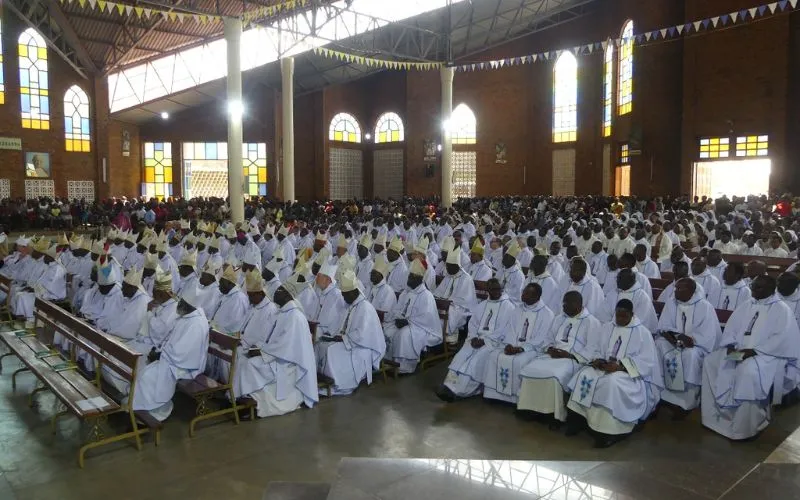
Members of a SECAM Plenary Assembly held in Rwanda. | Credit: ACI Africa
This conflict between cultural values, legal structures, and evolving social norms significantly shapes the pastoral landscape in which African Catholic bishops must tackle the challenges of polygamy.
Upholding Women’s Dignity
A vital theme emerging from the report is promoting women’s dignity in both cultural and ecclesiastical settings.
Pastoral approaches regarding polygamy must aim to advance women’s dignity, alongside acknowledging the practical and cultural reasons for their involvement in such arrangements while raising critical theological queries about alignment with divine intentions for human relationships.
The report contends that from a biblical standpoint, polygamy fails to facilitate the development of women as intended by God, making it crucial for pastoral strategies to encourage communities in reflective examinations of cultural norms related to gender roles and marriage.
Economic Insecurity and Polygamous Practices
Additionally, the report links polygamy to economic vulnerability, especially among widows.
One pertinent example mentioned is levirate marriage, whereby a widow marries her late husband’s relative to ensure protection and financial stability.
While this practice may serve social security, the report questions if it can lead to exploitation, reducing women to mere instruments of family exchange.
Consequently, the commission underscores the necessity of pastoral care specific to widows, ensuring both their material and moral security to diminish their reliance on polygamous arrangements for survival.
Addressing Veiled Forms of Polygamy
The commission also points to a phenomenon they term “veiled polygamy,” referring to cases where individuals sustain multiple sexual relationships outside formal marriages, often leading to familial structures with children whose parents remain unwed.
While this scenario may not generate the same doctrinal issues as traditional polygamy, it poses significant social challenges and detrimental impacts on both families and the Church.
The report observes that women in these circumstances often bear additional social stigma, while the absence of fathers raises critical concerns regarding children’s welfare.
In response, it advocates for enhanced pastoral formation within Christian communities to ensure that families facing these challenges are supported with care and responsibility.

SECAM members in 2025 discussing family issues. | Credit: ACI Africa
Preparing Couples for Christian Marriage
The commission underscores the importance of preventive education alongside pastoral care.
Many cases of Christian polygamy are fueled by societal pressures regarding fertility. The report emphasizes the need for comprehensive marriage preparation that adequately conveys the Christian understanding of matrimony.
While the aspiration for children is recognized as a legitimate cultural value, the report reminds believers that the essence of marriage transcends biological reproduction.
Christian marriage should be primarily viewed as a covenant grounded in love and faithfulness, encompassing more than merely the production of heirs.
Navigating Inculturation Challenges
The SECAM commission situates polygamy within a larger discourse of inculturation, where the expression of Christian faith intersects with diverse cultural narratives.
Acknowledging the substantial evolution of the Church’s engagement with African cultures since the era of missionaries, the report points out that earlier approaches often regarded polygamy strictly as a moral dilemma to eliminate.
Today’s Church must balance fidelity to the Gospel with a sincere understanding of cultural realities.
In their concluding reflections, SECAM members call for ongoing dialogue among Africa’s Catholic bishops, theologians, and pastoral workers to evaluate existing pastoral frameworks and, where necessary, “propose alternative pathways aimed at facilitating encounters with Christ and his teachings.”
This approach emphasizes that polygamy is not merely a disciplinary issue but a critical element of fostering an authentically African expression of Christian family life.
This article originated from ACI Africa, the sister service of EWTN News in Africa, and has been revised accordingly.
