

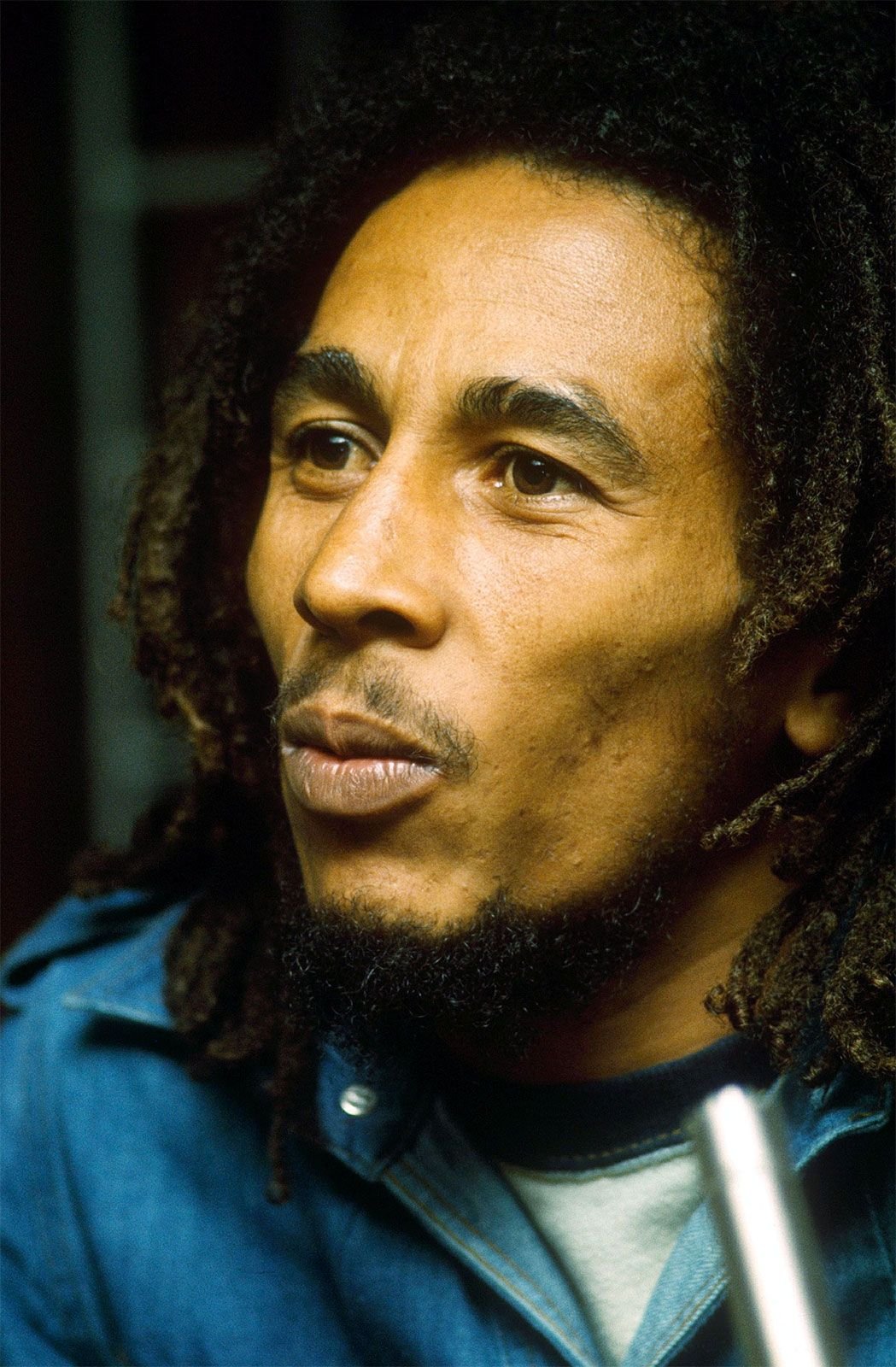
Bob Marley: The Icon of Reggae Music
Bob Marley was a seminal Jamaican singer-songwriter born on February 6, 1945, in Nine Miles, St. Ann, Jamaica. His innovative blend of early ska, rock steady, and rock music in the 1970s elevated him to international stardom. Marley passed away on May 11, 1981, in Miami, Florida, but his musical legacy continues to resonate globally.
Early Life
Growing up in Jamaica, Marley was the son of Norval Sinclair Marley, a white overseer, and Cedella Malcolm, a Black woman. His upbringing reflected the cultural dualities of Jamaican society. The influence of his maternal grandfather, a respected bush doctor, introduced Marley to both the healing arts and the rich oral traditions of the Jamaican countryside. Despite his modest beginnings, Marley exhibited talents in music from an early age.
In his teenage years, Marley relocated to Kingston’s impoverished Trench Town, where he began to hone his musical style, influenced by the vibrant sounds of local rhythms. He started recording songs under the guidance of producer Leslie Kong, marking the beginning of his professional music career.
Formation of The Wailers
In the early 1960s, Marley formed a vocal group with friends Peter Tosh and Bunny Wailer, calling themselves the Wailers. They gained recognition after recording “Simmer Down,” a song that resonated with the struggles of the impoverished Jamaican population. This breakthrough signified the emergence of reggae as a distinct musical genre.
International Recognition
Marley’s collaboration with producer Lee Perry helped refine their sound, leading to the release of their first major album, Catch a Fire, in 1972. As a result, Marley’s unique style, blending reggae with rock elements, garnered international acclaim. His music began to highlight social issues and advocate for the voiceless, showcasing the struggles of the marginalized.
Political Impact and Notable Events
Marley’s influence reached beyond music; he became a respected political figure. In December 1976, he survived a politically motivated assassination attempt, later performing at the One Love Peace Concert, a pivotal event aimed at healing political divisions in Jamaica. Marley’s call to unity resonated deeply, showcasing his commitment to peace and social justice.
Notable Albums
Marley’s discography includes some of the most iconic reggae albums of all time, such as:
- Natty Dread (1974)
- Live! (1975)
- Rastaman Vibration (1976)
- Exodus (1977)
- Kaya (1978)
- Uprising (1980)
- Confrontation (1983, posthumous)
His songs, such as “No Woman No Cry,” “Jamming,” and “Redemption Song,” remain essential listening in reggae music and beyond.
Legacy
Bob Marley is remembered not just as a musician but as a cultural icon. In April 1981, he was posthumously awarded Jamaica’s Order of Merit. The popularity of his music has grown since his passing, turning him into a symbol of hope and resistance. His impact is further solidified with the release of Legend (1984), which became the best-selling reggae album in history, with over 12 million copies sold worldwide.
The hairstyle associated with Marley, known as dreadlocks, became emblematic of the Rastafari movement and influenced many around the world, spreading awareness of Jamaican culture.
