

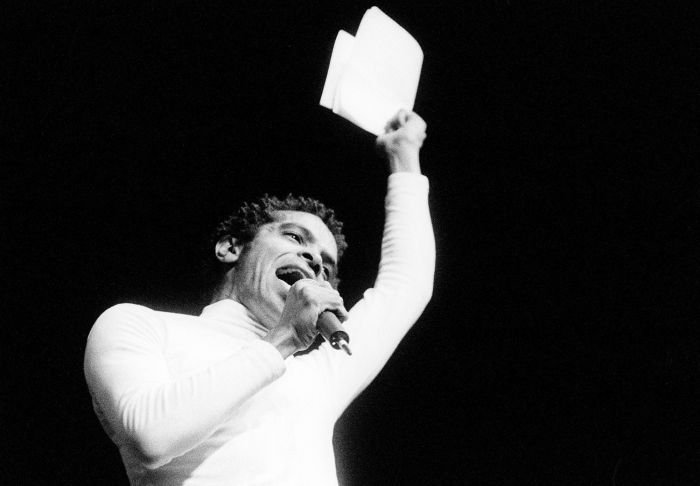
Exploring the Life and Legacy of Silamour Philander
Silamour Philander, born on January 19, 1961, in Somerset Hospital at Cape Town’s V&A Waterfront, made a significant impact on South African culture through their diverse artistic contributions. Growing up in Elsies River, a working-class Coloured township within the Cape Flats, their upbringing profoundly shaped their artistic identity. It is here that Philander honed their skills, drawing inspiration from the rich tapestry of vernacular humour, social narratives, and cultural contradictions that marked their community.
Early Life: A Foundation of Community and Culture
Philander attended John Ramsay Secondary School in Bishop Lavis, completing their matriculation. Their entry into the performance world was serendipitous; while accompanying a friend to an audition, they found their true calling. This unplanned encounter led to a prolific career that spanned multiple decades and various artistic mediums.
A Profound Influence from the Cape Flats
The formidable backdrop of the Cape Flats provided Philander with a lifetime’s worth of inspiration. Their experiences navigating the complexities of Coloured identity under apartheid, alongside the community’s resilience and sharp humour, greatly influenced the characters and narratives they created on stage and screen. Even as their career took them to international stages in London, Amsterdam, Stockholm, and New York, the essence of Elsies River remained a constant thread in their work.
Theatre: A Stage for Transformation
Philander’s career took off in Cape Town’s dynamic alternative theatre scene. They made their mark at The Space Theatre, a vital non-racial venue during the 1970s and 1980s, appearing in influential productions like Political Joke and Telling Tales. Additionally, they collaborated with Group 44, performing in engaging children’s educational theatre.
A breakthrough moment in Philander’s career was their role in the Baxter Theatre’s 1980 production of Waiting for Godot, which earned national acclaim and extended performances in London and the United States. Their innovative character, Rosie September, emerged from a cabaret titled The Wrong Time of Year, creating a lasting impact in Johannesburg’s theatre scene.
Expanding Horizons in Classical Theatre
Philander’s classical theatre achievements are well-documented. They showcased their talents in adaptations of Shakespeare, appearing in The Comedy of Errors in 1987 and Romeo and Juliet in 1992. Their involvement with revered South African playwrights underscored their versatility and commitment to the craft.
Television and Broadcasting: Connecting with Audiences
Over more than two decades, Philander captivated South African television audiences on both English and Afrikaans networks. They starred in Off the Record, a political satirical series, and contributed to children’s programming with shows like Bospraatjies and Kideo.
As a notable figure on kykNET and M-Net, Philander hosted the popular show Liriekeraai and participated in various other programs, showcasing their comedic insights through platforms like It’s a Funny Country. Their departure from e.tv in 2005, stemming from creative integrity concerns, highlighted Philander’s commitment to authenticity.
Cinematic Contributions
Philander’s filmography, though selective, features noteworthy works, including The Road to Mecca and Diamond Hunters. Recent screen credits include Dias Santana and Devil’s Peak, illustrating their enduring presence in the arts.
Artistry and Identity: A Writer Among Performers
As both a writer and performer, Philander’s self-penned show Woeskroes garnered significant acclaim. Their character DC Diamond served as a beloved persona, vividly capturing the essence of life in District Six, and they penned columns that resonated with readers, reflecting a unique blend of humour and social commentary.
Pioneering Cape Coloured Humour
Philander’s comedic style is celebrated as a representation of “Cape Coloured humour,” characterized by linguistic dexterity and a profound understanding of the community’s socio-political landscape. Their work transcended entertainment, serving as cultural assertion and historical documentation.
Personal Journey and Activism
Married to Toni Philander since 1985, they parented four children and informally supported a fifth. The public announcement of their separation in 2015 was marked by honesty and reflection on personal journey. In a landmark interview in 2017, Philander publicly identified as non-binary, showcasing immense bravery in navigating discussions of identity within a complex cultural context.
Philanthropic Endeavours
A dedicated advocate for educational theatre and community development, Philander used their voice to effect change. In March 2023, they established the Soli Philander Foundation, further solidifying their commitment to social impact.
Final Years and Legacy
Silamour Philander passed away on March 4, 2026, at the age of 65 due to cancer complications. They are survived by their children and remain a profound figure in South African cultural life. Their capacity to bridge the apartheid and post-apartheid eras through a continuous artistic journey is invaluable.
Philander’s legacy offers a sustained voice to the Cape Coloured experience, challenging narratives of marginalization and asserting dignity. They led the charge for a more inclusive representation of identity and artistry, serving as a beacon for future generations.
