

Strategic Portfolio Transformation in Africa’s Energy Landscape
As the global energy transition accelerates, national oil companies across Africa, including Angola, are under increasing pressure to rethink their business models. Traditional strategies that focus solely on hydrocarbons are evolving to include diversification into emerging sectors. A notable area of interest is critical minerals, which play a vital role in renewable energy infrastructure and electric vehicle manufacturing. This shift is not merely operational but signifies a fundamental realignment within global supply chains, where resources such as lithium and cobalt now hold strategic importance akin to that of traditional energy assets.
Angola’s rich geological resources position it advantageously for this transformation. Beyond its established oil reserves, Angola boasts significant deposits of lithium, uranium, cobalt, and rare earth elements. These materials are essential for clean energy technologies, including battery storage systems and nuclear power generation. The combination of abundant mineral resources and the nation’s existing energy sector expertise fosters compelling opportunities for integrated development strategies.
Join thousands of readers who start here
Our best articles, sent straight to your inbox. You can unsubscribe anytime.
Market Dynamics Driving Sonangol’s Uranium and Lithium Expansion
Energy Transition Economics Creating New Revenue Streams
The global market for critical minerals is experiencing unprecedented growth, spurred by the electrification of transport, power generation, and industrial sectors. The expansion of electric vehicle production capacities is driving massive demand for lithium, while the resurgence of nuclear power as a low-carbon baseload energy option is creating new dynamics in the uranium market. These changes present substantial opportunities for growth.
Sonangol’s strategy to expand into uranium and lithium aligns with these market shifts while leveraging its existing operational capabilities. The company’s exploration portfolio currently includes seven concessions across the uranium, lithium, and quartz sectors, providing a solid foundation for engaging in Angola’s diversifying extractive industries.
Concerns over resource scarcity are prompting supply chain reevaluations among consuming nations, particularly in Western economies that are eager to diversify sources away from concentrated production regions. This trend creates openings for new entrants with stable political frameworks and existing trade relationships. Additionally, the complexities of uranium imports have heightened demand for alternative suppliers. Angola’s advantageous geographic positioning along the Atlantic coast enhances its ability to serve North American and European markets via existing shipping infrastructure.
Angola’s Geological Advantages in Critical Minerals
The country’s mineral wealth extends beyond diamonds to vital materials such as lithium, copper, cobalt, manganese, uranium, iron ore, and rare earth elements. This geological variety facilitates a portfolio approach to mineral development that mitigates risk while maximizing infrastructure utility across multiple operations.
Lithium deposits identified in Angola show tremendous development potential, although further geological surveys and feasibility studies are necessary for comprehensive assessments. Similarly, uranium resources need rigorous evaluation to determine production viability and optimal extraction techniques. The proximity of these resources to existing infrastructure creates potential synergies, enhancing project economics.
Key Mineral Applications:
- Lithium and Cobalt: Essential in lithium-ion battery manufacturing for electric vehicles and energy storage solutions.
- Copper: Crucial for power grids, renewable energy systems, and electric vehicle charging networks.
- Uranium: A strategic fuel source for nuclear energy generation within a low-carbon energy framework.
- Rare Earth Elements: Specialized applications in wind turbine magnets, electric vehicle motors, and advanced electronics.
Strategic Financial Foundation Enabling Diversification
Robust Profit Performance Supporting Expansion Capital
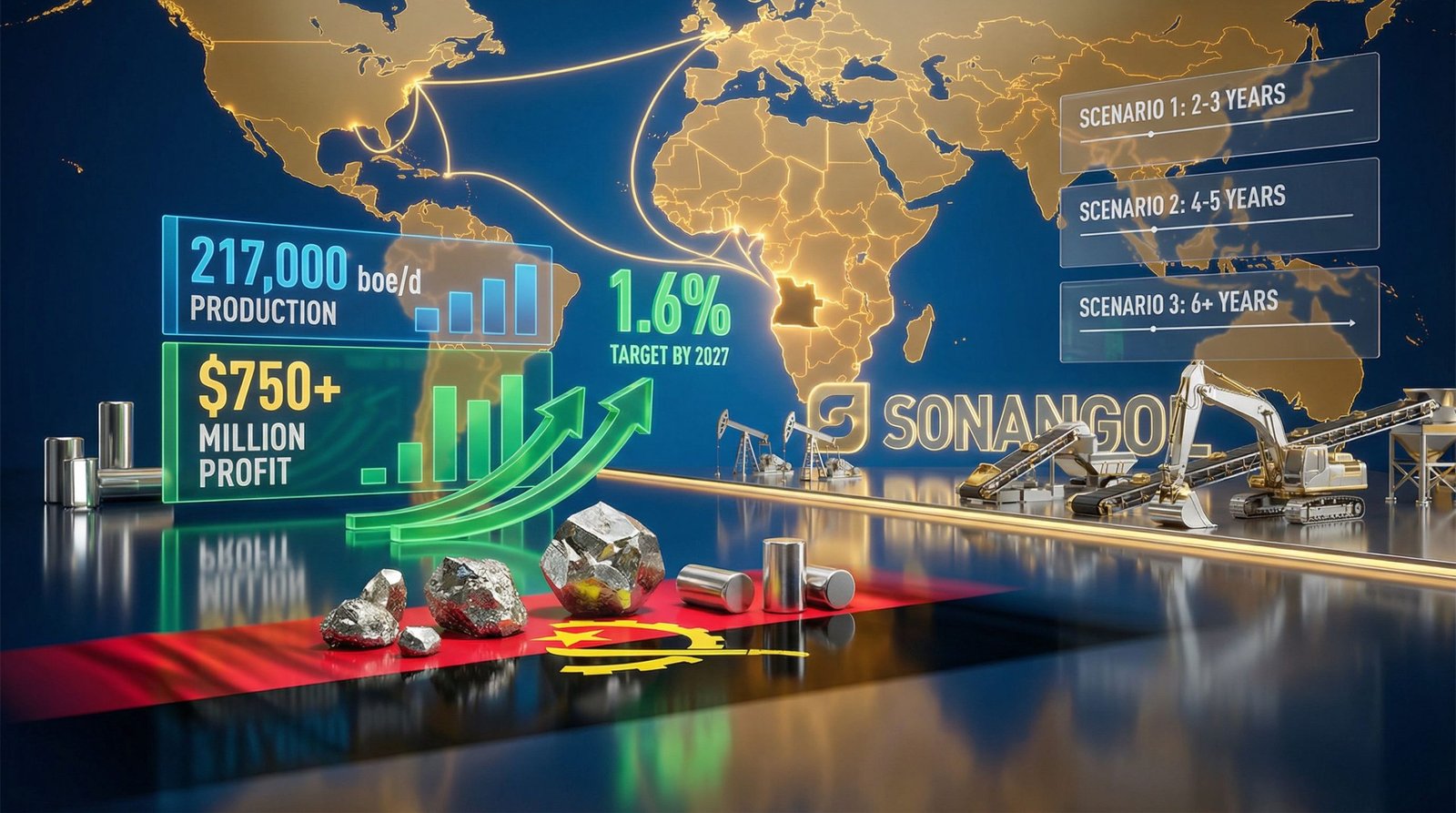
Sonangol achieved net profits exceeding $750 million in 2025, reflecting a strong financial position that provides ample capital for strategic diversification initiatives. The company maintained an oil production level of approximately 217,000 barrels of oil equivalent per day, ensuring stable cash flows from core hydrocarbon operations while exploring new sectors.
This financial robustness opens multiple pathways for Sonangol’s uranium and lithium ventures without undermining existing commitments. Capital allocation can embrace managed risk across various mineral explorations while conservatively managing established oil and gas operations.
Financial Overview for Diversification
| Performance Metric | 2025 Results | Strategic Implications |
|---|---|---|
| Net Profit | $750+ million | Favorable capital position for new ventures |
| Daily Production | 217,000 boe/d | Stable revenue base supporting diversification |
| Exploration Portfolio | 7 mineral concessions | Early positioning across multiple commodities |
Risk Management Through Revenue Diversification
Historically, oil price volatility has posed significant revenue challenges for petroleum-focused companies. Diversifying into critical minerals offers a natural hedge, as cycles in mineral commodities generally differ from those in hydrocarbon markets. This approach enhances overall revenue stability while situating the company in growth markets rather than those in decline.
Long-term sustainability planning increasingly involves considerations for post-hydrocarbon economic models. While oil and gas operations produce significant cash flows, developing capabilities in the mineral sector offers future strategic flexibility as global energy landscapes evolve. This proactive stance contrasts with reactive diversification strategies that often materialize during crisis moments.
Moreover, mineral sector expansion aligns with growing environmental, social, and governance (ESG) expectations valued by international investors. Engaging in clean energy supply chains strengthens corporate positioning within sustainable investment frameworks while maintaining a focus on profitability.
Critical Minerals Offering Maximum Strategic Value
Lithium’s Central Role in Global Battery Supply Chains
As electric vehicles gain traction, lithium demand is set to soar. Automotive manufacturers are ramping up commitments towards electrification, which necessitates secure lithium supplies with reliable pricing and delivery timelines. Angola’s potential for lithium production positions it to capture significant market share within Atlantic supply channels serving North American and European automotive industries.
Ongoing price volatility in lithium markets underscores supply-demand imbalances as production struggles to keep pace with rapidly growing consumption. Recent insights into the lithium market reveal that new production sources with dependable operational frameworks can command premium prices from battery manufacturers aiming for supply chain security. This dynamic opens the door for lucrative long-term supply contracts.
Global lithium demand is predicted to maintain strong growth through 2035 as electric vehicle production accelerates alongside battery storage deployments for renewable energy systems.
Uranium’s Strategic Importance in Nuclear Power Renaissance
Nuclear power generation is witnessing a resurgence, driven by government and investor emphasis on low-carbon energy strategies alongside the need for reliable baseload power. Multiple major economies are expanding nuclear capacities, ensuring sustained uranium demand that surpasses current production capabilities.
Geopolitical factors are also shaping uranium supply chain strategies, with Western nuclear utilities actively diversifying supply sources away from concentrated regions. This opens doors for new players with stable political climates. Angola’s established international relationships, bolstered by oil exports, serve as a strong basis for developing nuclear fuel supply agreements.
Strategic Uranium Market Drivers:
- Nuclear capacity expansion plans across developed economies
- Diversification efforts by nuclear utilities
- Long-term contracts that provide revenue security
- Technical barriers that limit new production capacity development
Alignment With Angola’s National Mining Investment Strategy
In 2022, Angola’s mining sector contributed 1.3% of GDP, with aspirations to elevate this share to 1.6% by 2027. Achieving this goal necessitates an influx of $2 billion in cumulative investment across non-diamond mining sectors by 2027, presenting significant opportunities for both domestic and international organizations focused on mineral development.
Efforts to modernize regulations encompass the implementation of digital mining registries and streamlined permitting processes designed to attract foreign investment while adhering to environmental and social standards. These enhancements aim to reduce administrative hurdles that have traditionally impeded mining project development and bolster sector transparency and accountability.
National Mining Development Targets
| Metric | Current Status | 2027 Target | Growth Required |
|---|---|---|---|
| Mining GDP Contribution | 1.3% (2022) | 1.6% | +0.3 percentage points |
| Non-Diamond Investment | Baseline | $2 billion | Cumulative target |
| Regulatory Framework | Traditional | Digital registry | Modernization completion |
Sonangol’s Role as Economic Transformation Vehicle
As a state-owned enterprise, Sonangol possesses unique capabilities to lead strategic economic initiatives, supported by government backing, established international relationships, and substantial capital resources. The company’s expansion into uranium and lithium not only leverages these advantages but also contributes to national diversification goals beyond traditional oil and diamond exports.
Furthermore, opportunities for technology transfer exist between oil and gas operations and mineral extraction processes. Project management experience, environmental monitoring systems, and community engagement frameworks cultivated through hydrocarbon activities provide foundational benefits for mining ventures. Such knowledge transfer can minimize start-up costs and reduce learning curves associated with entering new industrial sectors.
Job creation extends beyond mining operations to include support industries such as equipment manufacturing, specialized services, and logistics. The development of mineral processing capabilities alongside extraction operations contributes to the formation of integrated industrial clusters that reinforce overall economic resilience.
Implementation Pathways for Strategic Diversification
Joint Venture Partnership Approaches
Forming international mining partnerships grants access to technical expertise, established customer relationships, and operational best practices that can expedite project timelines. Joint ventures facilitate risk-sharing while allowing Sonangol to maintain strategic control over Angolan mineral resources and long-term value capture.
Partnership criteria should prioritize technical ability, financial stability, and alignment of strategic goals, rather than focusing solely on financial metrics. Mining operations necessitate sustained capital investments over lengthy development periods, making reliability and commitment essential for project success.
Partnership Evaluation Framework:
- Technical Expertise: Proven proficiency in uranium and lithium extraction technologies.
- Financial Capacity: Demonstrated ability to finance multi-year development initiatives.
- Market Access: Established customer relationships and integrated supply chains.
- Strategic Alignment: Long-term dedication to African mineral development.
Phased Development Strategies
A gradual approach to mineral development investments aligns with oil revenue generation cycles, ensuring financial stability throughout transitional periods. Initial phases should focus on comprehensive resource assessment and feasibility studies, trailing into pilot operations that validate both technical and economic viability before committing to full-scale production.
This measured strategy enhances learning and operational refinement while allowing flexibility to adapt based on market conditions and operational performance. Risk management is improved through staged capital commitments rather than large initial investments in unproven ventures.
Optimizing market entry timing necessitates a careful review of commodity pricing cycles, competing production capacities, and customer demand patterns. Strategic production scheduling can maximize revenue while avoiding market oversupply that leads to depressed pricing.
Competitive Advantages Supporting Market Entry
Existing Infrastructure and Operational Capabilities
Angola’s existing port facilities, transport networks, and logistics capabilities create substantial cost advantages compared to new mining developments in regions that lack such supporting infrastructure. Investments made in the oil industry for roads, power systems, and communication networks provide a foundation that lowers mineral project development costs and timelines.
Project management expertise gained from tackling complex offshore oil operations translates effectively into substantial mining ventures. Systems for environmental monitoring, safety protocols, and community engagement established for hydrocarbon activities can serve as reliable templates for mineral extraction projects, ensuring adherence to international standards.
Established governmental relationships and adept navigation of regulatory frameworks provide intangible assets that facilitate permitting processes and stakeholder cooperation. These connections, nurtured through decades of oil industry operations, offer competitive advantages against foreign companies without local credibility.
Financial Resources and Investment Capacity
A strong financial performance underpins Sonangol’s uranium and lithium expansion, supplying substantial capital resources unavailable to smaller mining companies. This financial strength supports extended development schedules, enhanced infrastructure investments, and greater operational flexibility during commodity downturns.
State backing bolsters investment security for international partners while granting access to governmental support programs and diplomatic resources that influence international market development. This government backing also permits patient capital approaches that value long-term growth over immediate financial returns.
Moreover, relationships with international capital markets through established oil industry connections create additional financing options for major mineral development efforts. Current ties with various international banks, investment funds, and trading firms offer pathways to secure project financing under competitive conditions.
Global Supply Chain Dynamics Influencing Strategic Positioning
Critical Minerals Geopolitics and Market Access
Western nations are increasingly prioritizing supply chain diversification for strategic materials essential to the clean energy transition. Sonangol’s expansion into uranium and lithium positions Angola as a reliable supplier, responding to market demand for alternatives to concentrated production zones. This geographical diversification can enhance market positioning for new production capacity.
China’s preeminence in lithium processing adds vulnerabilities for Western battery manufacturers seeking assured supply chains. Angola’s lithium production could cater to integrated processing facilities that service Atlantic market customers, thereby mitigating reliance on Asian processing capacity.
Strategic partnerships with governments in consumer markets can enhance long-term demand security while opening avenues for development financing and technical assistance. These collaborations yield mutual benefits as consuming nations secure vital mineral supplies, while Angola enhances its industrial capabilities. Furthermore, Angola’s state-owned oil company is increasingly recognized as a competitive partner for US investors, reinforcing its global standing.
Atlantic Maritime Advantages
Angola’s coastal location offers direct shipping access to North American and European markets without needing to transit through contested maritime routes. This geographic advantage significantly lowers transportation costs and delivery risks compared to alternatives requiring longer distances or politically sensitive transit paths.
Established trade relationships from oil exports afford pre-existing commercial frameworks, shipping agreements, and customer connections that facilitate mineral export development, thus lowering market entry barriers and establishing a foundation for long-term supply contracts.
Investments in port infrastructure made for oil exports already accommodate mineral commodities with minimal additional costs. Equipment for container facilities and bulk handling, along with integrated logistics systems, enhance overall infrastructure usability and project economics.
Managing Implementation Challenges and Risk Factors
Technical and Operational Development Requirements
The acquisition of mining expertise represents the critical capability gap needing to be addressed through targeted recruitment, training initiatives, and partnership formations. Sonangol’s uranium and lithium expansion can benefit from transferable skills but still requires specialized knowledge in mineral extraction technologies and processing methodologies.
Environmental and social governance standards for mining differ significantly from those in the oil industry, particularly concerning community impacts, water usage, and waste management. Therefore, it’s crucial to develop suitable frameworks by consulting international best practices and engaging local stakeholders to ensure sustainable operations.
Key Risk Management Priorities:
- Technical Proficiency: Hiring and developing specialized mining talent.
- Environmental Compliance: Implementing internationally recognized sustainability standards.
- Community Engagement: Developing stakeholder consultation and benefit-sharing strategies.
- Market Volatility: Establishing strategies for pricing risk management and contract diversification.
Market Competition and Customer Development
Established mining companies have significant operational advantages, including proven extraction technologies and established customer connections, creating barriers for new entrants. To overcome these advantages, differentiated value propositions highlighting supply security and geographical benefits must be emphasized.
Developing customer relationships in the mineral market requires sustained engagement, as buyers assess supplier reliability, quality consistency, and long-term supply capabilities. Committing to this aspect demands ongoing marketing efforts and the successful demonstration of operational excellence over various commodity cycles.
Access to technology and intellectual property considerations can restrict certain extraction and processing options. Careful evaluation of licensing requirements and technology transfer opportunities is essential. Forming strategic alliances with technology providers can address these limitations while ensuring ongoing technical support.
Enjoyed this article?
We publish high-impact stories like this a few times a week. No spam.
Success Metrics and Performance Evaluation Framework
Short-term Development Milestones
Initial indicators of success should focus on forming partnerships, progressing regulatory frameworks, and completing resource assessments instead of immediate revenue generation. Sonangol’s uranium and lithium expansion necessitates systematic capability building before transitioning to operational production, making developmental milestones more relevant than early-stage financial performance.
Completing feasibility studies for priority mineral projects will validate technical viability and form the foundation for future investment decisions. These studies should cover geological assessments, engineering plans, environmental impact evaluations, and market analyses to ensure thorough project evaluation.
Securing regulatory approvals and advancing permitting processes signify efficient navigation of administration while showcasing government support for diversification initiatives. Streamlined approval pathways contribute to reduced development durations and lower administrative costs.
Medium-term Production and Revenue Objectives
Initiating production in uranium or lithium operations marks a successful transition from development to active operational phases. While initial production levels may be modest, they will validate technical capabilities and provide a framework for scaling operations dependent on market demand and performance.
Revenue targets from mineral operations should reflect pragmatic market penetration expectations while offering substantial diversification advantages. Achieving 10-15% of total revenue from mineral outputs signifies notable progress without burdening operational capabilities during transitional phases.
Performance Measurement Framework
| Development Phase | Key Milestones | Revenue Targets | Market Position |
|---|---|---|---|
| 2026-2027 | Partnership formation, completion of feasibility studies | <5% of total revenue | Establishing market entry |
| 2028-2030 | Initial production, developing customer relationships | 10-15% of total revenue | Established market presence |
| 2030+ | Commencing full-scale operations, achieving regional leadership | 20%+ of total revenue | Significant market share |
Long-term Strategic Vision and Market Leadership
Achieving regional leadership in critical minerals production mandates sustained operational excellence, continuous capacity enhancement, and market share growth across various commodities. This positioning extends strategic value beyond immediate financial gains through fortified negotiation power and market influence.
Moreover, a substantial contribution to Angola’s economic diversification initiatives illustrates the successful alignment between corporate strategies and national developmental goals. This alignment not only strengthens governmental support but also contributes to broader economic resilience and sustainable development objectives.
The importance of developing a comprehensive critical minerals strategy becomes paramount for long-term success. Adopting an integrated energy and minerals company approach offers unique market differentiation while providing advantages through diversified revenue streams and enhanced risk management capabilities.
For instance, ongoing innovations in the lithium industry illustrate the necessity for staying attuned to industry trends and technological progression.
Investment decisions must account for multiple risk variables such as commodity price fluctuations, operational complexities, and evolving regulatory landscapes. Past performance is no guarantee of future results, and the capital-intensive nature of mineral development projects necessitates a lengthy timeline before revenue generation commences.
Identify the Next Major African Mineral Discovery
Leverage Discovery Alert’s proprietary Discovery IQ model to receive real-time alerts on significant ASX mineral discoveries across Africa and beyond, empowering subscribers to capitalize on actionable opportunities ahead of the broader market. Explore how major mineral discoveries can lead to exceptional returns by visiting Discovery Alert’s dedicated discoveries page, featuring historic examples of transformational market outcomes.
