

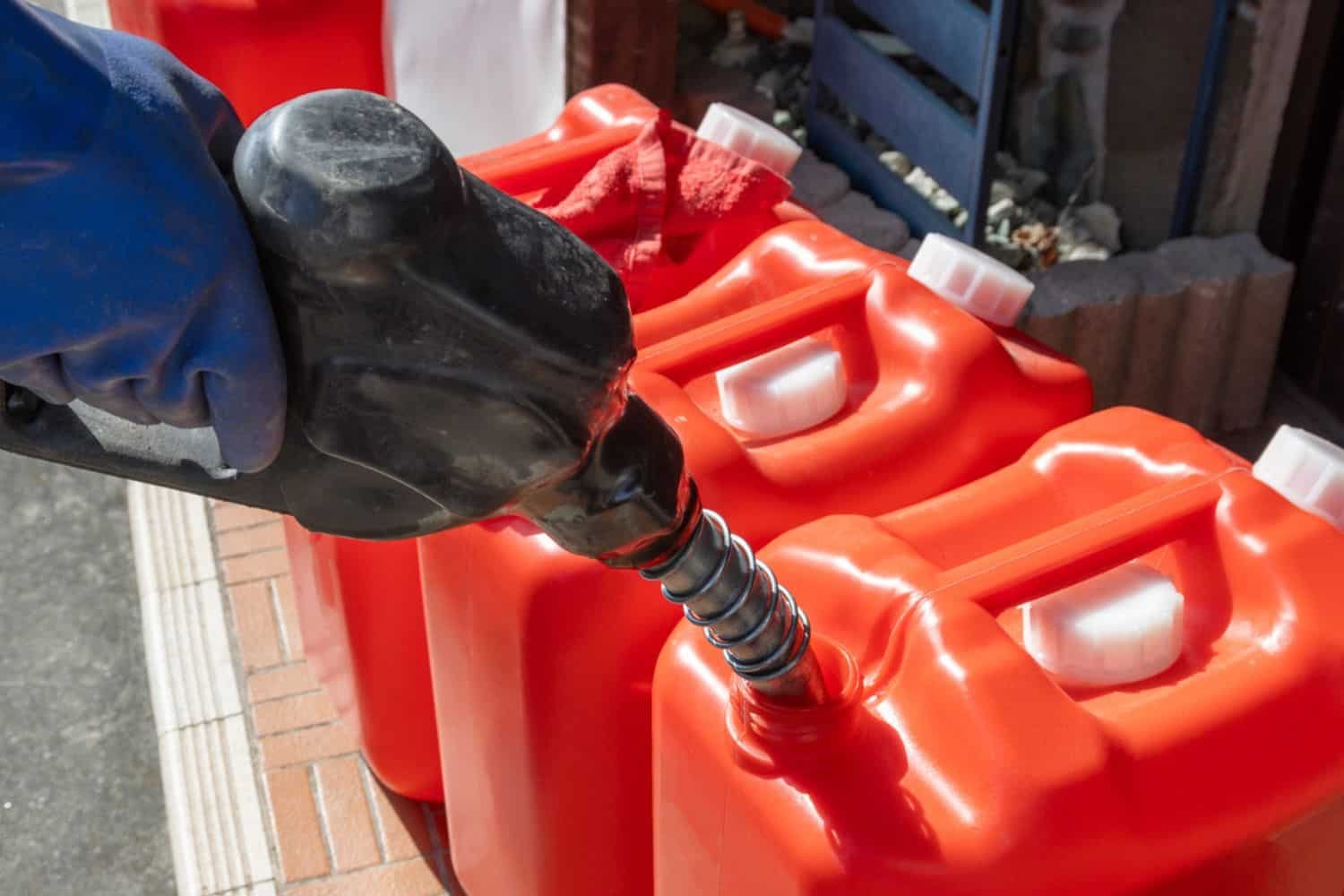
Motorists Consider Fuel Storage Amid Upcoming Price Surge in South Africa
As South Africa gears up for an unprecedented rise in fuel prices, many motorists are contemplating the option of storing fuel in significant quantities to alleviate the impending financial strain. With less than a week to go before a record fuel price increase takes effect, the urgency for solutions has never been greater.
Recent analysis from the Central Energy Fund (CEF) reveals alarming projections: diesel may exceed R10 per litre for the very first time in South African history. The CEF’s data indicates that petrol prices are currently under-recovering by R5.24 to R5.76 per litre, while diesel prices have surged to approximately R9.86 to R10.00 per litre.
Can I Store Petrol at Home?
The legalities surrounding fuel storage at residential properties are dictated primarily by municipal bylaws, which can differ from one province or city to another.
Johannesburg
In Johannesburg, petrol storage is limited to a maximum of 40 litres, while diesel can be stored up to 210 litres.
Tshwane
As per the municipal fire safety guidelines in Tshwane, individuals may not store more than 200 litres of petrol without authorization, while diesel storage can go up to 400 litres.
Cape Town
The laws in Cape Town restrict storage to a maximum of 200 litres of flammable liquids and 100 kg of flammable gas.
eThekwini
According to the eThekwini Municipality’s regulations, residents can store up to 210 litres of petrol and up to 500 litres of diesel, along with a maximum of 100 kg of gas without a Certificate.
Ekurhuleni
In Ekurhuleni, regulations set maximum storage limits for fuel. Without a Certificate of Registration from the Chief Fire Officer, individuals may store:
- Up to 100 litres of petrol.
- Up to 420 litres of diesel.
- Up to 1,100 litres of other flammable liquids.
Be Cautious with Storage Containers
Guidelines established by the Department of Mineral Resources and Energy stress that only approved containers should be used for storing petrol and diesel. The regulations, which were clarified in 2021, focus on safety and have defined what constitutes an acceptable “container.” These regulations are essential for ensuring compliance and safety in fuel storage.
Understanding Fuel in Vehicle Tanks
According to South African municipal bylaws, no certificate is needed for fuel contained in vehicle tanks up to 1,000 litres. This includes regulations about transporting fuel for operational uses, which outline restrictions and responsibilities for drivers.
Provincial Fuel Consumption Trends
Fuel consumption varies significantly across regions. Data from the Department of Mineral Resources and Energy highlights these disparities.
Gauteng
Being the highest consumer, Gauteng represents approximately 36% of petrol and 24.5% of diesel consumption in South Africa.
KwaZulu-Natal & Western Cape
These provinces each account for around 15-18% of the national fuel consumption.
Northern Cape
This region consistently ranks at the bottom for total fuel usage.
| Province | Petrol Consumption Share | Diesel Consumption Share |
| Gauteng | ~36% | ~24.5% |
| KwaZulu-Natal | ~15.7% | ~18.7% |
| Western Cape | ~15.6% | ~16.6% |
| Other Provinces | <10% each | <10% each |
South Africans Feeling the Pinch
As the date approaches for significant price hikes, many regions are already experiencing challenges. The conflict in Iran has heightened global concern over fuel prices and supply. Residents, particularly in Cape Peninsula areas, have reported severe fuel shortages, impacting the agricultural sector during a crucial period for farming.
Some service stations in the Garden Route have enforced fuel rationing, implementing limits such as “50L per vehicle per day” while prohibiting dispensing into containers. Images depicting these limitations have circulated widely, highlighting the urgency of the situation.
Projected Fuel Prices
Effective April 1, the upcoming fuel prices will include an additional 21-cent-per-litre tax increase.
| Octane | Current Price | Increase | New Price (Including R0.21 Tax) |
| 93 Petrol | R20.19 | R5.24 | R25.64 |
| 95 Petrol | R20.30 | R5.76 | R26.27 |
| Diesel 0.05% | R18.53 | R9.86 | R28.60 |
| Diesel 0.005% | R18.60 | R10.00 | R28.81 |
| Illuminating Paraffin | R12.54 | R11.46 | R24.00 (No Tax) |
Learn more about the upcoming changes in fuel pricing: Government reveals its fuel plans as SA braces for record petrol and diesel hikes.
