

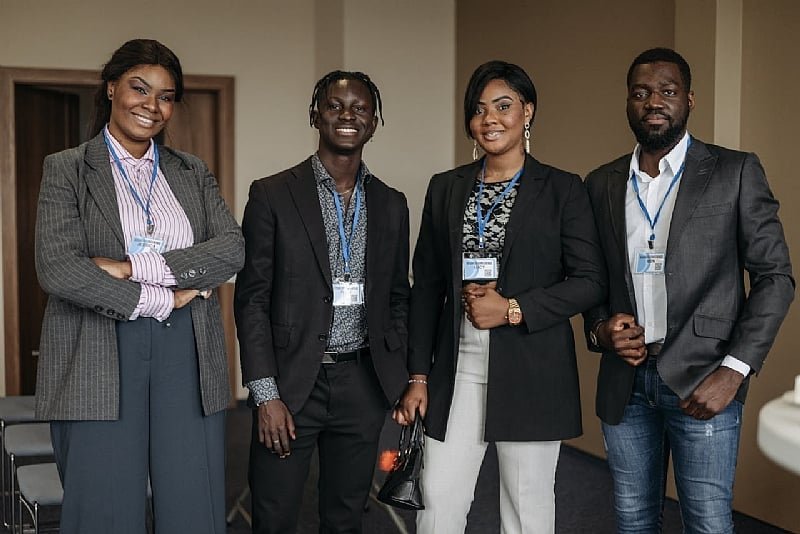
A transformative wave is sweeping across Africa and its participation in the global economy, reshaping the distribution of capital, resources, and corporate power on the continent. Recent analyses underscore a trend—Africa is transitioning from passivity to active engagement in global markets.
This shift is marked by key developments in finance, mining, energy, and corporate influence, collectively illustrating how the continent is navigating local ambitions, global capital, and geopolitical competition.
Ghana’s Mining Sector Transformation
In Ghana, significant changes are underway as the country’s mining sector shifts gears. The Damang gold mine, previously operated by Gold Fields Limited for nearly 30 years, is being transitioned to local firm Engineers and Planners Company Limited, led by Ibrahim Mahama. This move, backed by a $205 million financing package, exemplifies the ambition of local enterprises to take ownership of valuable extractive resources.
Revitalizing the Damang mine could demand an investment of up to $1 billion, but the overarching message is clear: Ghana is committed to enhancing local participation and retaining value, even amid international pressures regarding increased royalties and stringent regulations.
Congo: A New Era of Mineral Geopolitics
Moving south, the Democratic Republic of the Congo (DRC) is emerging as a focal point for the global competition over critical minerals. The government has recently approved the $30 million sale of Chemaf to Virtus Minerals, a U.S.-backed entity, a move that signifies not just a corporate transaction but a geopolitical stance. As the U.S. aims to secure cobalt and copper vital for energy transitions, the DRC has become a strategic arena.
This deal signals a shift away from the long-standing dominance of China in the Congolese mining sector. By diversifying partnerships, the DRC asserts greater control over its resources while aligning itself with the dynamics of new global powers.
Morocco’s Corporate Growth in a Competitive Landscape
On the corporate front, Morocco is witnessing notable growth. Nine Moroccan companies have been recognized in the 2026 Forbes Middle East list of the most valuable firms in the Middle East and North Africa, with Attijariwafa Bank leading the charge alongside other prominent firms like Maroc Telecom and Managem Group.
Despite Gulf economies’ dominance, Morocco’s ascent reflects a larger trend: African corporations are increasingly regionalizing and entering international capital markets, with banking, telecom, infrastructure, and energy driving this expansion. Morocco is positioning itself as a strategic hub linking Africa, Europe, and the Middle East.
Zenith Bank: Expanding Global Reach
Zenith Bank Plc, Nigeria’s second-largest bank by market capitalization, showcases Africa’s ambition in the financial sector, aiming for a listing on the London Stock Exchange by 2027. This strategic push seeks to access global capital and enhance credibility while supporting cross-border growth. If successful, Zenith would join a select group of Nigerian banks listed in London.
The bank is also broadening its international presence with plans for new branches, indicating that African banks are evolving into global entities driving trade and investment flows across continents.
Shell’s Exit: The Energy Sector’s New Landscape
As African companies expand, some global players are beginning to retreat. Shell plc’s move to divest its downstream assets in South Africa, including around 600 petrol stations, marks a significant transition after over a century in the country. This divestiture is part of a broader strategy to focus on higher-margin upstream operations in oil and gas exploration.
For South Africa, this shift may alter the competitive landscape, allowing room for new entrants while signaling changing strategies among multinational energy corporations in Africa.
A Continent in Flux
The convergence of these developments illustrates a continent in transition. In Ghana, local firms are reclaiming roles once held by multinationals; in Congo, global powers vye for control over essential minerals; Moroccan corporations are establishing regional prominence; and Nigerian banks are reaching for international capital. Meanwhile, South African giants are recalibrating their market presence.
This narrative reflects a rebalancing of power between local interests and foreign entities, as well as between public policy and private capital, positioning Africa as an increasingly assertive player on the global stage.
The Broader Context
Beyond isolated business events, a larger picture is unfolding regarding control, capital, and competition. African economies are no longer merely defined by resource extraction or external dependency; they are dynamic arenas where global interests converge and local actors are taking charge.
As highlighted in recent reports, these trends may significantly determine the next decade of economic transformation in Africa. Investors, policymakers, and industry leaders must recognize that Africa is not merely rising; it is reshaping the rules of engagement.
