

Financial Challenges Facing the East African Community: A Call for Sustainable Integration
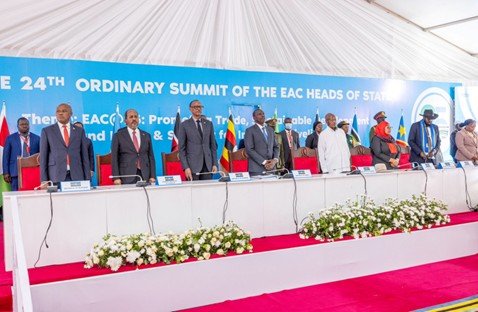
The atmosphere at the Arusha International Conference Centre this month encapsulated a blend of politeness and anxiety. Delegations from across the region presented familiar speeches advocating for unity and regional integration, yet an underlying issue loomed large: the East African Community (EAC) is facing a significant financial crisis.
Uganda Takes the Helm
During this month’s summit, Uganda’s President Yoweri Museveni took on the rotating chairmanship of the East African Community, succeeding President William Ruto of Kenya. This leadership transfer holds symbolic significance, placing Museveni in charge of a bloc that is grappling with financial sustainability.
Ambitious Vision of the EAC
Formed as one of Africa’s most ambitious regional integration initiatives, the EAC encompasses over 300 million individuals across countries stretching from the Indian Ocean to Central Africa. The community’s goals include establishing a customs union, a common market, and eventually a monetary union and political federation. While these objectives might sound grand in official communications, the reality of insufficient funding makes the achievement of these goals seem increasingly uncertain.
Budget Shortages and Growing Arrears
Behind closed doors, discussions among officials in Arusha revealed a growing concern over accumulating arrears from partner states. Only a limited number of governments consistently meet their financial obligations, leading to delays in essential functions and rising financial gaps that threaten the EAC’s daily operations.
Impacts on Legislative and Judicial Functions
The repercussions of these financial strains are becoming increasingly evident. The East African Legislative Assembly has faced session delays due to funding shortages, while the East African Court of Justice struggles to perform its legal duties without timely access to necessary resources. As vital institutions to the EAC’s framework, any impediment to their operations hampers overall integration progress.
National Financial Pressures
The challenge extends beyond administrative inefficiencies. East African governments must navigate rising national debts, weakening currencies, and mounting public demands, making it increasingly difficult to prioritize contributions to the EAC. In scenarios where budget allocations are necessary, regional obligations often take a backseat, leading to widespread financial arrears within the bloc.
A Contradiction in Leadership Commitment
There lies a troubling contradiction: the very leaders who advocate for regional integration are failing to provide the necessary financial backing to realize it. A customs union, common market, and cooperative legal systems are unattainable without consistent funding, which the EAC has struggled to secure.
Reforming the Funding Formula
At the summit, leaders acknowledged this contradiction by approving a revised funding formula. Contributions will now be divided into equal shares along with amounts tied to each country’s economic capacity. This change suggests a collective understanding that the previous system, which assumed equal contributions from all member states, was no longer feasible.
Consequences for Financial Non-Compliance
In a decisive move, the summit also addressed the issue of non-compliance with financial contributions. Countries that fail to meet their budgetary obligations may lose the ability to nominate candidates for senior positions within the organization, emphasizing that financial responsibility will increasingly shape influence within the EAC.
The Urgent Call for Integration
Museveni highlighted the gravity of the situation, asserting that East Africa risks becoming marginal in a rapidly changing global economy if regional cooperation falters. Larger trading blocs are emerging globally, and the choice for East African countries is not merely between integration and independence—it’s about the choice between integration and irrelevance.
Geopolitical Expansion and Complexities
The EAC has seen rapid expansion in recent years with new members like the Democratic Republic of the Congo and Somalia. While this enlargement boosts the bloc’s geopolitical clout, it also complicates administration and increases operational costs. A larger community necessitates stronger, not weaker, institutions.
Historical Context and Future Implications
The evolving political landscape, marked by tensions in eastern Congo and disputes between states, adds layers of complexity to regional commitments. Observers note unsettling parallels with the first EAC, which disintegrated in 1977 due to financial disagreements and a lack of governance cohesion. However, today’s EAC has made significant strides in enhancing regional trade and connectivity.
Importance of Institutional Integrity
Current EAC institutions play a crucial role in the daily lives of East Africans—from truck drivers moving goods to students studying across borders. Funding shortfalls not only hinder institutional functionality but also disrupt the very fabric that facilitates commerce and cooperation.
Investing in Sustainable Growth
Debates over membership contributions transcend mere financial administration; they represent a commitment to maintaining the integrity and effectiveness of the EAC. Treating these contributions as investments in national economic futures will enable sustainable regional development.
The Path Forward for East Africa
As the summit concluded, the rhetoric of solidarity and shared destiny prevailed. However, the challenge lies in aligning these sentiments with the more pragmatic necessity of fiscal contributions to sustain the community’s functions.
The future of the EAC hinges not just on declarations but on the resolve of its member states to uphold their financial responsibilities. As East African economies grow and the population expands, a robust EAC could amplify opportunities for all member states, while a weakened organization would leave each country navigating challenges in isolation.
In conclusion, sustainable integration requires not just visionary dialogues but consistent action in fulfilling financial commitments to sustain the development of this vital regional bloc. For more insights on East African integration, visit East African Community or explore regional economic reports.
