

Transforming Malawi’s Energy Landscape: Solar Energy and Sustainable Agriculture
In an inspiring move towards renewable energy, Malawi is witnessing a significant shift as solar power plants pave the way for a sustainable future. These developments are spearheaded by Toronto-based JCM Power, which has successfully established two solar facilities in Malawi, contributing to a cleaner energy mix in the region.
Solar Power’s Role in Malawi
Currently, approximately 10% of Malawi’s grid electricity is generated from solar, thanks to the 60-megawatt Salima solar plant, which was co-developed with InfraCo Africa Ltd. and marked its inception in 2021 as Malawi’s first solar facility. Following that, the Golomoti solar plant was commissioned in 2022, equipped with a groundbreaking 5-megawatt battery storage system—the first of its kind in utility-scale projects across sub-Saharan Africa.
Despite the urgent need for renewable energy solutions, as of 2023, only 16% of Malawi’s population had access to electricity. This highlights the critical importance of the solar initiatives being put into place.
Overcoming Challenges in Solar Development
The journey to renewable energy in Malawi was not without its hurdles. Loris Andrys, JCM’s senior business developer for Africa, referred to Malawi as a “frontier market,” lacking adequate regulatory frameworks for solar projects. The necessity to develop these regulations was inherently intertwined with the creation of the Salima and Golomoti plants.
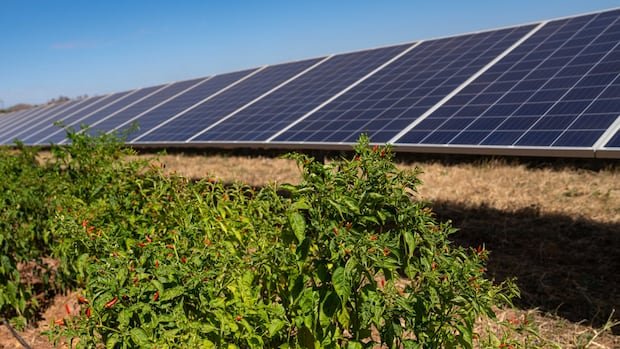
Additionally, the economic volatility of the Malawian kwacha posed a challenge, as the government compensates JCM in local currency. In response to this challenge, JCM Power initiated community farming programs focused on African bird’s eye chili peppers, which thrive in the regions surrounding their solar farms. The harvested chilies are sold in U.S. dollars, primarily to the restaurant chain Nando’s, known for its signature Peri-Peri sauce. This innovative approach not only stabilizes financial returns but also fosters local agriculture.
A Bright Future: Solar Energy Potential in Africa
African countries hold a significant portion of the world’s solar potential, with the International Energy Agency estimating that Africa possesses 60% of the world’s top-quality solar resources. With an emphasis on addressing the energy needs of the 600 million Africans without electricity, the push towards solar energy aligns with the UN’s Sustainable Development Goal 7 for universal access to affordable and reliable energy by 2030.
Amos Wemanya, a senior climate advisor at Power Shift Africa, emphasized that solar power presents an opportunity for energy sovereignty, as many African nations traditionally depend on imported fossil fuels with fluctuating prices. The growth trajectory for solar energy is promising, with a remarkable 54% increase in solar installations in Africa reported in 2025.
Investment in African Solar Initiatives
JCM Power’s renewable projects are underpinned by investment from development banks, including FinDev Canada. This public funding is essential in facilitating solar developments in emerging markets, which are often seen as commercially unviable. In addition to Malawi, JCM is actively exploring opportunities in neighboring countries such as Namibia, Botswana, Mozambique, and Zambia.
Meanwhile, Vancouver-based Stardust Solar is also making strides in the African market by launching its first franchise in Zambia. Their new project will add 30 megawatts of solar capacity, contributing to the region’s energy demand.
Ensuring Sustainable Development through Solar
As solar projects proliferate across the continent, it is crucial to ensure that they adhere to sustainable development principles. Carole Brunet, an associate professor specializing in the social and environmental impacts of solar energy, notes that many projects are being rapidly implemented without adequate consideration of their long-term impacts on local communities.
Addressing these challenges requires thoughtful integration of local agricultural practices, job creation, and gender equality initiatives—goals that are becoming increasingly essential in solar energy projects. JCM Power’s commitment to promoting gender inclusivity is evident in their workforce, where 25% of employees at their Malawi plants are women, spearheaded by Grace Kalowa, the company’s Malawi country manager.
In conclusion, Malawi stands at the forefront of a renewable energy revolution that harnesses solar power’s potential while integrating sustainable agricultural practices. By addressing both energy needs and community development, these initiatives not only provide electricity but also foster economic growth and enhance social equity.
