

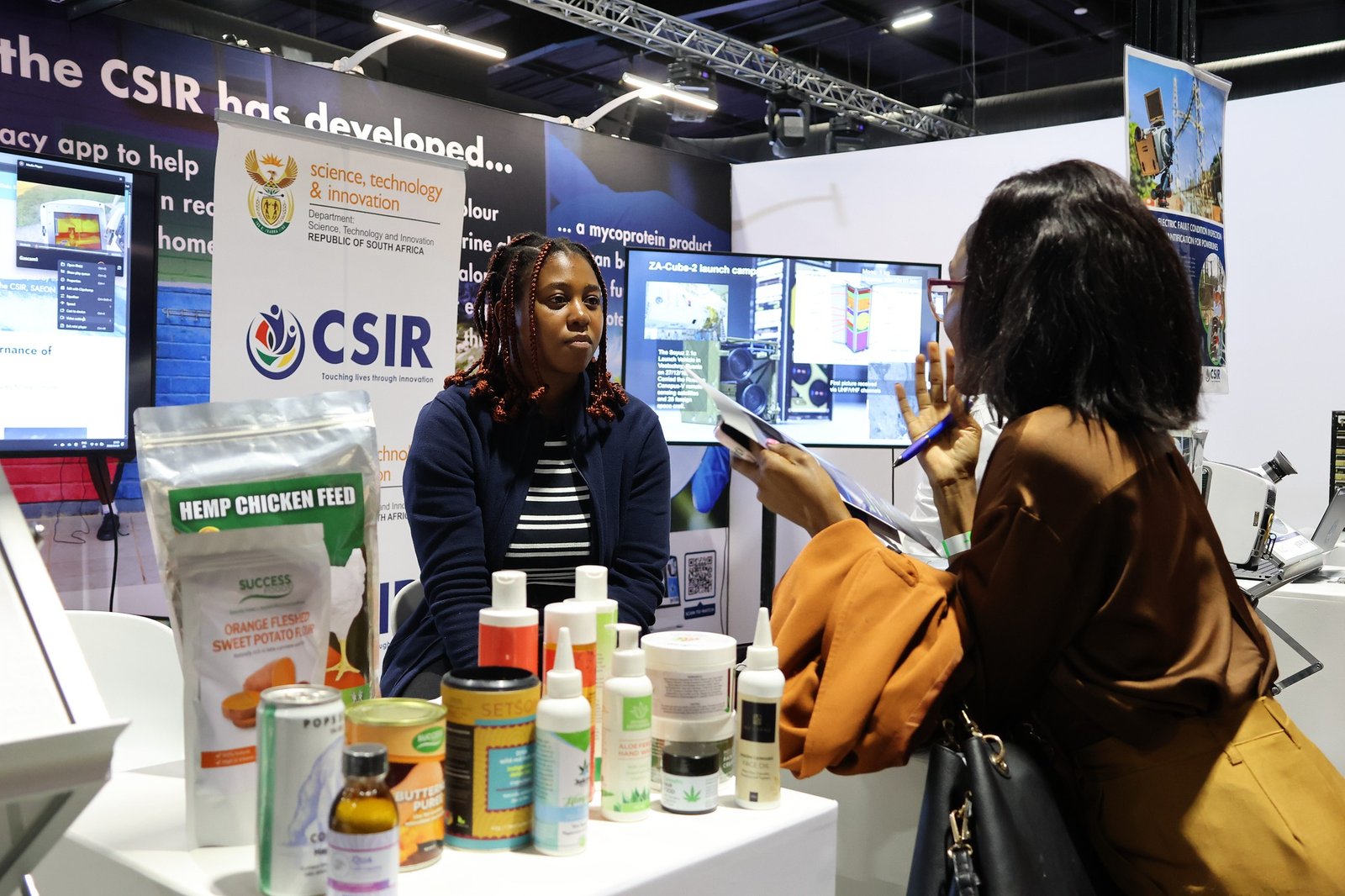
The talent on display at South Africa Innovation Week (SAIW) 2026 is truly inspiring. Photo: Department of Science, Technology, and Innovation SA
Unlocking South Africa’s Innovation Potential
Walking through the inaugural South Africa Innovation Week (SAIW) at Nasrec, the vibrant creativity and entrepreneurial spirit of the nation were unmistakably on display. Innovators pitched diverse products ranging from mushroom-based pet items to goat’s milk cosmetics, alongside technological solutions for the film industry, event management, and public transport logistics. Universities showcased their advancements, while government agencies like the South African National Space Agency and the Medical Research Council highlighted groundbreaking research projects.
Challenges in the Innovation Landscape
Despite this energy, South Africa lags at 61st out of 139 in the Global Innovation Index, with a decline in scores over the past decade. The issue is not a lack of ideas but rather challenges in the progression from conception to commercialization.
The Bottleneck of Innovation
The fragmentation of the innovation ecosystem presents diverse opinions on the barriers to innovation. Audrey Verhaeghe, founder of the South African Innovation Summit, cites insufficient resources for early-stage projects, noting that funding is more readily available for advanced commercialization than for nascent ideas. Ismael Abdoola, acting CEO of the Technology Innovation Agency (TIA), points out that only three organizations consistently fund early-stage innovation, implying a significant gap in support.
Conversely, Dr. Adrienne Leussa highlights a disconnect: the Department of Trade, Industry and Competition struggles to find investable projects, sometimes necessitating a return of unspent funds. This dichotomy illustrates a fractured pipeline where innovators lack access to supportive resources while funders seek refined proposals.
The Consequences of Inaction
The repercussions of this dysfunction are profound, as stated by Cleola Kunene from the JSE: a lack of investment in home-grown innovation leads to costly imports. The pattern is evident: talented individuals and innovative ideas often migrate overseas, with foreign markets reaping the benefits of South African ingenuity.
Cultural and Regulatory Hurdles
Verhaeghe notes another challenge: international funding agencies perceive South Africa as too developed for aid while simultaneously not competitive on a global scale. Factors like broad-based black economic empowerment regulations further complicate engagement from foreign investors. Additionally, issues of corruption and patronage diminish the financial landscape, pushing potential investors away.
Execution and Coordination Gaps
Even with available funding, execution often falters. Dr. Leussa mentions a skills crisis in entrepreneurship education, suggesting that while idea generation thrives, the actual implementation suffers. A newly established small grant fund at the University of Cape Town aims to bridge the gap between laboratory discoveries and market-ready products, yet the divide remains substantial.
The Need for Coordination
Lilah Clark from the JSE encapsulates a critical issue: a lack of alignment among government, corporations, and academia hampers progress. The corporate sector’s minimal presence at events like Innovation Week exemplifies this disconnect. New approaches to corporate support are vital to align with the contemporary challenges faced by startups and SMEs.
Hidden Successes within the Ecosystem
Despite challenges, Nthame Mametja from 22 On Sloane argues that many successes remain unreported, primarily at grassroots levels. This raises the question: Is the South African innovation ecosystem underperforming or simply underrepresented? While it ranks second in Africa behind Mauritius, the exploration of relative underperformance indicates that significant potential remains untapped.
Pathways to Improvement
Addressing South Africa’s innovation dilemma requires focused strategies:
- Development of robust pipelines: Facilitate growth from idea to investable venture through mentorship and structured support.
- Innovative funding sources: Establish funding mechanisms that embrace early-stage uncertainty.
- Strengthening connections: Foster systematic pathways that connect academia with industry.
- Improved coordination: Create platforms to align government, businesses, and investors toward common goals.
- Cultural shift regarding failures: Reframe setbacks as opportunities for learning and growth.
- Enhanced storytelling: Document and promote successes, particularly within grassroots innovation.
- Collaboration between private and public sectors: Utilize events like SAIW as progress indicators and engagement opportunities.
As SAIW showcased the vibrant innovation landscape, the evolution from potential to realization remains critical. Time, patience, and connective resources are essential in harnessing the capabilities of South Africa’s innovation ecosystem.
