

Exploring the African Diaspora: A New Exhibition in Seville
Discovering “Améfrica: Diasporic Connections”
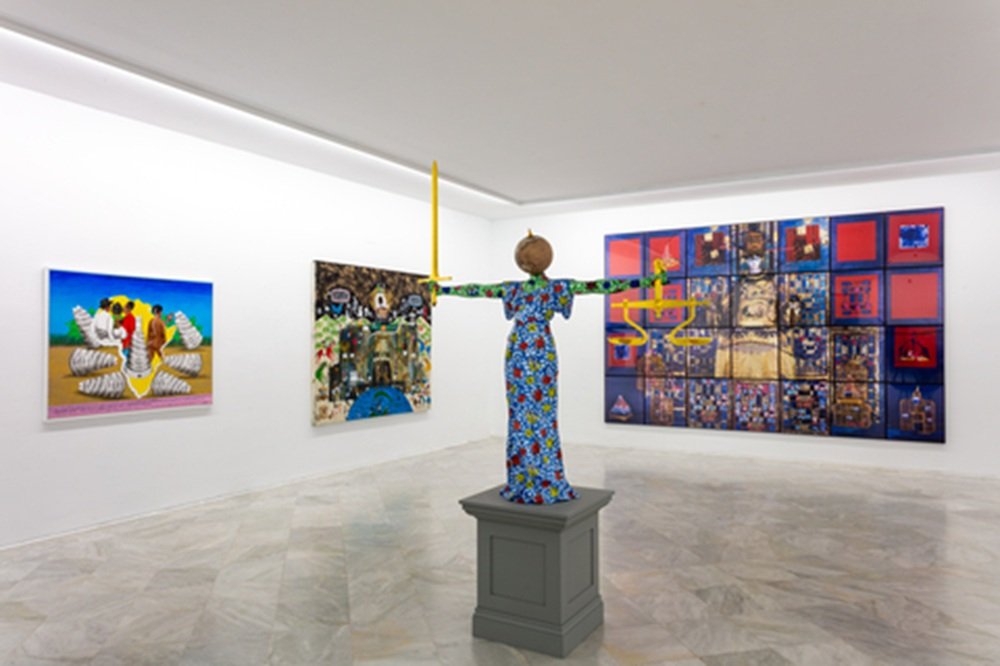
The Centro Andaluz de Arte Contemporáneo (CAAC) in Seville has launched an impactful exhibition titled Améfrica: Diasporic Connections in the Jorge M. Pérez Collection, curated by Brazilian expert Helio Menezes. This remarkable showcase, drawn from the Jorge M. Pérez Collection and El Espacio 23 in Miami, features 128 art pieces from 99 diverse artists, emphasizing the widespread influence of the African diaspora.
On display in the museum’s North and East Cloisters until January 10, 2027, this exhibition sets the tone for CAAC’s 2026 programming, fostering a significant cultural dialogue across the Atlantic.
A Comprehensive Look at African Influence
Améfrica offers a fresh perspective on Africa’s profound impact on the Americas while exploring relational, political, and aesthetic dimensions. The exhibit spans a variety of forms including painting, sculpture, photography, installation, and textiles, showcasing contributions from artists hailing from over thirty countries across Africa, the Americas, Europe, and Australia.
Prominent figures like Kara Walker and El Anatsui are featured alongside pioneering artists, creating a dynamic conversation that bridges generations and backgrounds.
Key Themes in the Exhibition
The exhibition unfolds through five thematically-driven chapters inspired by key concepts highlighted by Lélia Gonzalez that emphasize African identity. Each section presents a unique narrative exploring different perspectives of the diaspora.
1. Adaptation
This chapter reflects on both forced and voluntary movements that interlink Africa and the Americas. Artists such as El Anatsui and María Magdalena Campos-Pons investigate themes of migration, material exchange, and memory.
2. Resistance
Focusing on contemporary activism, this section features works by Mickalene Thomas and Zanele Muholi that utilize visual language to convey socio-racial tensions. Emphasis is placed on themes of care, resilience, and collective struggle.
3. Reinterpretation
Highlighting spiritual legacies reshaped by displacement, artists like Belkis Ayón reinterpret inherited frameworks through ancestral practices and rituals, connecting past and present.
4. Creation of New Forms
Celebrating innovation, this chapter includes works by artists such as Kapwani Kiwanga and Sonia Gomes, who blend abstraction and sculpture to explore new aesthetic languages.
5. Amefricanas
Focusing on the voices of Black women artists, this segment challenges colonial narratives and promotes self-representation, featuring powerful works from artists like Kara Walker and Faith Ringgold.
Conclusion: A Reflection on Shared Histories
Pérez, an avid collector, articulates his vision for the exhibition, stating, “Améfrica underscores that we share intertwined origins and that no artistic expression, nor any society, emerges in isolation.” This powerful project not only showcases remarkable artistry but also emphasizes the complex journeys and shared memories that shape our societies.
Experience the vibrant narratives and connections within the African diaspora at the CAAC, and discover how these diverse stories continue to resonate in contemporary culture.
